
In the early days of British Rail dieselisation the largest locomotives were known as the Type Cs with over 2,000hp to play with. However, it was soon clear that more powerful locomotives would be needed for the principal expresses and heaviest freights, though no suitable engines existed at the time - until the arrival of English Electric's incredible Deltic prototype in 1955 which had two of innovative Napier Deltic engines which gave a combined power output of 3,300hp. British Railways revised its power classifications to the now familiar Types 1 to 5 with the Type 5 for locomotives with over 3, 000hp available [1].
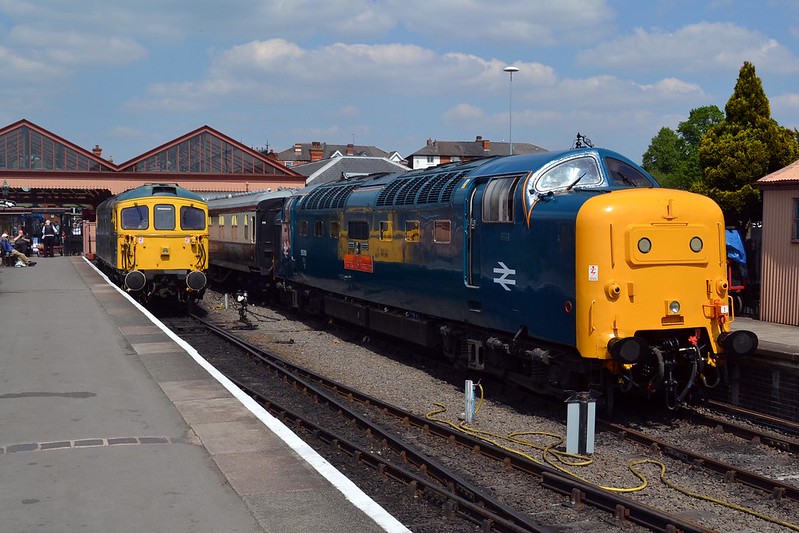
55 019 at Kidderminster Town
| Information | |
|---|---|
| Number built: | 22 |
| Built: | 1961-62 |
| Builder: | English Electric Vulcan Foundry |
| Engine: | 2 Napier Deltic 18-25 diesels |
| Power: | 3, 300 hp (2, 460 kW) |
| Wheel arrangement: | Co-Co |
With high power and a relatively low weight (the Deltic was thirty-two tons lighter than a Class 45 but brought 800hp more to the table) the Deltic proved itself on top BR expresses and a production order for 22 was made to replace ex-LNER Pacifics on the East Coast Main Line [2]. The production Deltics differed in appearance to the prototype and construction, one problem with the prototype had been its awkward size which limited its route availability, the production Deltics were somewhat slimmer and a bit longer [3].
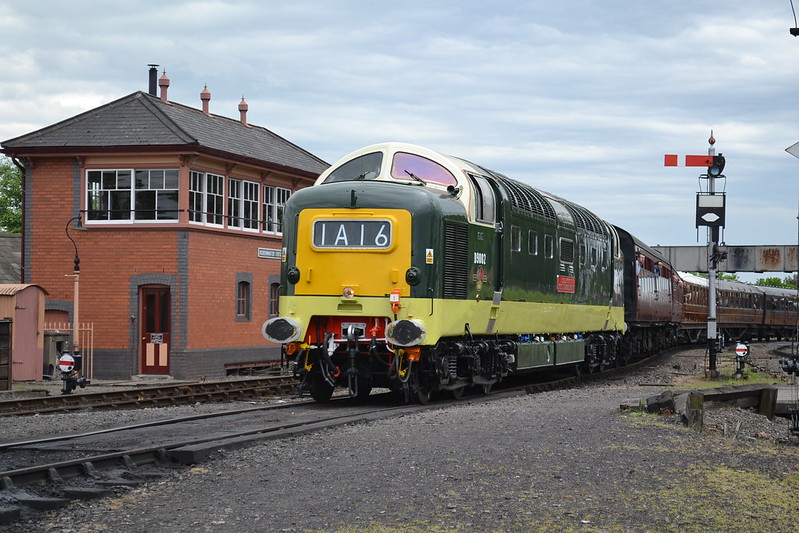
D9002 approaches Kidderminster Town
The Class 55s, as they became known performed, admirably on the ECML until being replaced by the High Speed Train in the late 1970s, with a final withdrawal from service at the end of 1981. Although they still had a lot to offer, the Class 55s were expensive to maintain and the small fleet made them uneconomic. Six Class 55s were preserved as well as the prototype, the diesels (along with the Western Class 52s) attracting a level of popularity and interest not seen since the end of steam.
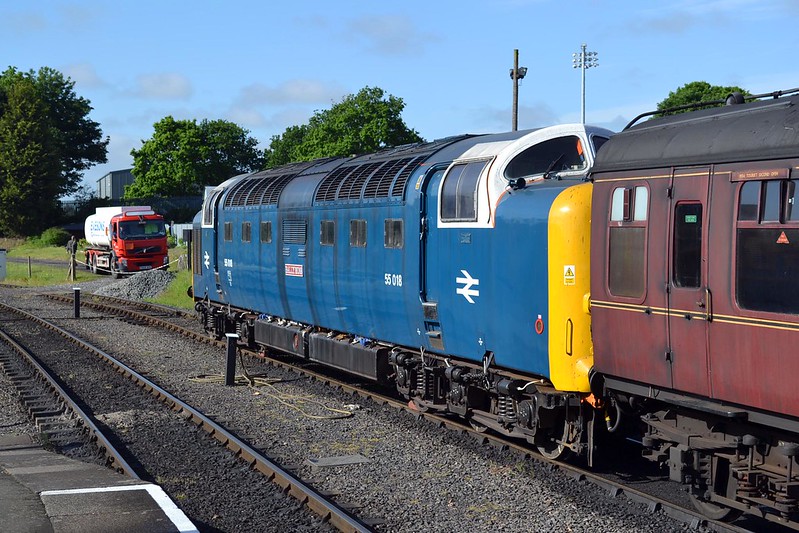
55 018 waits it's next turn at a Severn Valley Railway diesel gala
This wasn't the end of the Deltic story however, in the mid-1990s the Class 55s made a return to National Rail service with four being mainline certified [4] and are often used for charter services.
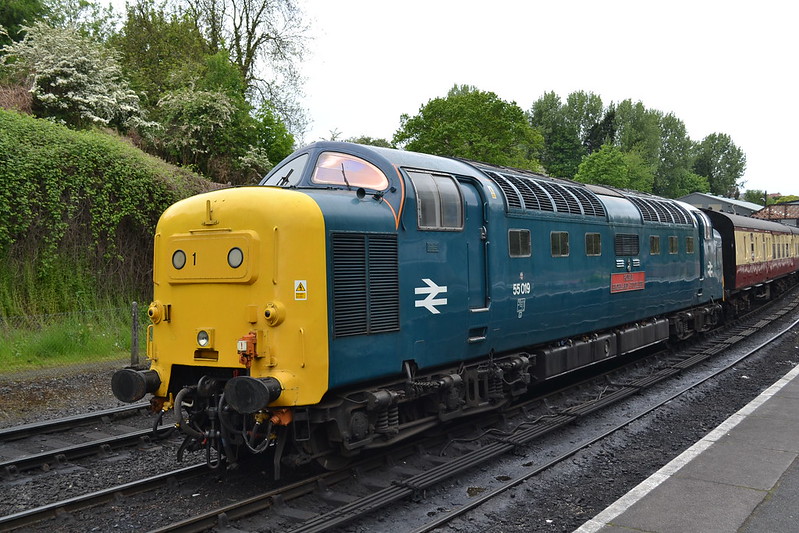
55 019 at Bridgnorth
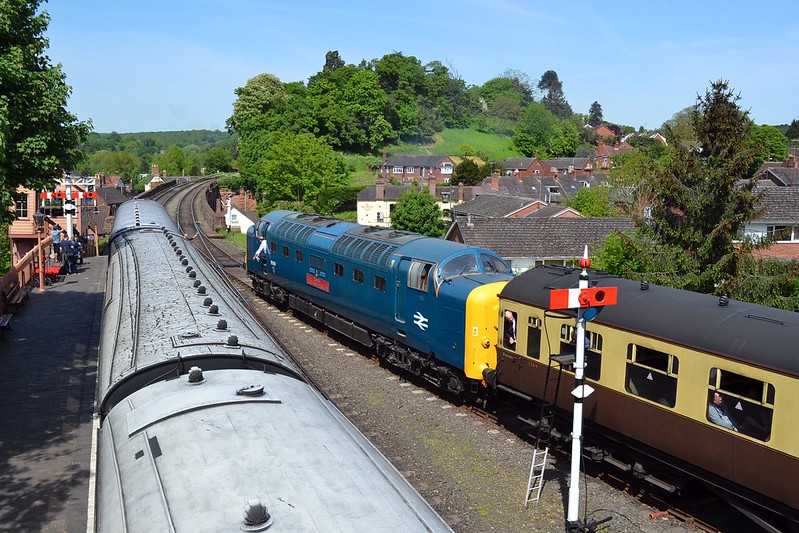
55 019 again, this time departing Bewdley
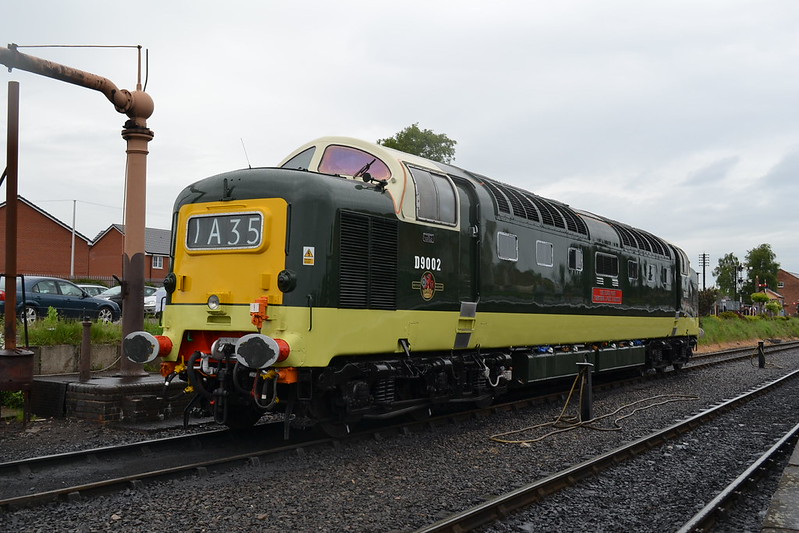
D9002 awaits it's next duty
[1] Brian Haresnape, Early Prototype and Pilot-Scheme Diesel Electrics (Ian Allan, 1981) p. 11
[2] Haresnape, Prototypes p. 31
[3] Brian Haresnape, Production Diesel Electrics Types 4 & 5 (Ian Allan, 1984) p. 42
[4] Colin J. Marsden, Traction Recognition (Second Edition) (Ian Allan, 2008) p. 48