
The Class 144 was the follow-on from the Class 143, and the final development of the Pacer. It has a Walter Alexander built body almost identical to the 143 but with a chassis built by BREL Derby.
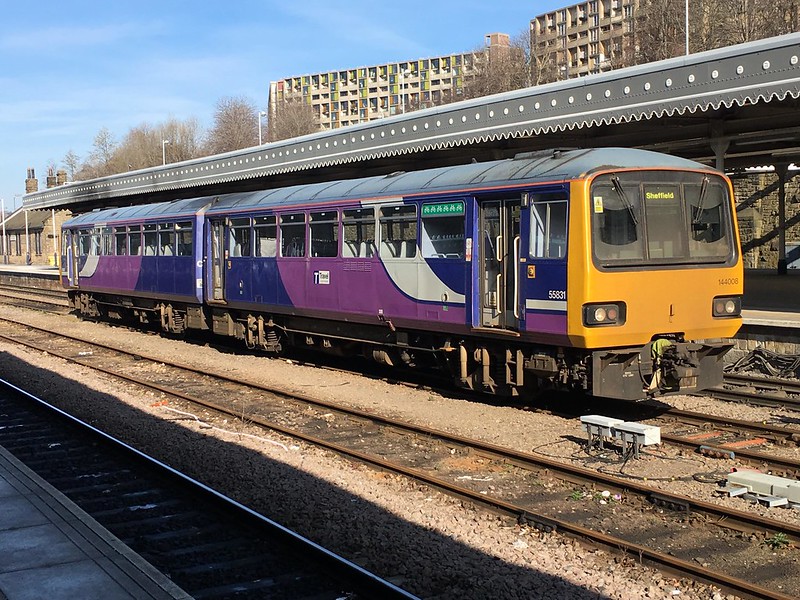
Northern 144 008 at Sheffield
| Information | |
|---|---|
| Number built: | 56 (23 2 and 3-car sets) |
| Built: | 1986-87 |
| Builder: | Walter Alexander / BREL Derby |
| Engine: | Cummins LTA10-R diesel per car |
| Power: | 450/675 hp (330/495 kW) |
| Formation: | (2-car) Driving Motor Standard (DMS)+Driving Motor Standard Lavatory (DMSL) (3-car) DMS+Motor Standard (MS)+DMSL |
The Class 144 was ordered for services in West Yorkshire [1]. To cope with an increase in passenger demand, West Yorkshire PTE later ordered ten extra Motor Standard trailers to augment ten trains to 3-cars. These were the only vehicles in the large Pacer fleet to have no driving cabs. The Class 144 was originally built with Leyland TL11 engines but these were later replaced by Cummins diesels. The original transmission has also been replaced with a Voith diesel-hydraulic system [2].
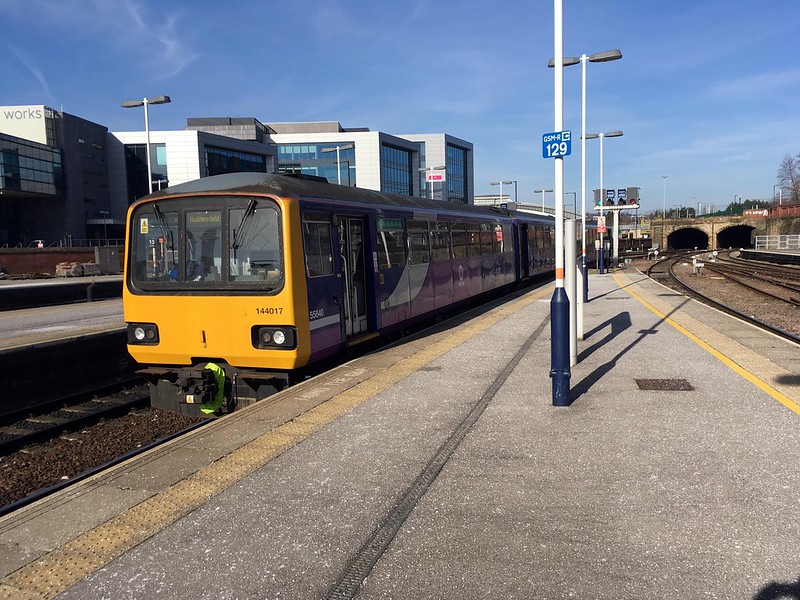
144 017 arrives at Sheffield
As with the rest of the Pacer fleet the Class 144s were withdrawn during 2020. One Class 144 was experimentally modified as the Class 144e (for Evolution) to meet future accessibility standards and had an accessible toilet and a new interior/seating [3], however no others were modified to 144e standard and replacement stock was instead ordered.
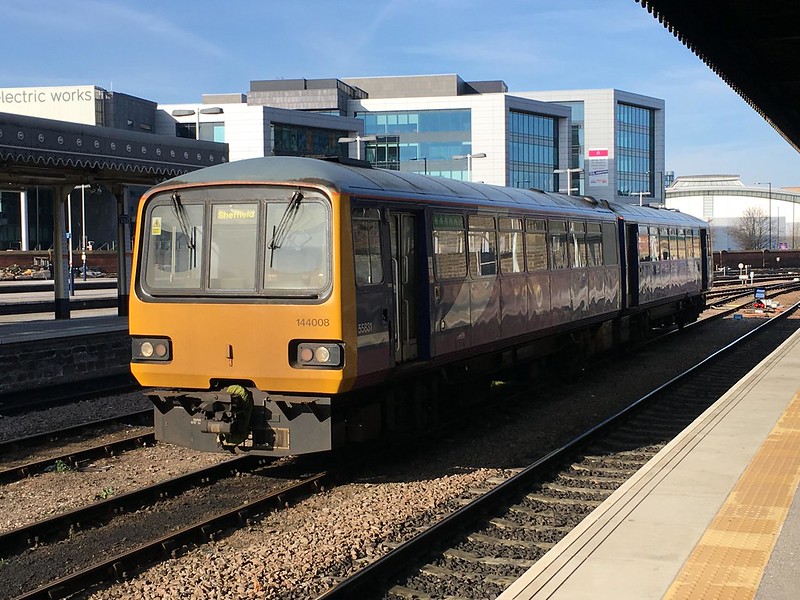
Another view of 144 008
Thirteen Class 144s have been preserved with a number of others sold on for non-railway use including a couple which will become school classrooms!
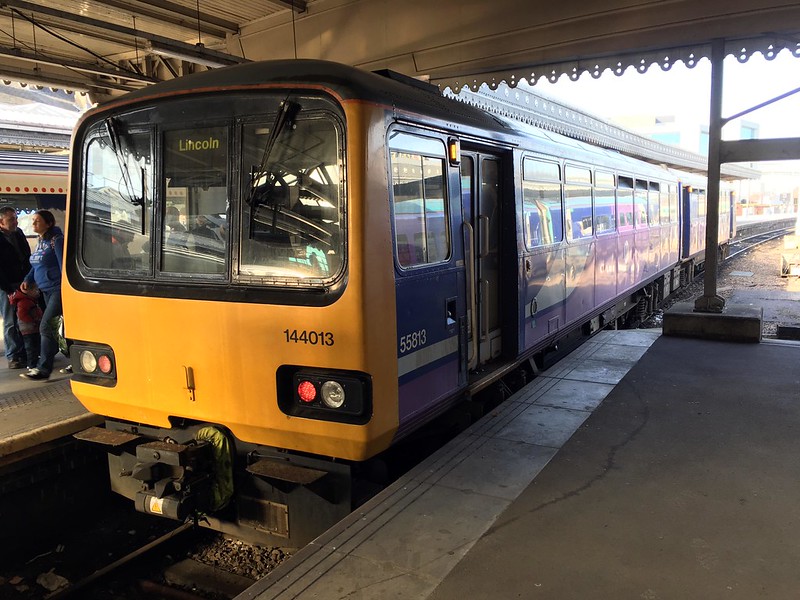
144 013 on arrival at Sheffield
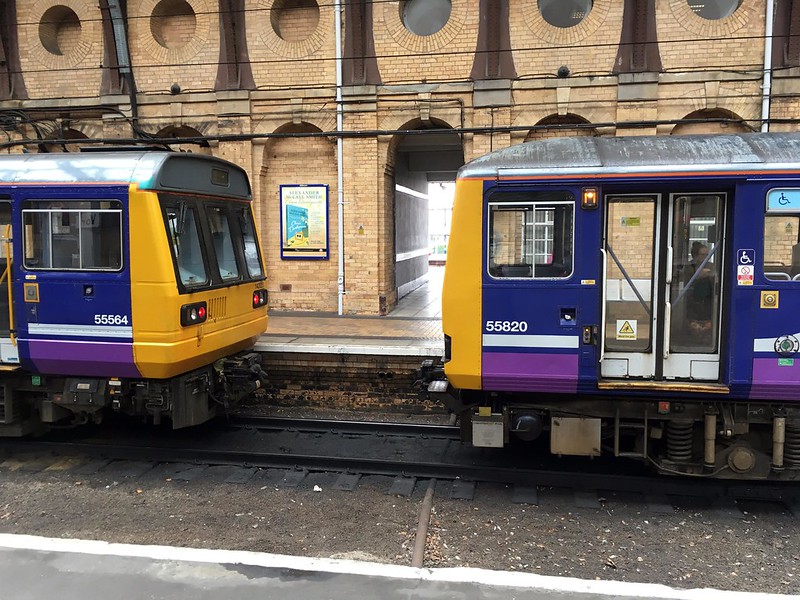
Pacer front end comparison: Northern 142 023 and 144 020 at York
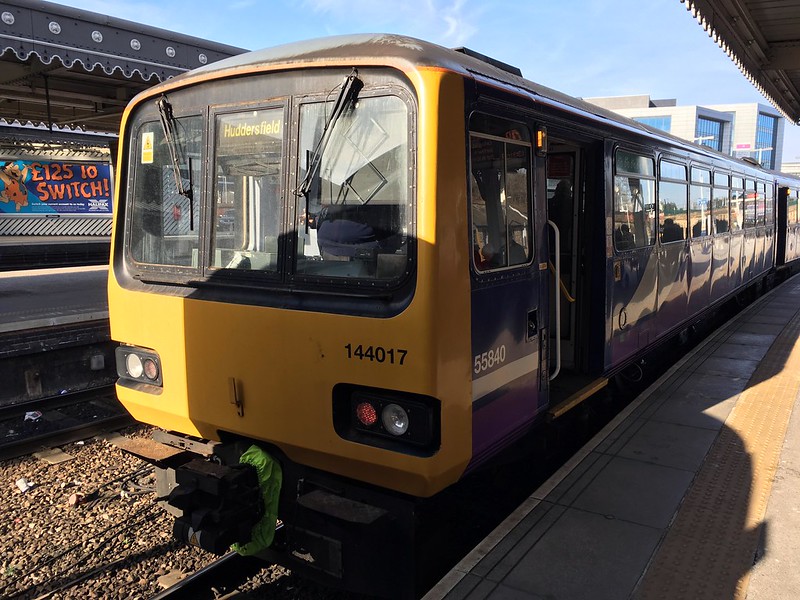
144 017 prepares to depart
[1] Brian Haresnape, Diesel Multiple Units: The Second Generation and DEMUs (Ian Allan, 1986) p. 78
[2] Colin J. Marsden, DMU and EMU Recognition Guide (Ian Allan, 2013) p. 127
[3] Colin J. Marsden, Rail Guide 2016 (Ian Allan, 2016) p. 91