
The Class 143 is one of the Pacer family of diesel multiple units. It was built at the same time as the Class 142 and is also a railbus design marrying a bus or coach type body (built by coach builder Walter Alexander) to a chassis derived from a freight vehicle [1]. The Class 143 perhaps look a bit more like a train compared to the 142, the body of which retained more aspects of its Leyland National bus heritage. The follow-on Class 144 uses the same body as the Class 143 though with a different chassis [2].
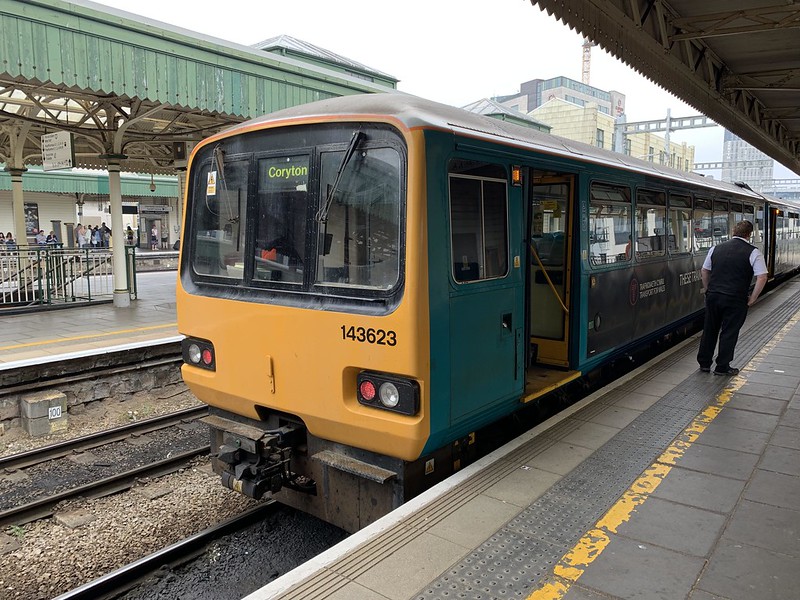
Transport for Wales 143 312 at Cardiff Central
| Information | |
|---|---|
| Number built: | 50 (25 2-car sets) |
| Built: | 1985-86 |
| Builder: | Walter Alexander / Andrew Barclay |
| Engine: | Cummins LTA10-R diesel per car |
| Power: | 450hp (330kW) |
| Formation: | DMS (Driving Motor Standard)+DMSL (Driving Motor Standard Lavatory) |
Originally the 143s worked for British Rail's Provincial Sector and the Tyne & Wear PTE. In the privatised era they are operated by GWR and Transport for Wales (formerly Arriva Trains Wales). Like the 142s, their original transmission has been replaced with a Voith hydraulic one.
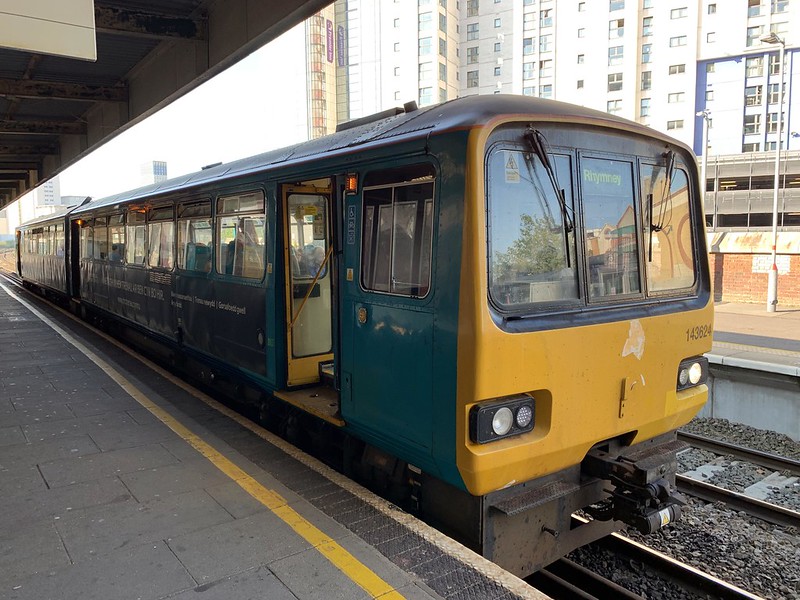
Transport for Wales 143 624 at Cardiff Queen Street
As with the other Pacer designs, the 143s were due to be withdrawn by 2020 though the Class 143 managed to remain in service with Transport for Wales until the Spring of 2021. Nearly half the fleet (11) have been preserved.
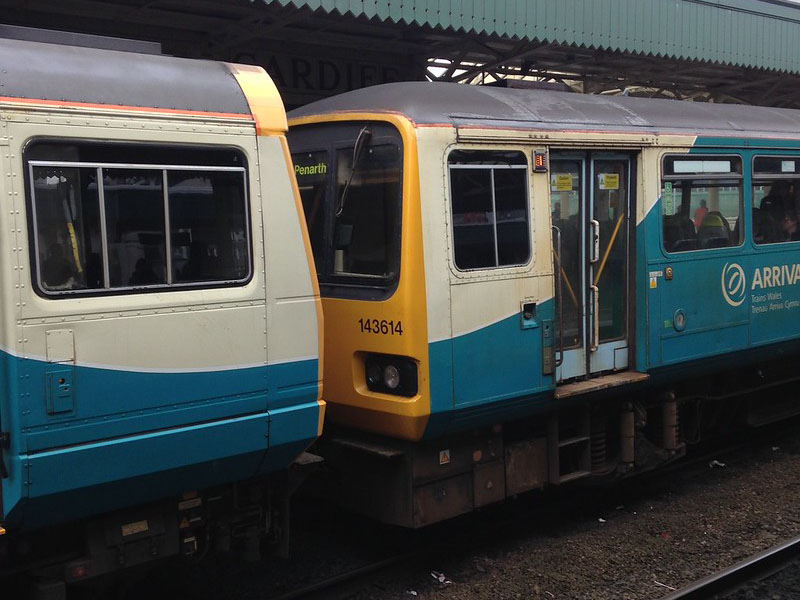
Front end comparison: ATW 143 614 (and a Class 142) at Cardiff Central
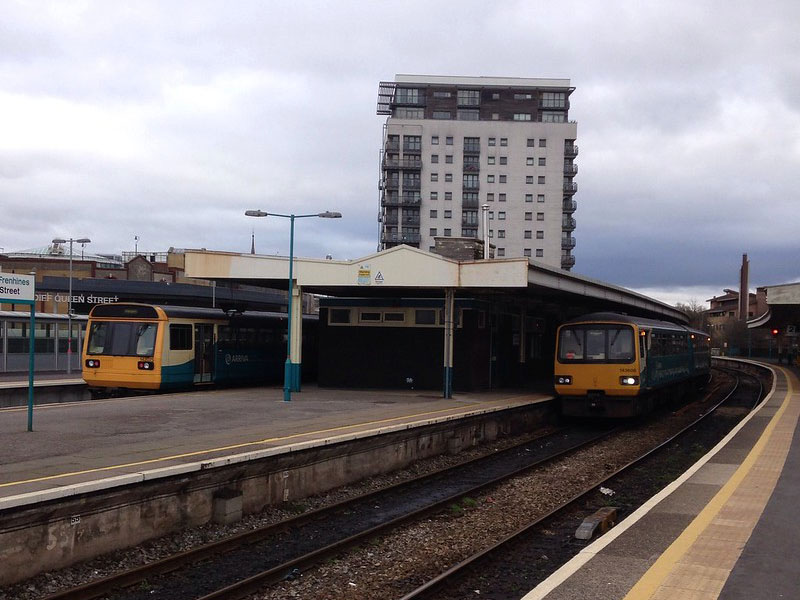
ATW 142 075 and 143 606 at Cardiff Queen Street
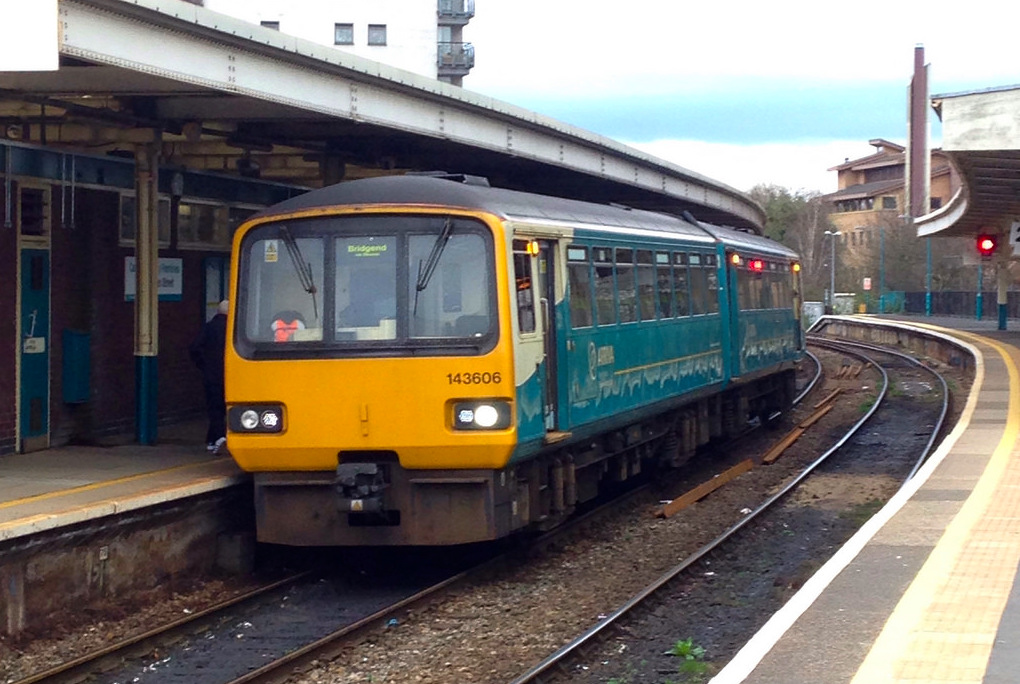
Arriva Trains Wales 143 606 at Cardiff Queen Street
[1] Colin J. Marsden, DMU and EMU Recognition Guide (Ian Allan, 2013) p. 125
[2] Brian Haresnape, Diesel Multiple Units: The Second Generation & DEMUs (Ian Allan, 1986) p. 70