
The town of Runcorn is on the river Mersey at the north western edge of the county.
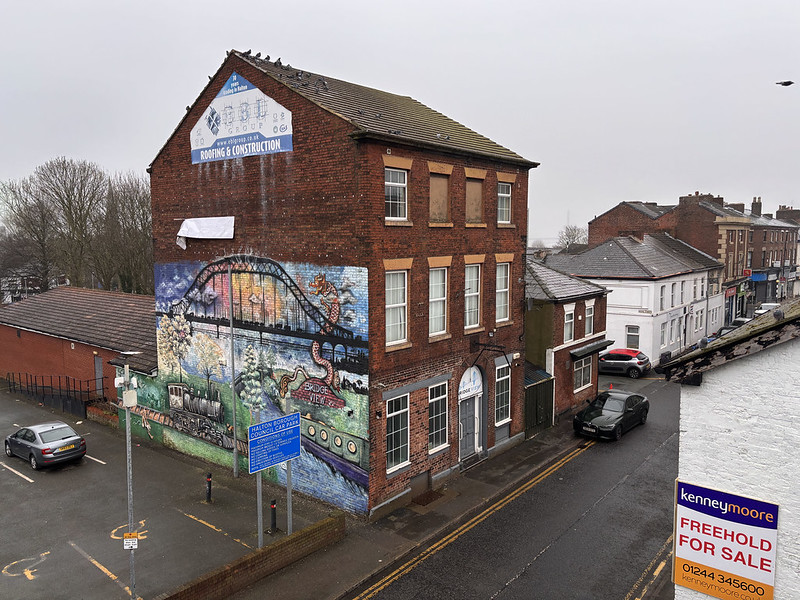
Building with a painted mural which celebrates Runcorn's transport heritage
Runcorn has Anglo-Saxon origins, it was founded by Æthelflæd of Mercia in the 10th century. Runcorn was known as Rumcofan in the Anglo-Saxon Chronicle, which means wide bay. Æthelflæd built a fort to protect the northern frontier of Mercia against Viking attacks.
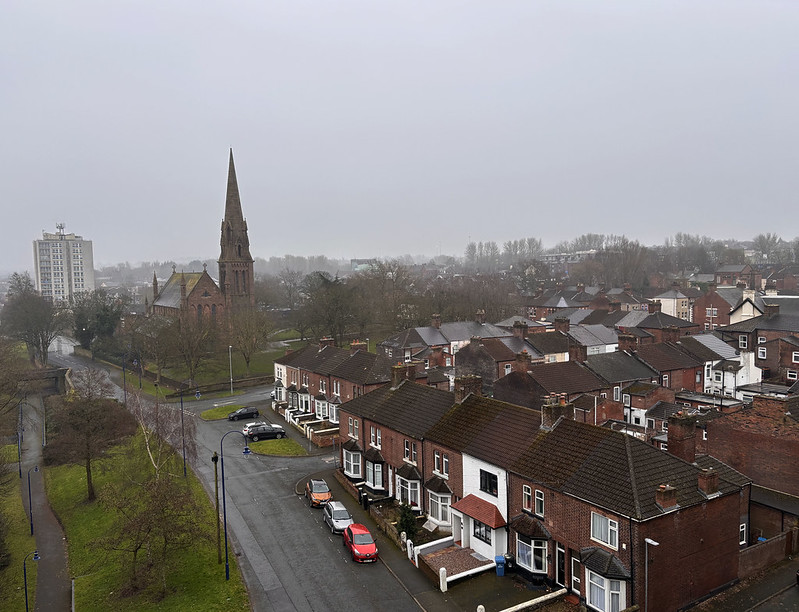
View of the town from the Silver Jubilee Bridge
Runcorn was not mentioned in the Domesday Book. An Augustinian priory was established in Runcorn in 1115, this later moved to nearby Norton. A castle was built by the Normans on nearby Halton Hill. This was held by the Royalists during the Civil War and later slighted.
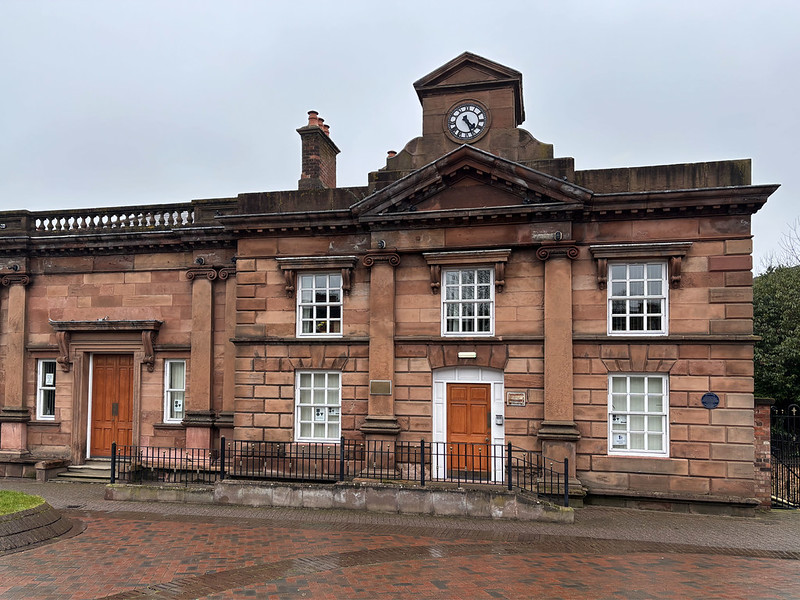
Inside the old town
Runcorn remained a small hamlet until the Industrial Revolution. Improvements to Mersey navigation and the building of canals gave Runcorn good connections with the sea and the English interior. A port was developed at Runcorn and some associated industries including ship building. In the 19th century, Runcorn became well known for the chemical industry. The Manchester Ship Canal was opened in 1894.
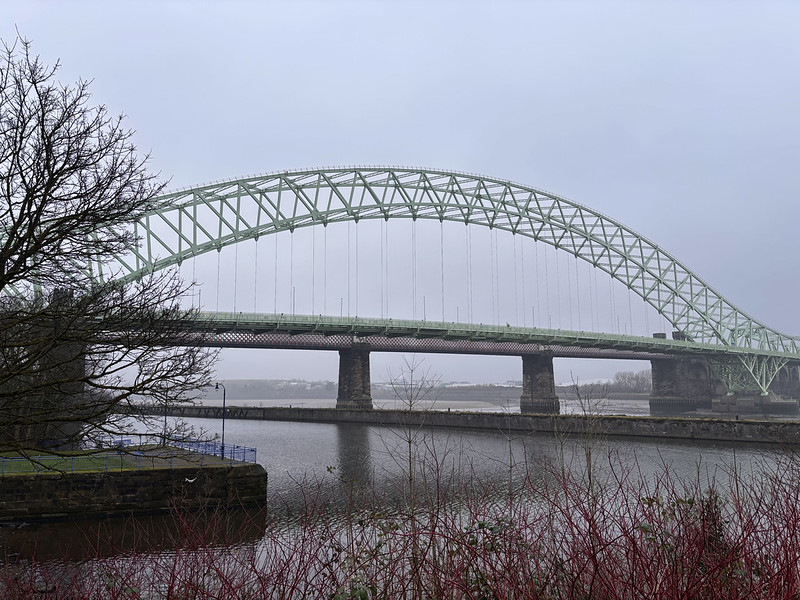
Silver Jubilee Bridge
In the 1960s, Runcorn was identified as a new town and the population doubled with new housing estates in the south and east of the town. A bridge was first opened across the Mersey linking Runcorn directly with Widnes on the other side of the river in 1905 by road. This was replaced by a new bridge, nowadays known as the Silver Jubilee Bridge in 1961. The railway bridge alongside was opened in 1868 and nowadays carries the Liverpool branch of the West Coast Main Line.
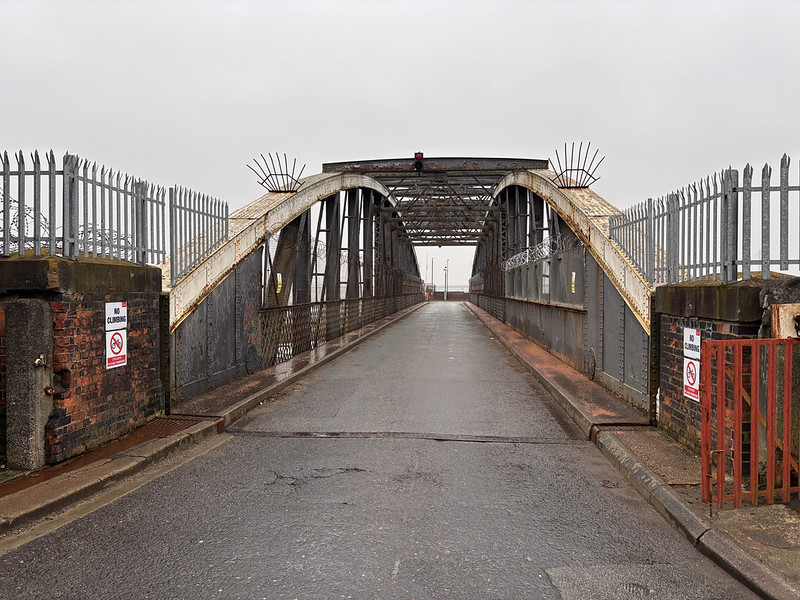
Old Quay Swingbridge over the Manchester Ship Canal
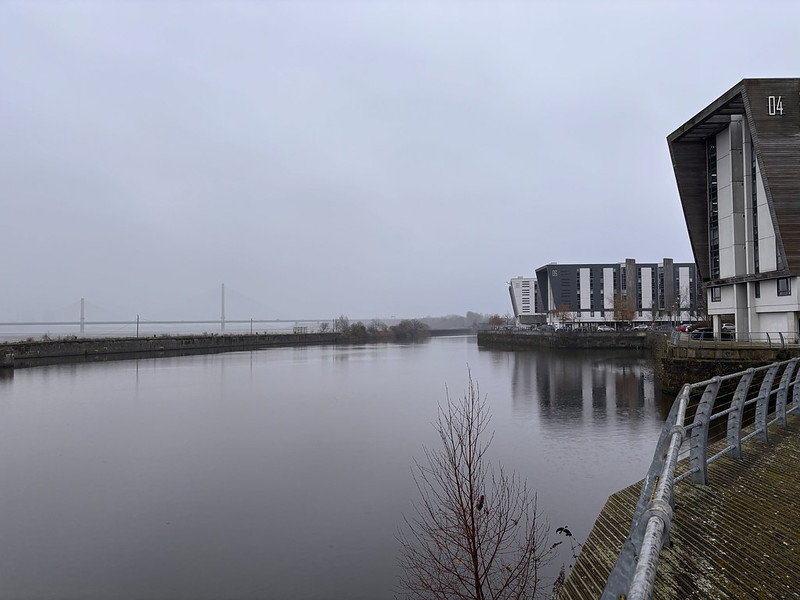
Manchester Ship Canal and modern canal side developments
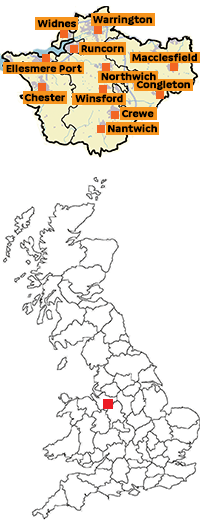
Location