
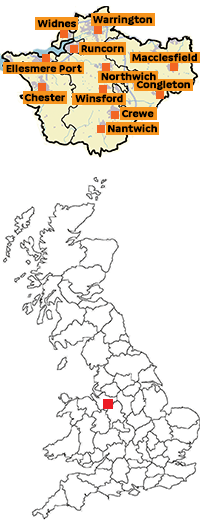
Widnes is a town on the opposite side of the river Mersey from Runcorn. Up until 1974, Widnes was part of Lancashire.
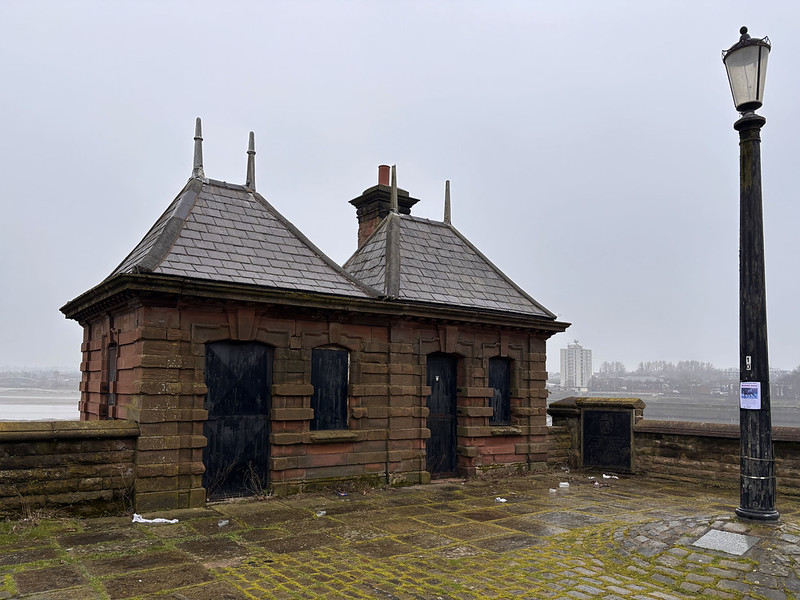
On the banks of the Mersey, Runcorn can be seen in the background
There has been habitation in the area since at least the Stone Age. Widnes was on the southern border of the Danelaw. Widnes' name may come from the Danish vid noese or wide nose. This may refer to the river Mersey which is wide at this point.
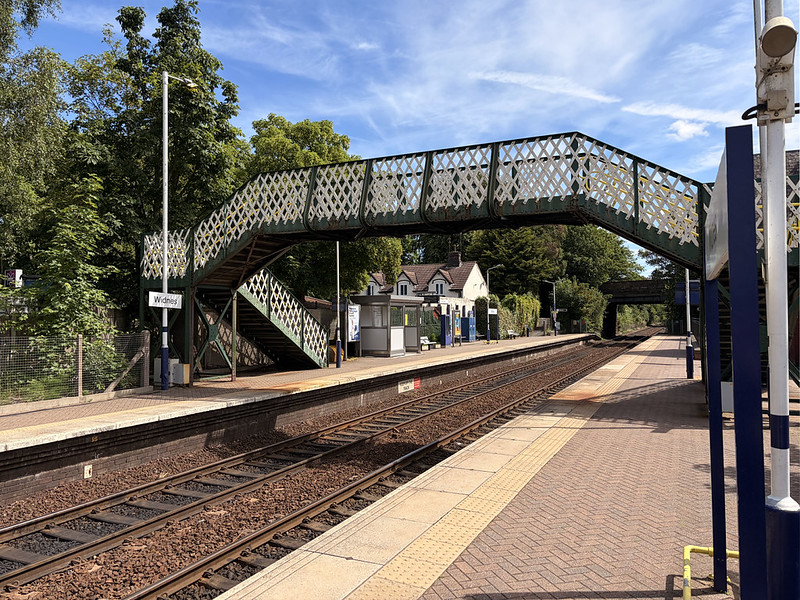
Widnes railway station
New transport links including the Sankey Canal and the railways helped Widnes grow. It became a major centre of the chemical industry. This helped Widnes grow with a large influx of workers but it also gave it a reputation for pollution and being a harsh unhealthy place to live.
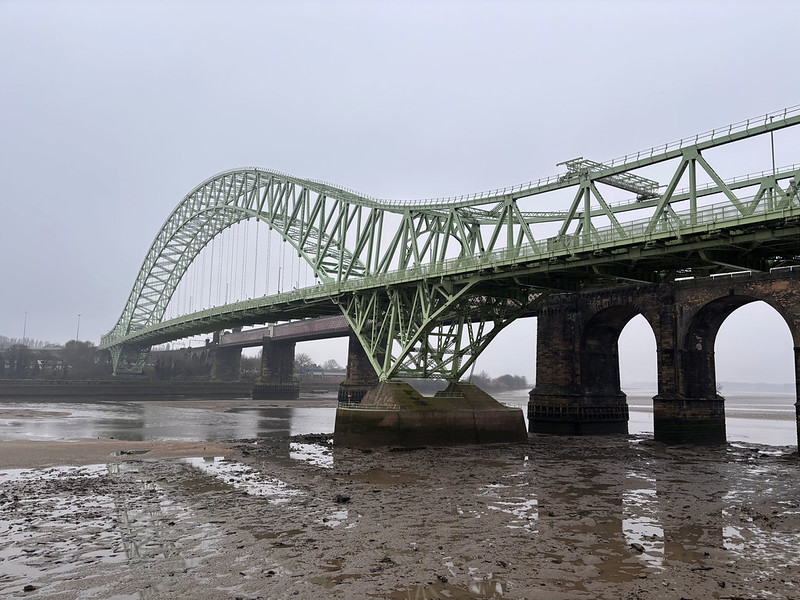
Silver Jubilee Bridge
The chemical industry still exists in Widnes though on a smaller, and much more environmentally friendly, scale. A number of river crossings are at Widnes including the Silver Jubilee Bridge which opened in 1961. Hough Green and Widnes railway stations were opened in the early 1870s.
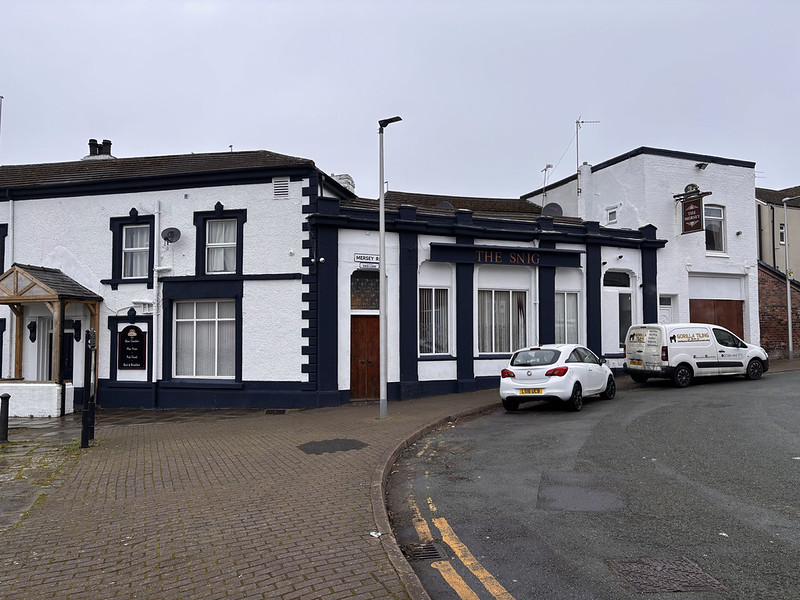
The Snig pub
St Mary
The parish church of St Mary is in the West Bank area of Widnes overlooking the Mersey. It was opened in 1910, replacing an earlier church which had been built on unsuitable land.
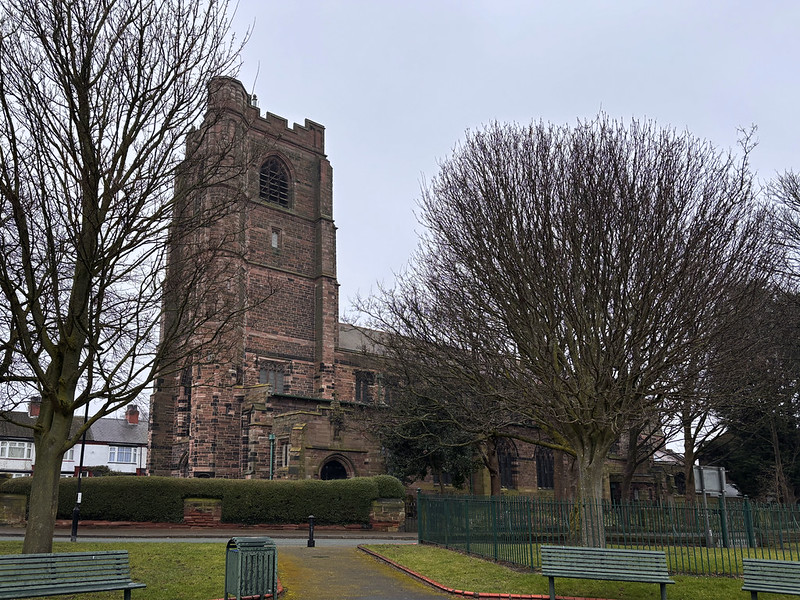
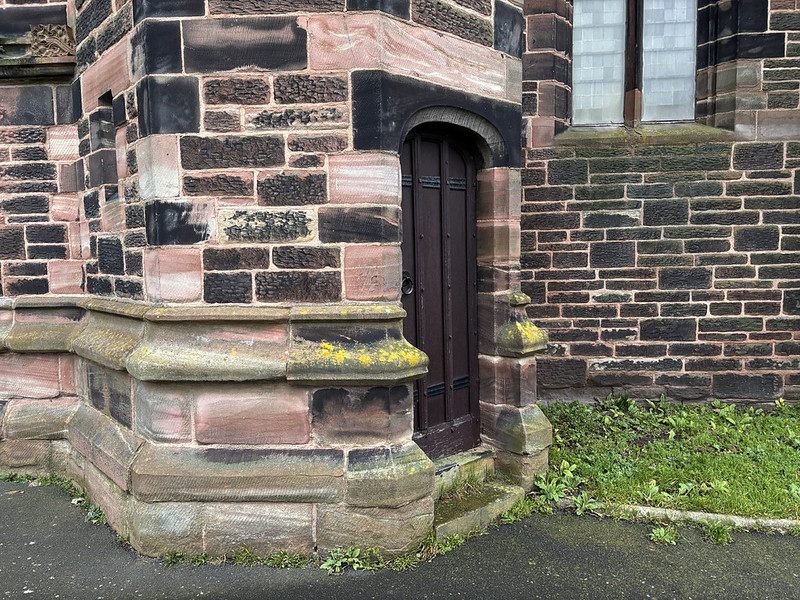
The church is built from red flecked sandstone. The church is in the Perpendicular style and has a give bay nave with north and south aisles and a clerestory. The church has a south transept where there is a Lady chapel and a west tower.
Location