
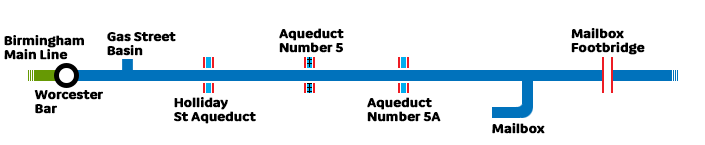
At the Birmingham end of the Worcester & Birmingham Canal it connects to the Birmingham Main Line. The Worcester & Birmingham Canal was not part of the Birmingham Canal Navigations network, and the first twenty years of the canal's life there was a physical barrier between the two canals known as the Worcester Bar. This was largely due to the difference in the water levels between the two canals and hence the need to avoid water loss.
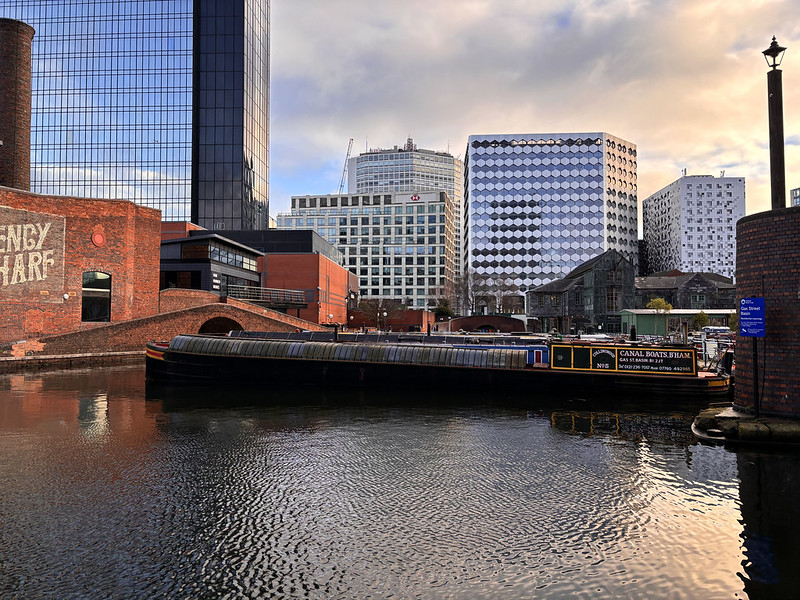
Gas Street Basin
Cargos had to be unloaded from boats on one canal and carried across to be re-loaded on a boat on the other canal. Thankfully, in 1815 a stop lock was installed and the bar removed. Later on the Worcester & Birmingham raised their water level and the lock gates were removed.
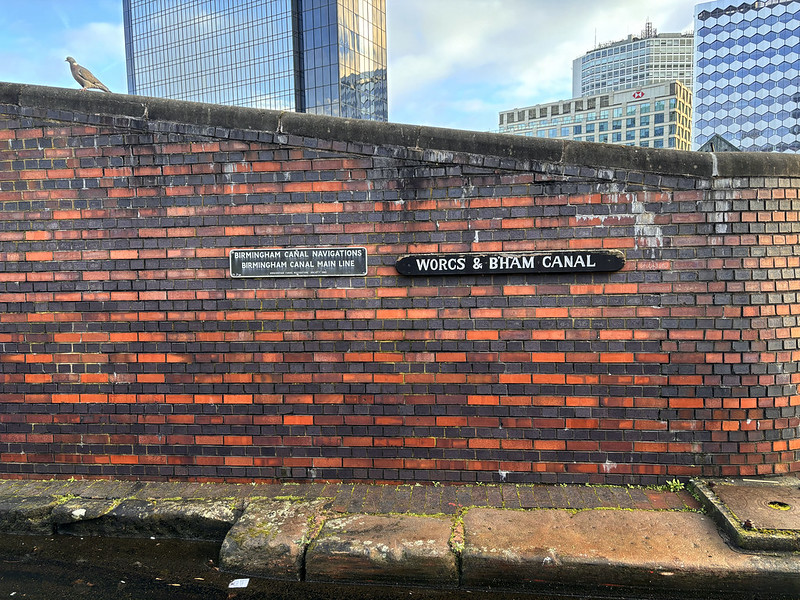
Worcester Bar was located here
Gas Street was a busy basin where boats were loaded and unloaded, of course these days it is a place for leisure boaters to moor.
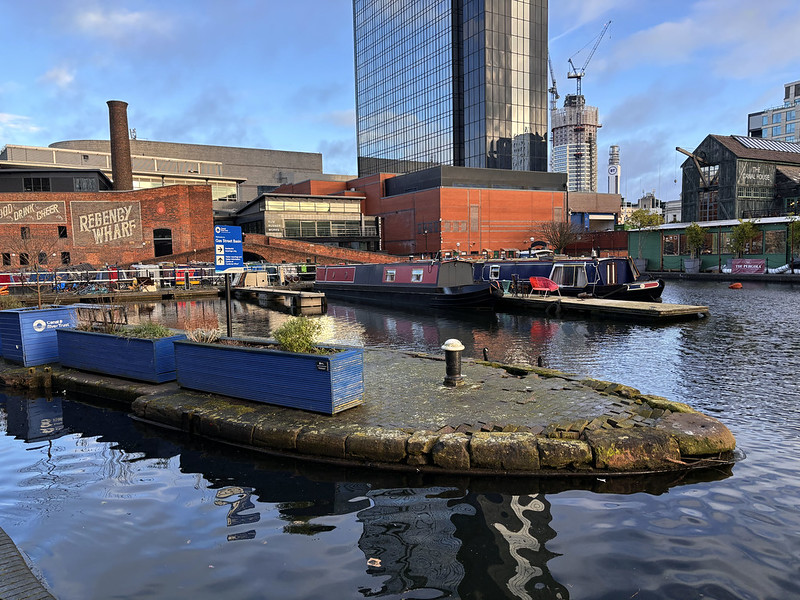
Another view of Gas Street Basin
Moving away from Gas Street the canal passes over three aqueducts, the most impressive being the Holliday Street Aqueduct. This is built from cast iron in 1870 and is now a listed structure. The canal also passes over a railway line (Cross City Line) and a disused railway tunnel.
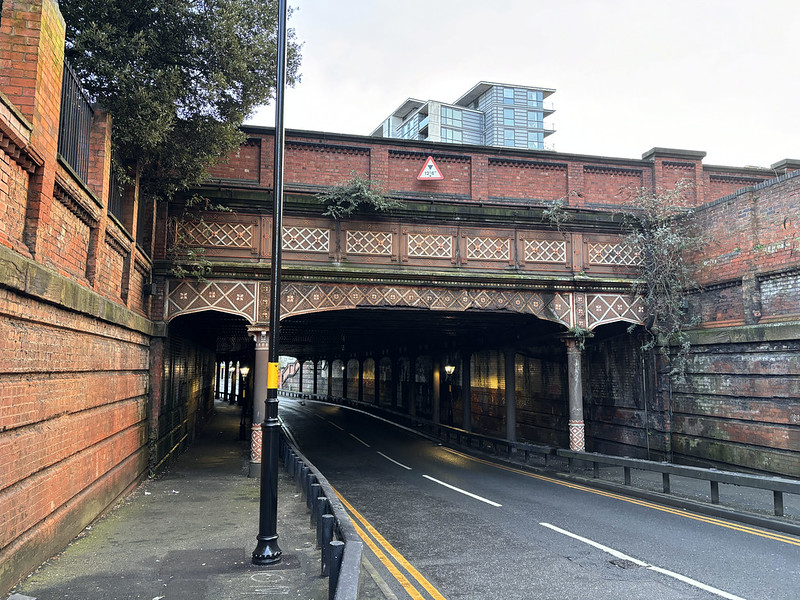
Holliday Street Aqueduct
The commercial terminus of the canal was Worcester Wharf, which had a railway goods yard as well as canal wharves for the transfer of goods. In 1970 the Royal Mail opened a new main sorting office in Birmingham, this had a tunnel linking it to Birmingham New Street railway station. In the late 1990s the sorting office site was sold and it has gone on to become the centre of a major redevelopment of the area.
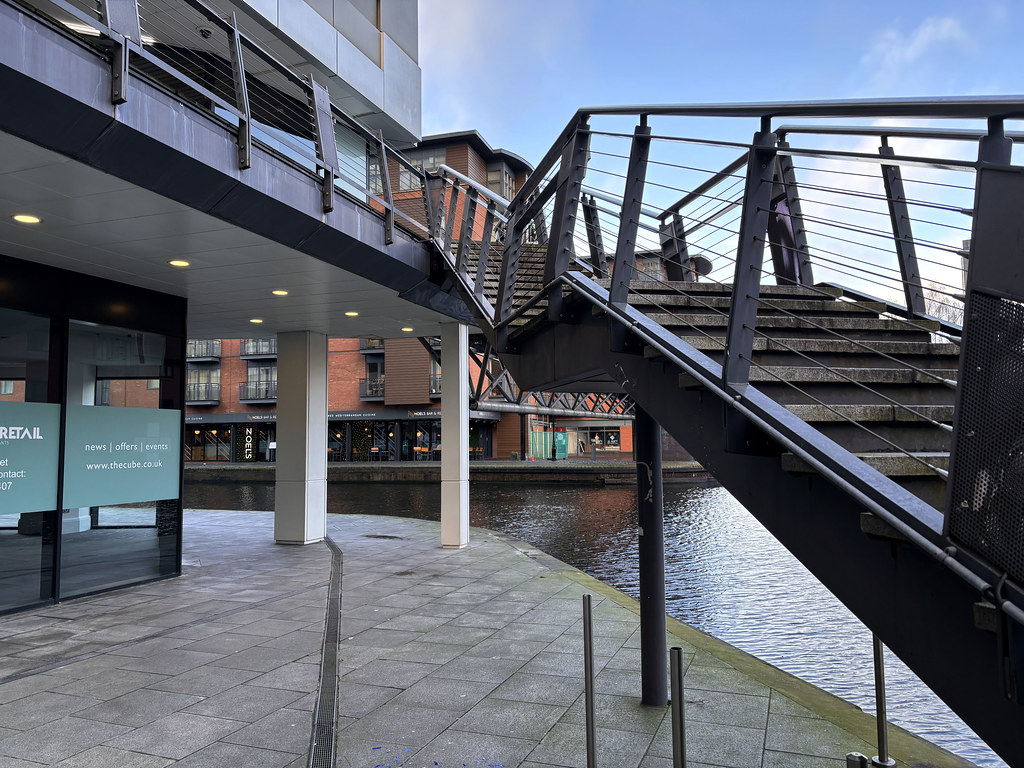
Mailbox footbridge
A far cry from the canal's cargo carrying days of course but a perfect symbol of the leisure orientated waterway of the 21st century.
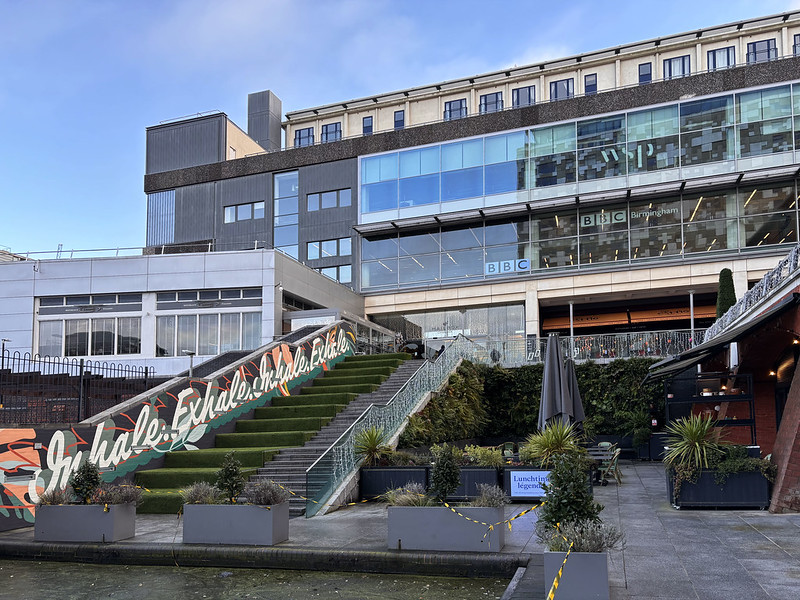
Mailbox


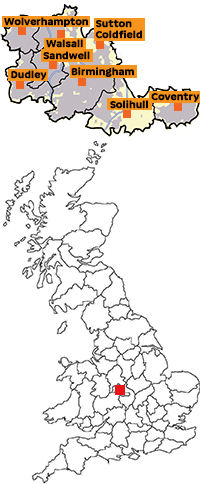
Location
