
The 1938 Tube Stock was built as part of London Underground's New Works Programme of the late 1930s, they became one of the most successful - if not the most successful - types of British train ever. The 1938 Tube Stock served on the Underground for fifty years and, in the guise of the Class 483 remained in service on the Isle of Wight until 2020, over 80 years after their first entry in service!
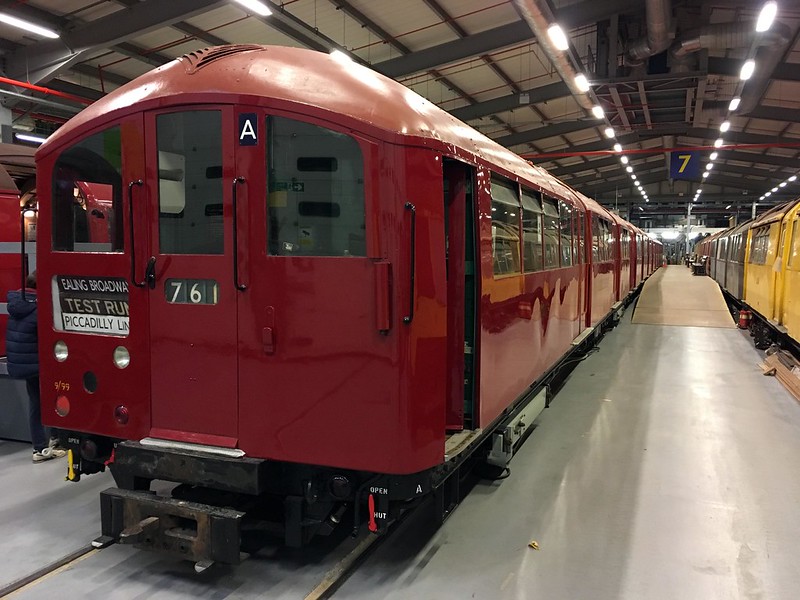
Preserved 4-car set at LTM Depot Acton
| Information | |
|---|---|
| Number built: | 1, 121 (plus 173 additional builds & conversions) |
| Built: | 1938-47 |
| Builder: | Metro-Cammell / Birmingham Railway Carriage & Wagon Company |
| Engine: | 2 General Electric or Crompton Parkinson LT100 traction motors per motor car (630v DC fourth rail) |
| Formation: | (4+3 7-car formation) Driving Motor (DM)+Trailer (T) +Non-Driving Motor (NDM)+DM(+DM+T+DM) |
In the late 1930s London Underground began an expansion programme known as the New Works Programme, new lines required new trains. Even before the huge Standard stock order had been completed, London Underground were planning the next generation of tube trains. A number of experimental trains were built known as the 1935 Tube Stock. These were an advance on the Standard stock, improvements in technology meant that the switching equipment could be fitted underneath the body instead of occupying space behind the driving cabs [1]. A number of these trains were streamlined to experiment with high-speed tube trains, however the streamlining idea, which was unpopular with the senior management at London Underground (though apparently popular with the public), was later dropped.
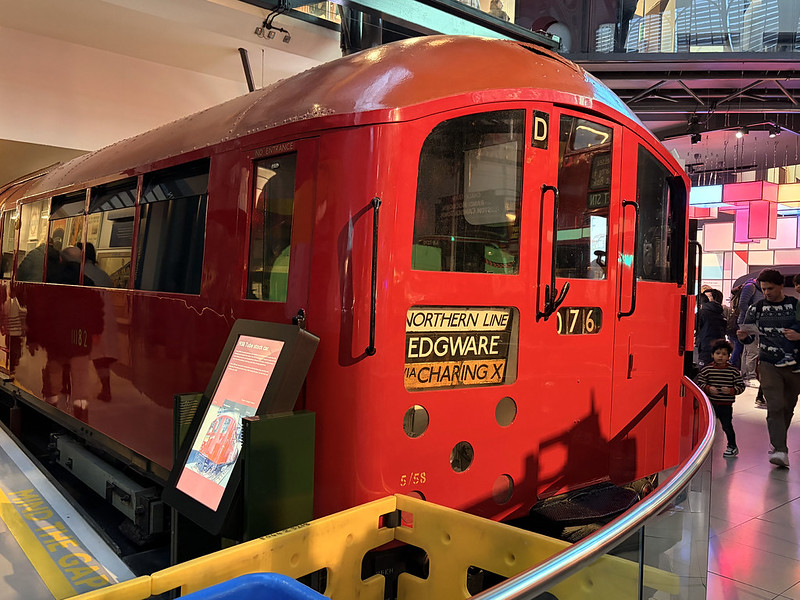
Preserved DM at London Transport Museum, Covent Garden
Having evaluated a number of types of equipment on the 1935 protoypes, London Underground decided on a final specification and placed huge orders for new stock to be known as 1938 Tube Stock. Most stock was delivered before the Second World War called a halt to development with the final twenty-seven outstanding cars built in 1946-47. The fleet was later augmented by 173 cars - a mixture of conversion of Standard and 1935 Tube Stock cars and ninety one new builds known as the 1948 Tube Stock (though identical to the 1938s).
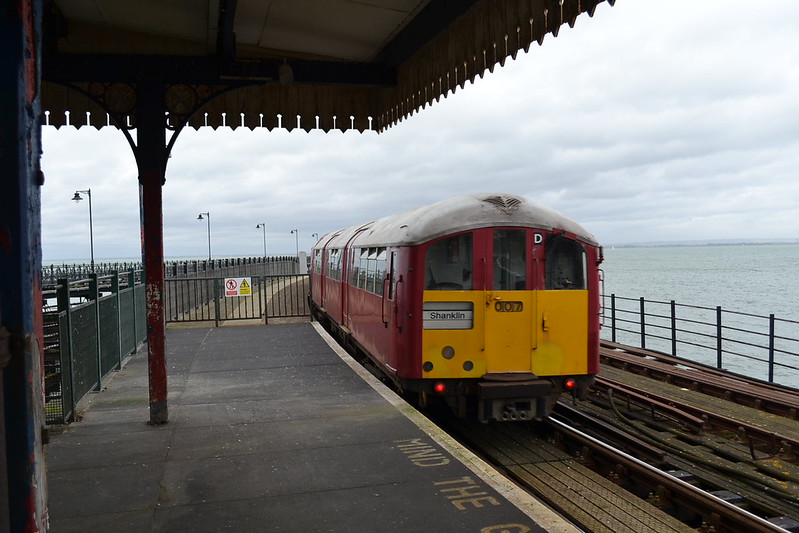
A Class 483 on the Isle of Wight
Initially the stock operated in 7-car formation, comprising a four and three car set semi-permanently coupled [2]. Later on, 9-car formations were used on the Northern Line [3]. During their long lives the 1938 Tube Stock worked on the Bakerloo, Central, East London, Northern and Piccadilly Lines. Withdrawals began in the early 1970s [4] though the 1938 Tube Stock remained in service on the Underground until 1988 when the final five trains (which had been refurbished to augment newer trains) were withdrawn by the Northern Line. These trains however were then sold to British Rail for a new life on the Isle of Wight as the Class 483 [5].
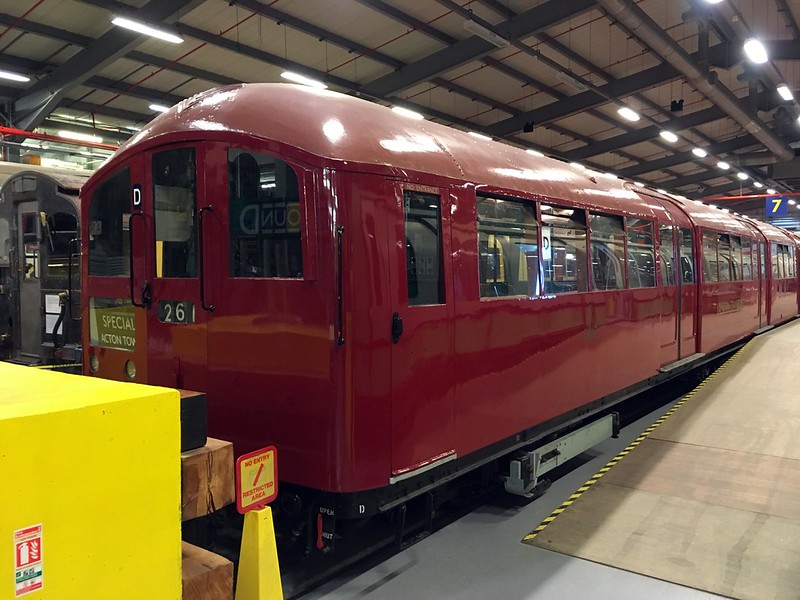
Another view of the preserved set at Acton
A working 4-car set of 1938 Tube Stock has been preserved [6] as well as another Driving Motor (and a couple of cabs) in museums. A number of Class 483s have also been preserved.
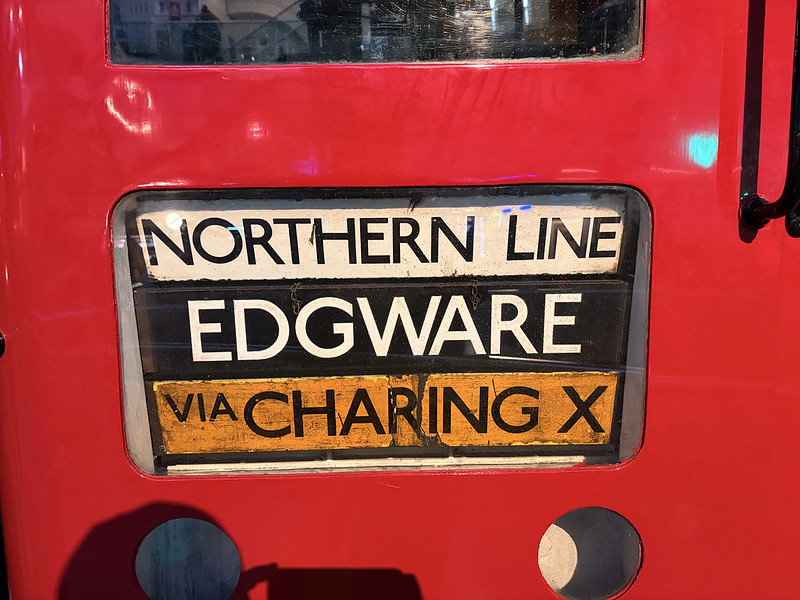
Front end destination display
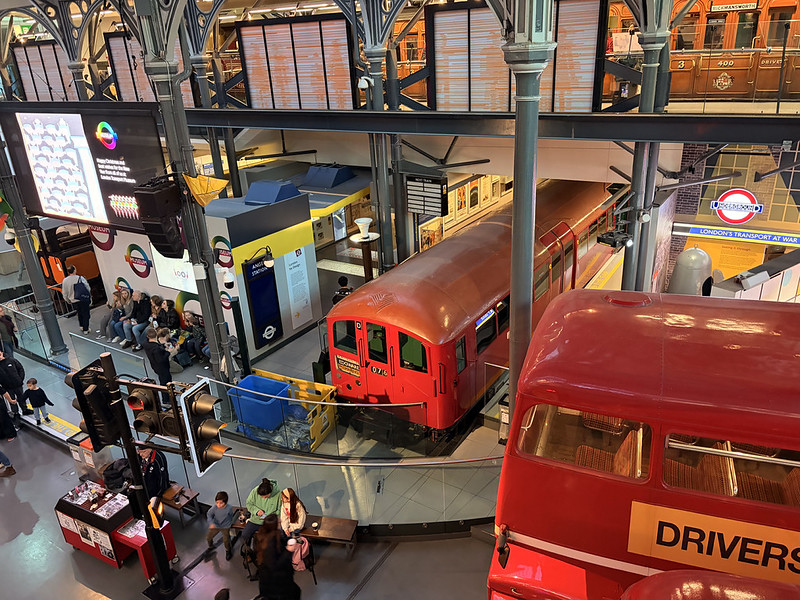
London Transport Museum
[1] Paul Moss, London Underground (Haynes, 2014) p. 95
[2] J. Graeme Bruce, The London Underground Tube Stock (Ian Allan, 1988) p. 77
[3] Brian Hardy, Underground Train File: Tube Stock 1933-1959 (Capital Transport, 2001) p. 66
[4] Bruce p. 81
[5] Brian Hardy, Tube Trains on the Isle of Wight (Capital Transport, 2003) p. 60
[6] Kim Rennie, Underground and Overground Trains (Capital Transport, 2017) p. 36