
British Rail finally got the go-ahead and funds for the electrification of the East Coast Main Line (originally it was supposed to have taken place at the same time as the WCML) in the 1980s. For the ECML, British Rail needed a new fleet of express passenger locomotive these were the Class 91 which were coupled to Mark 4 coaches in push-pull formation with a Driving Van Trailer on the other end [1].
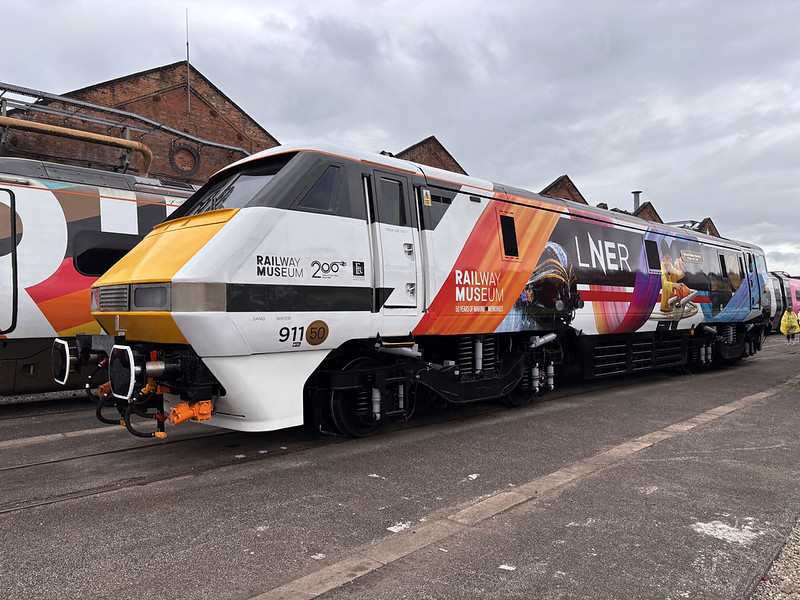
LNER 91 150 at Derby Litchurch Lane
| Information | |
|---|---|
| Number built: | 31 |
| Built: | 1988-91 |
| Builder: | BREL Crewe |
| Engine: | GEC G426 traction motors (25kV AC OHLE) |
| Power: | 6, 080 hp (4, 533 kW) |
| Wheel arrangement: | Bo-Bo |
This system was also called the Intercity 225 (replacing the Intercity 125 as it did on the ECML) the name referring to the fact they could go 225kp/h (140mp/h). However, this has been restricted to 125mp/h in everyday use. On a test train, one Class 91 reached 162mp/h in 1989 (the British locomotive speed record).
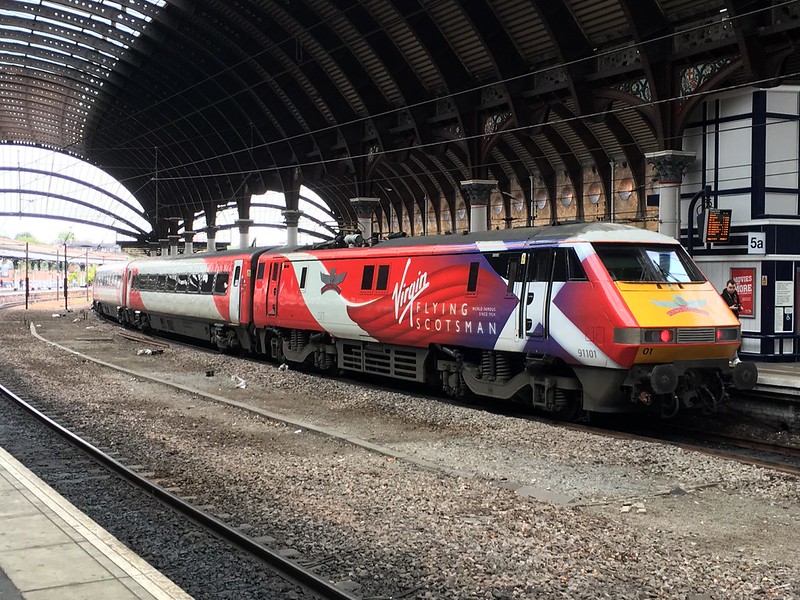
91 101 at York
Unusually the Class 91 has an asymmetric design with a streamlined cab at one end and a blunt ended one at the other. The Class 91 can operate fully in either direction though of course usually travels pointy-end first, especially when hauling an express. However, the Class 91 can travel at up to 110mp/h blunt end first. As built the Class 91s were 91/0s but became 91/1s after refurbishment [2].
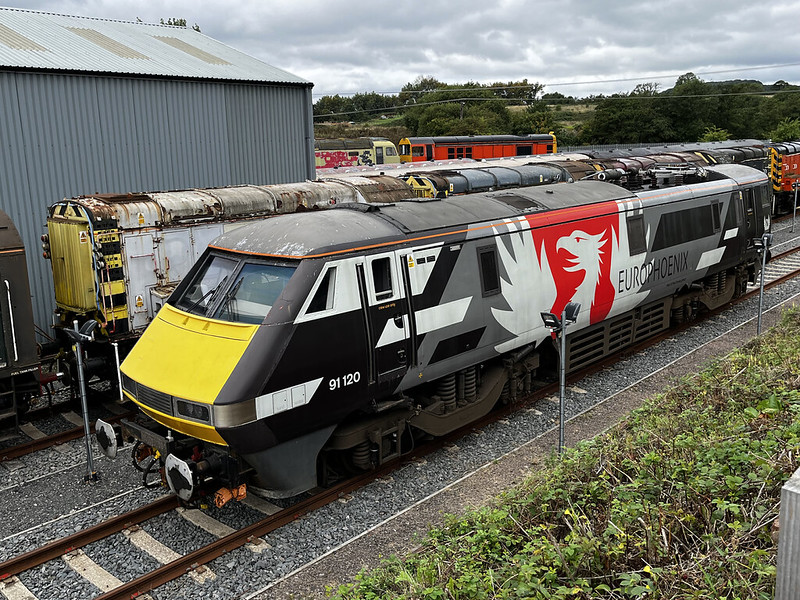
Europhoenix 91 120 at Barrow Hill
They remain on ECML duties though have being larged replaced by the Class 800 / 801. Ten have been retained by their current operator LNER to augment services.
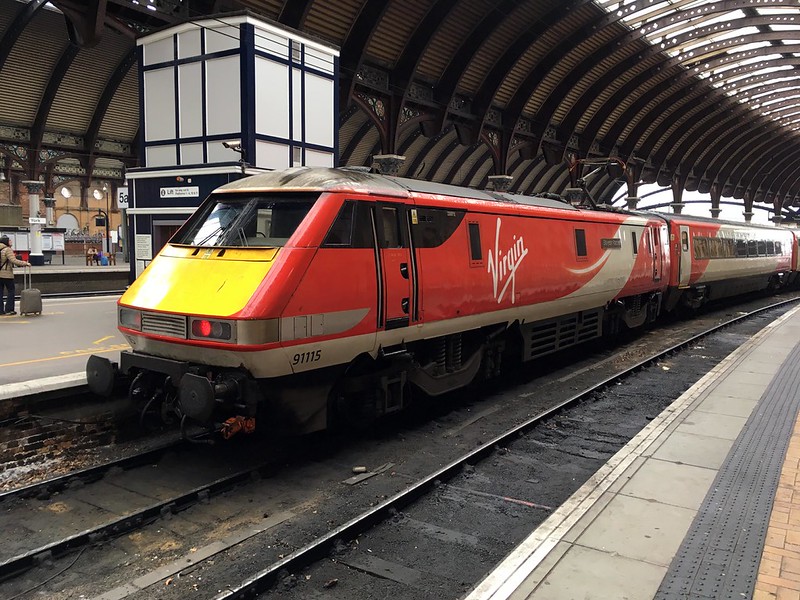
91 115 at York in Virgin East Coast livery
The final LNER Class 91s are due to be replaced by the Class 897 by the end of the 2020s. A couple are owned by Railway Operations Group/Europhoenix for testing and possible use on electric freight services.
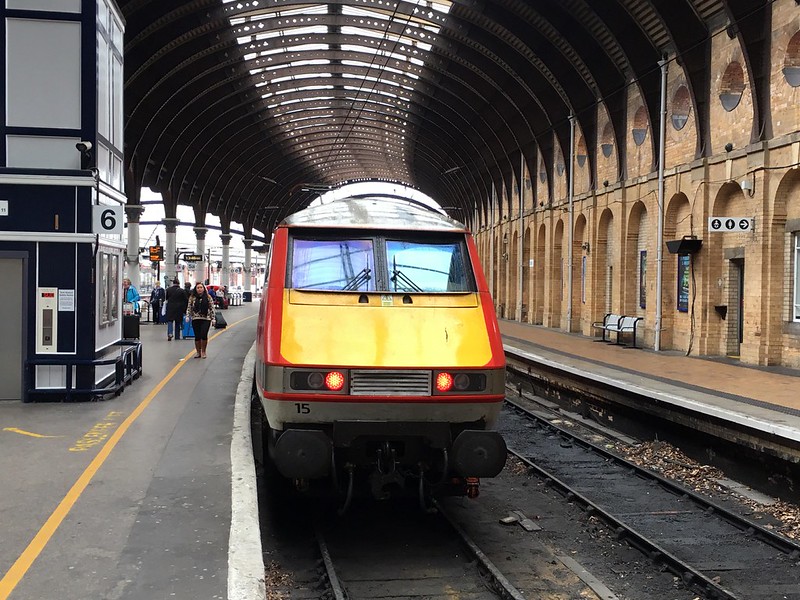
Front end of 91 115
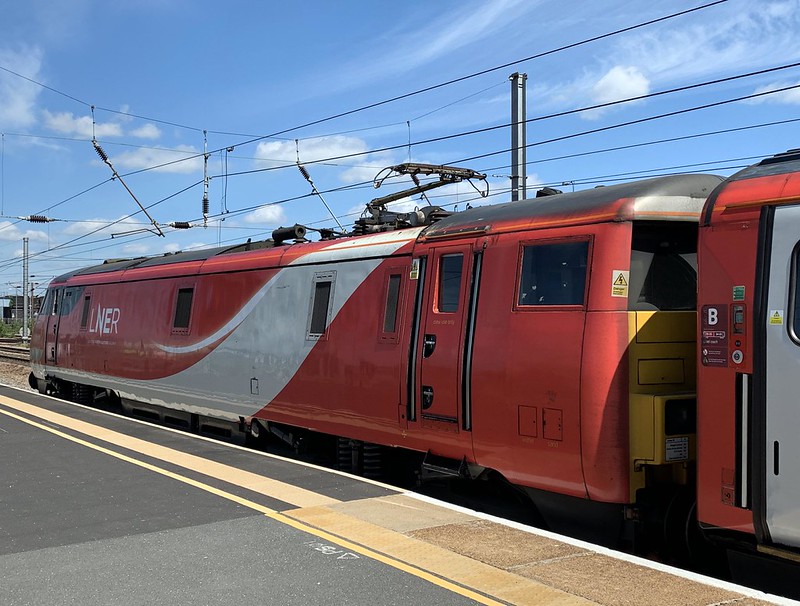
The blunt end of 91 131 is visible here during a stop at Peterborough
[1] Gavin Morrison, AC Electric Locomotives (Ian Allan, 2013) p. 80
[2] Colin J Marsden, Traction Recognition (Ian Allan, 2011) p. 92