
The EM2 electric locomotive (later Class 77) was built to haul express passenger services over the Woodhead route, which had been electrified to 1,500v DC overhead post-war) alongside the earlier mixed-traffic Class 76. The Class 77 was based on the Class 76 though were larger and more powerful and had Co-Co bogies - a result of the ride problems the Class 76 Bo-Bo bogies had at speed [1].
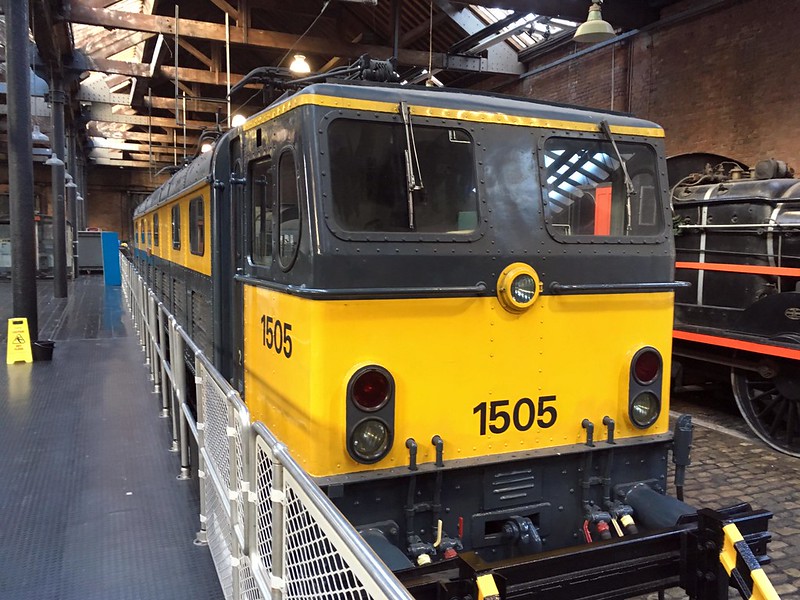
NS 1505 preserved at MOSI Manchester
| Information | |
|---|---|
| Number built: | 7 |
| Built: | 1953-54 |
| Builder: | BR Gorton |
| Engine: | 6 Metropolitan-Vickers 146 traction motors (1500kV DC OLHE) |
| Power: | 2, 490 hp (1, 857 kW) |
| Wheel arrangement: | Co-Co |
Originally twenty seven locomotives were planned but in the end only seven were, some later build Class 76s were instead fitted with train heating boilers and improved bogies for passenger duties.
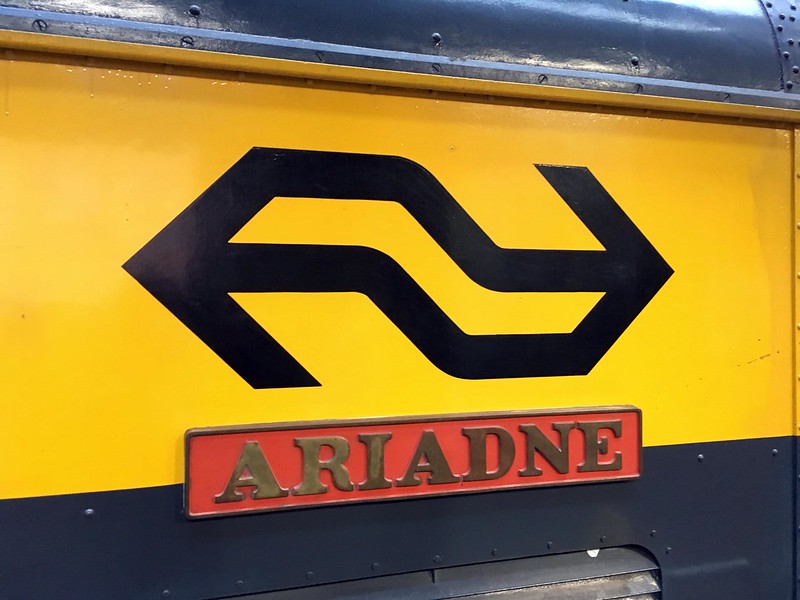
NS 1505 carried the name Ariadne in BR service
They entered service in the mid-1950s hauling expresses between Manchester Piccadilly and Sheffield Victoria [2]. However, their British Railways career was short. They were withdrawn in 1968 as passenger services along the Woodhead route were phased out (the line and the Class 76 remained in service for freight until 1981).
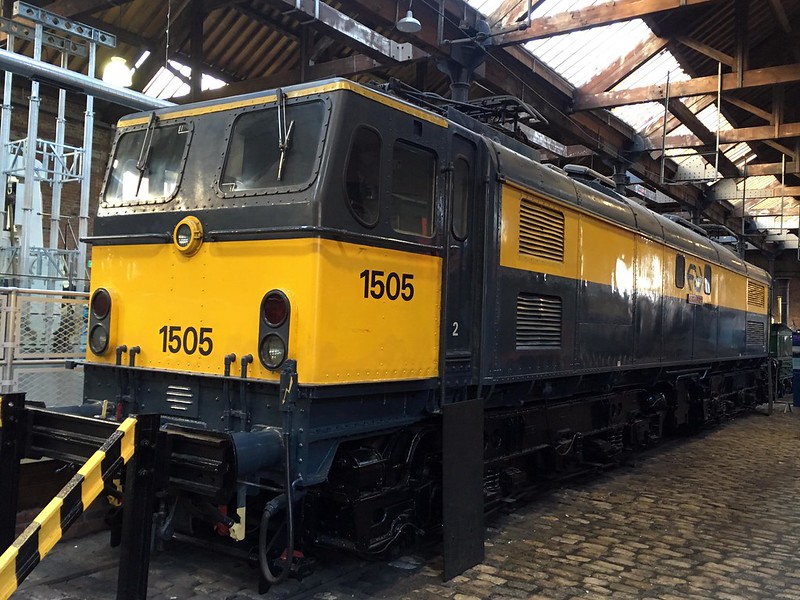
In NS service the locomotives received new cab light clusters on the cab ends
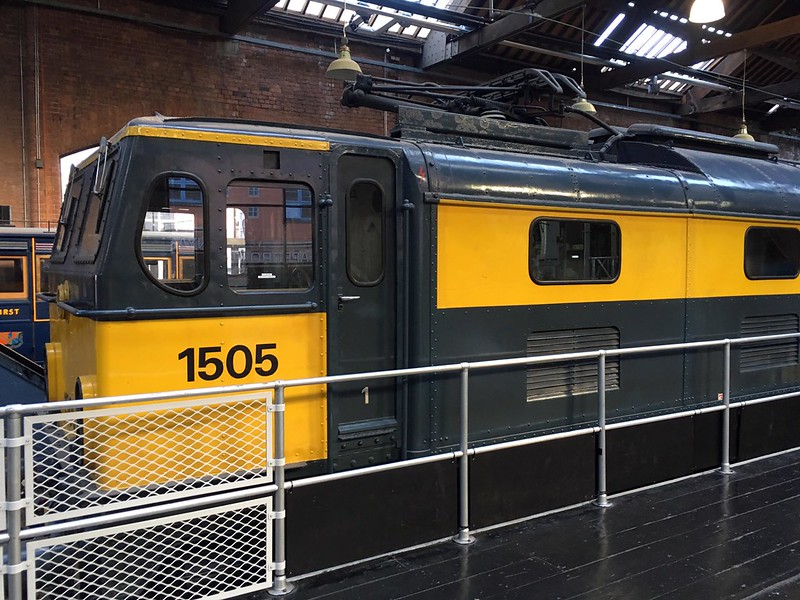
Cab side view
Happily the still fairly fresh locomotives found a buyer. They were sold to the Dutch railway operator Nederlandse Spoorwegen and became the NS 1500 class. They received new headlights and pantographs and remained in service until 1986. Three have been preserved.
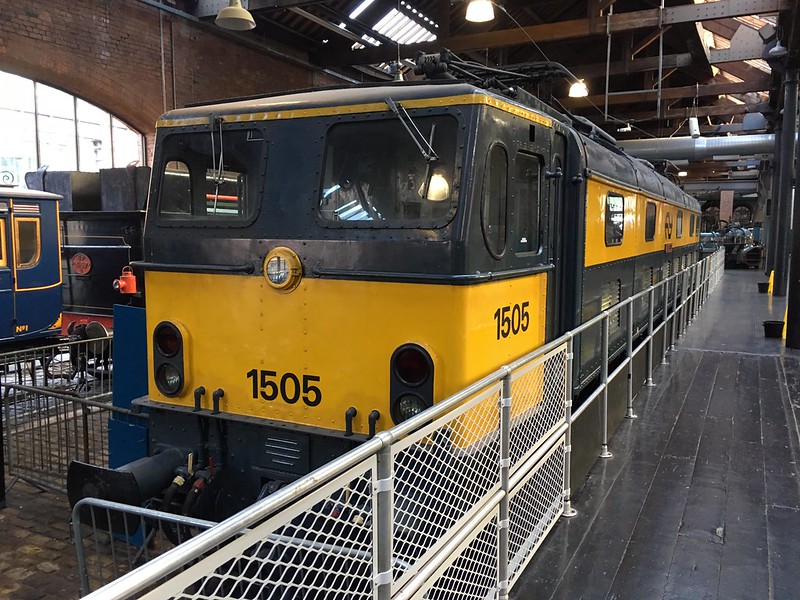
Another view of NS 1505, in BR service the locomotives were in black and later green livery
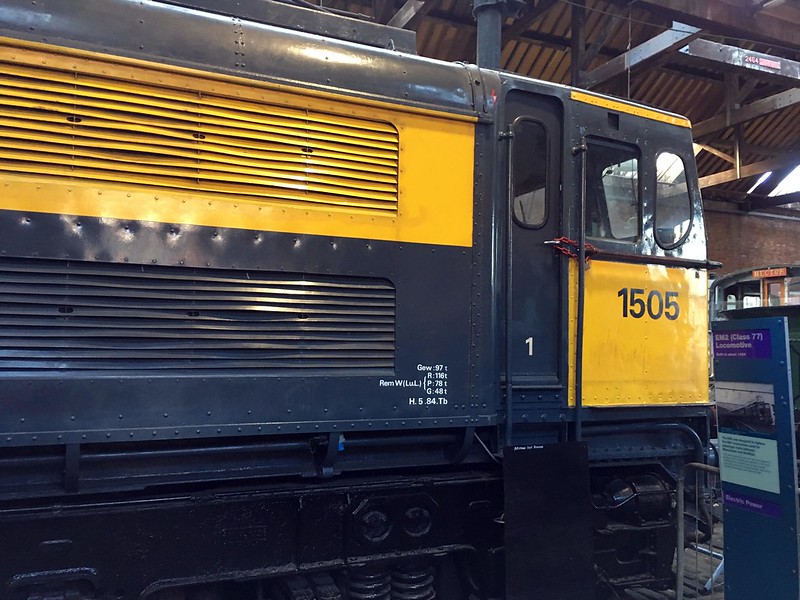
Another cab side view, the locomotive was E27001 in BR service
[1] Brian Haresnape, Electric Locomotives (Ian Allan, 1983) p. 32
[2] Colin J. Marsden, Diesel & Electric Locomotive Recognition Guide (Ian Allan, 2011) p. 214