
Forty-two 2-car Class 155 diesel multiple units (DMUs) were built in the late 1980s by British Leyland for cross-country routes but at the same time British Rail saw a need for a new generation of single "bubble" car DMUs to replace ageing first generation stock like the Class 121 [1] and conversions of some of the new 155s fitted the bill.
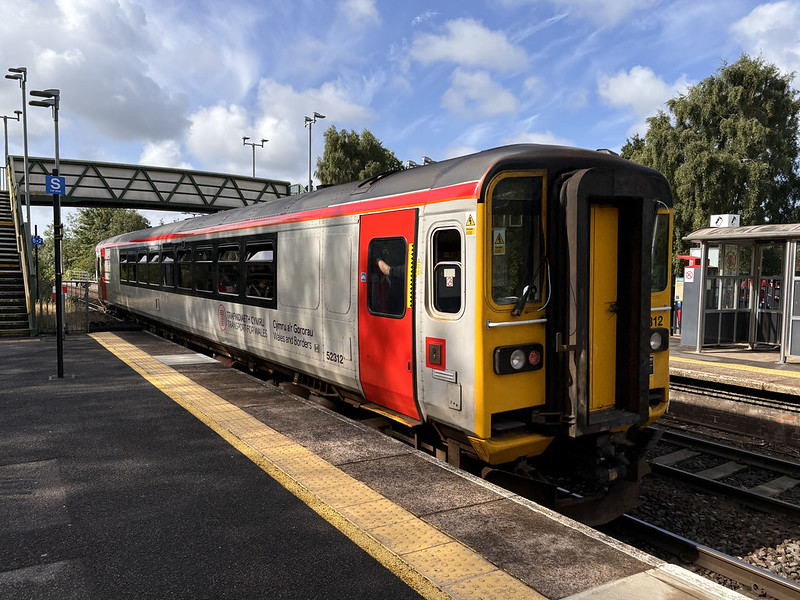
Transport for Wales 153 312 departs Whitchurch
| Information | |
|---|---|
| Number built: | 70 |
| Built: | 1987-88 (as Class 155) Converted to single cars 1991-92 |
| Builder: | British Leyland Conversions by Hunslet-Barclay |
| Engine: | Cummins NT855R5 diesel |
| Power: | 285 hp (213 kW) |
| Formation: | Driving Motor Standard Lavatory (DMSL) |
The Class 153s (as they became) quickly proved themselves to be very flexible and versatile units able to run on lightly-loaded branch lines such as the Stourbridge Town branch and the line to Cardiff Bay. They can also provide a capacity boost to other routes where needed as they are able to work in multiple with other members of the "Sprinter" DMU family.
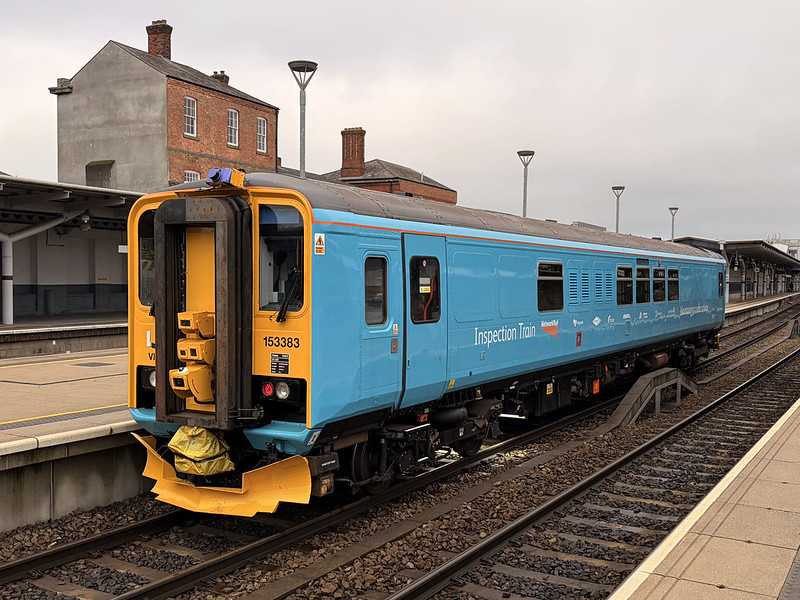
Network Rail Inspection Car 153 383 at Derby
They are still in service with Transport for Wales and Scotrail, along with three now used for infrastructure monitoring by Network Rail. In the past they have been used by many other companies including West Midlands Railway and East Midlands Trains.
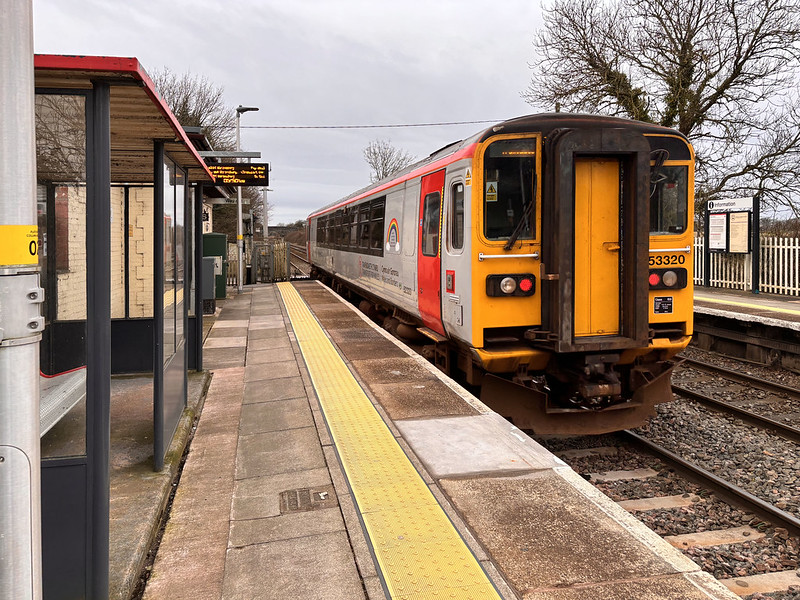
Transport for Wales 153 320 departs Wrenbury
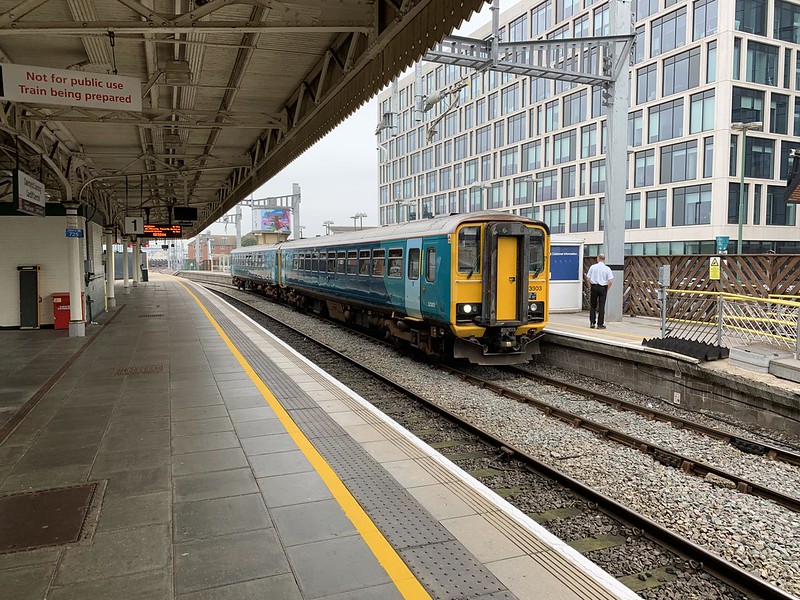
Transport for Wales 153 303 at Cardiff Central
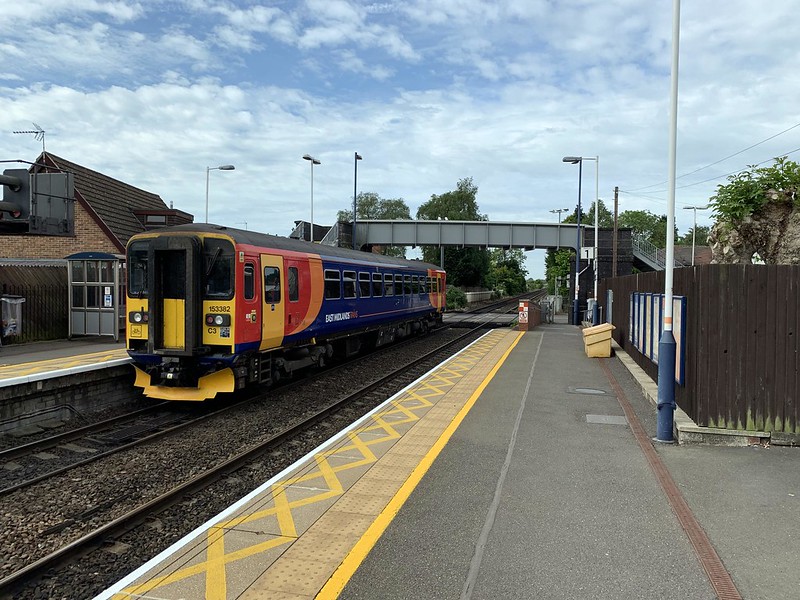
EMR 153 382 departs Attenborough
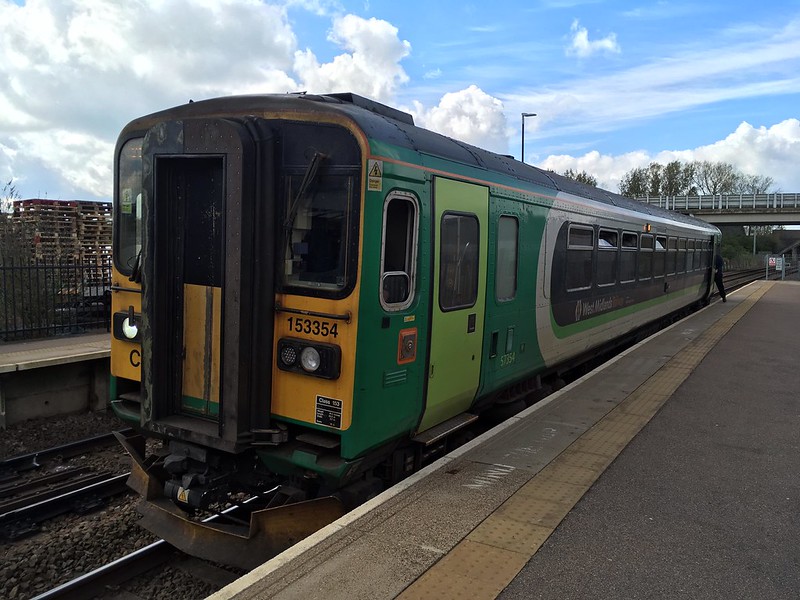
West Midlands Railway 153 354
[1] Colin J. Marsden, DMU and EMU Recognition Guide (Ian Allan, 2013) p. 134
[2] Colin J. Marsden (ed.), Modern Locomotives Illustrated No. 211 February-March 2015 (Classes 150-156 Second Generation DMUs) p. 52