
The Class 119 diesel multiple unit was built for cross-country services by the Gloucester Railway Carriage & Wagon Company to a BR Swindon and Derby influenced design, and is similar mechanically to the company's single-car Class 122. The Class 119 three-car sets included toilets, buffet facilities and first class compartments though the buffets were later removed [1].
W51073 at Duffield on the EVR
| Information | |
|---|---|
| Number built: | 81 cars (in 27 3-car sets) |
| Built: | 1958 |
| Builder: | Gloucester Railway Carriage & Wagon Company |
| Engine: | 2 BUT AEC 6-cyl later 2 Leyland 680-1595 diesels per power car |
| Power: | 600 hp (447 kW) |
| Formation: | Driving Motor Brake Composite (DMBC)+ Trailer Brake Second (Lavatory) (TBS(L))+ Driving Motor Standard (Lavatory) (DMS(L)) |
The Class 119 originally worked throughout Western Region, later on working on Reading-Guildford services plus the extension through to Gatwick Airport (where extra luggage space was provided) and services around south west London. They were withdrawn in 1992.
Luggage area on W51073
On Southern Region the Class 119 were known as "glasshouses" by SR drivers as the large cab windows were unlike those usually found on SR allocated multiple units [2]. Three cars have been preserved including Driving Motor Brake Composite W51073 on the EVR.
W51073 has a first class area behind the cab
W51073 at Wirksworth
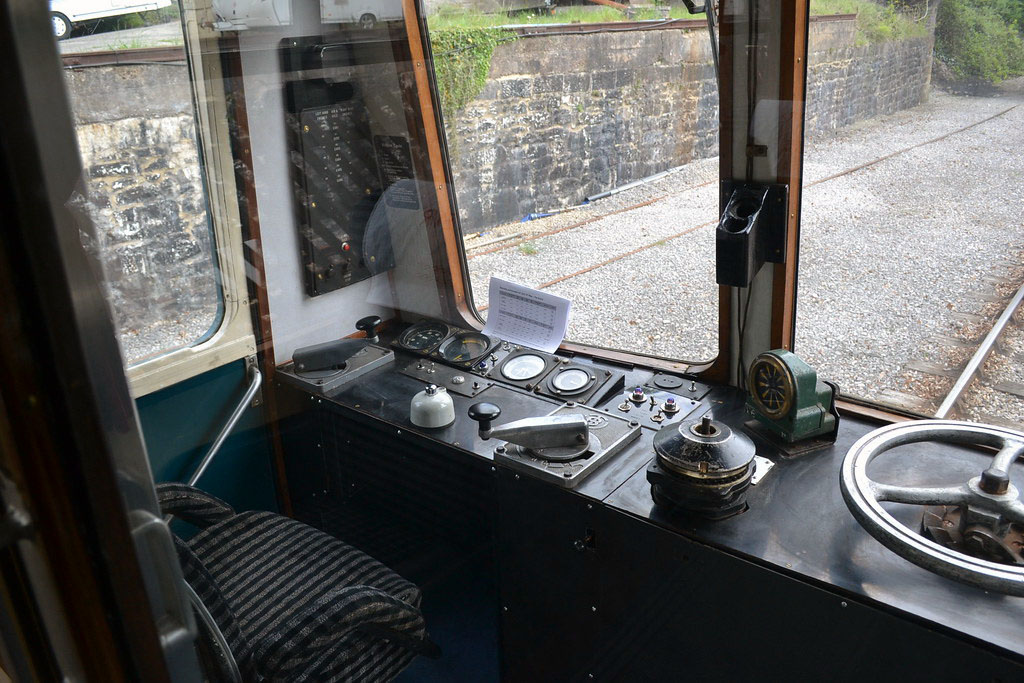
Class 119 cab
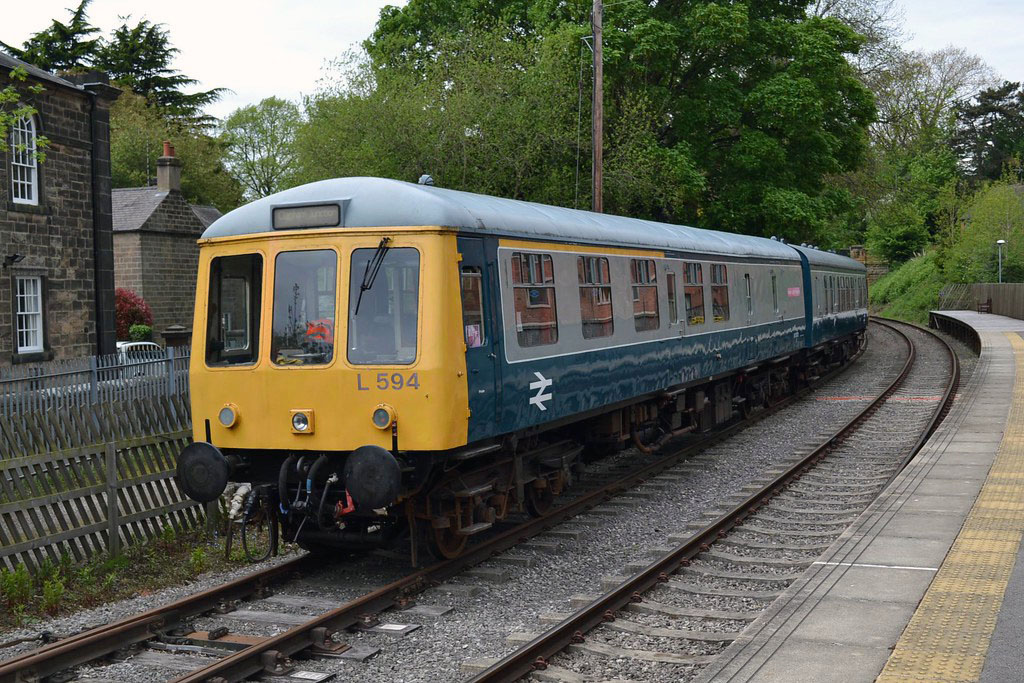
Another view of W51073 at Duffield
[1] Colin J Marsden, DMU & EMU Recognition Guide (Ian Allan, 2013) p. 76
[2] Brian Haresnape, Diesel Multiple Units: The First Generation (Ian Allan, 1985) p. 53