
The Class 108 diesel multiple unit (DMU) was designed for branch line and local services having a low-density interior and toilets and were allocated to British Rail's London Midland and Eastern Regions [1]. The Class 108 was the second of the so-called "Derby Lightweight" DMUs being lighter in construction than other units such as the Class 114.
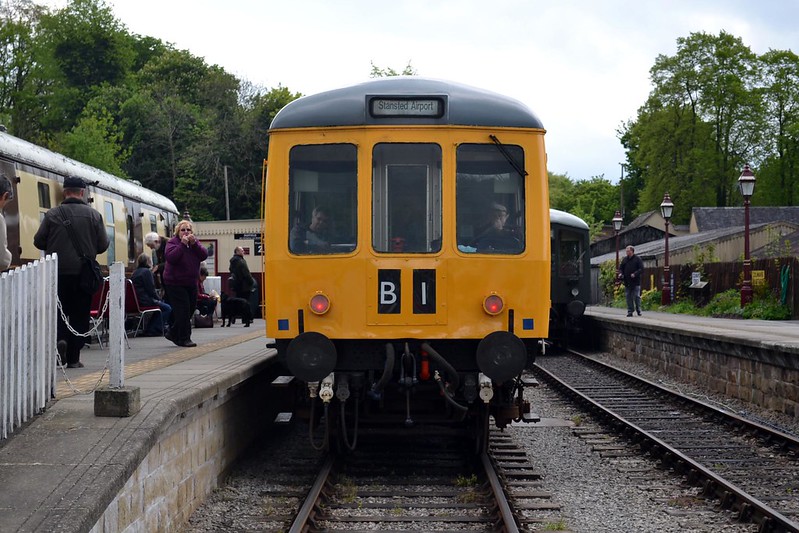
Preserved Class 108 at Wirksworth
| Information | |
|---|---|
| Number built: | 333 cars |
| Built: | 1958-61 |
| Builder: | BR Derby |
| Engine: | 2 BUT AEC / Leyland 6-cyl diesels |
| Power: | 300 hp (220 kW) |
| Formation: | Driving Motor Brake Standard (MBS)+[Trailer Brake Standard Lavatory (TBSL)+Trailer Standard Lavatory (TSL)]+Driving Motor Composite Lavatory (DMCL)/ Driving Trailer Composite Lavatory (DTCL) |
They served as 3 or 4-car sets, some later reverting to 2-cars, until the early 1990s when they were withdrawn. Some cars with first class accommodation were declassified to second/standard [2].
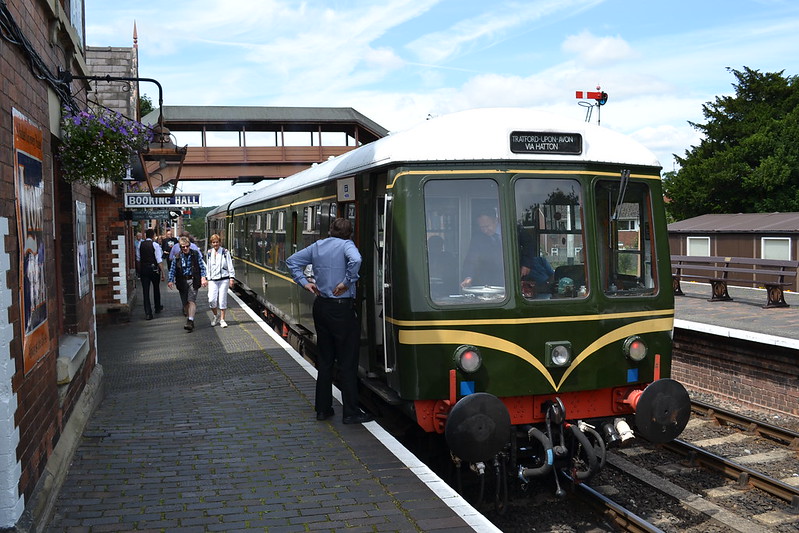
At Bewdley on the Severn Valley Railway
Because of the good condition of the Class 108 units on withdrawal a number went into departmental service and also preservation. Over 30 cars are currently preserved and many of these are operational on various heritage lines.
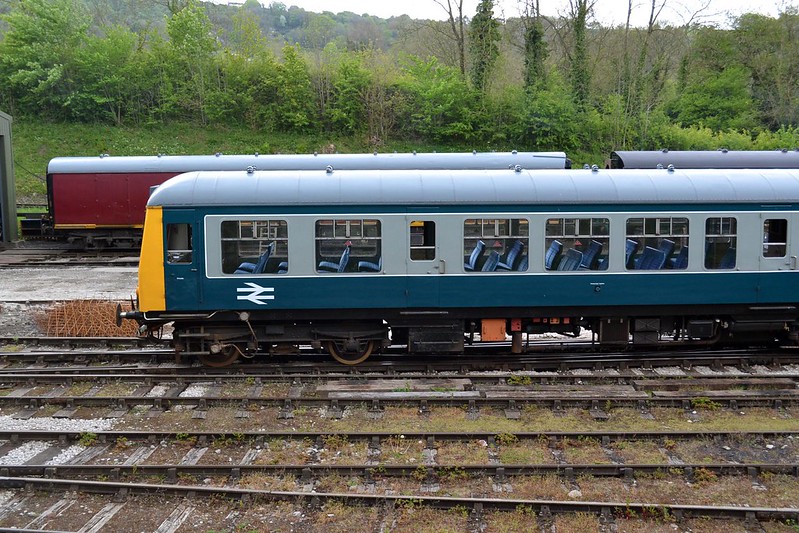
At Wirksworth on the Ecclesbourne Valley Railway
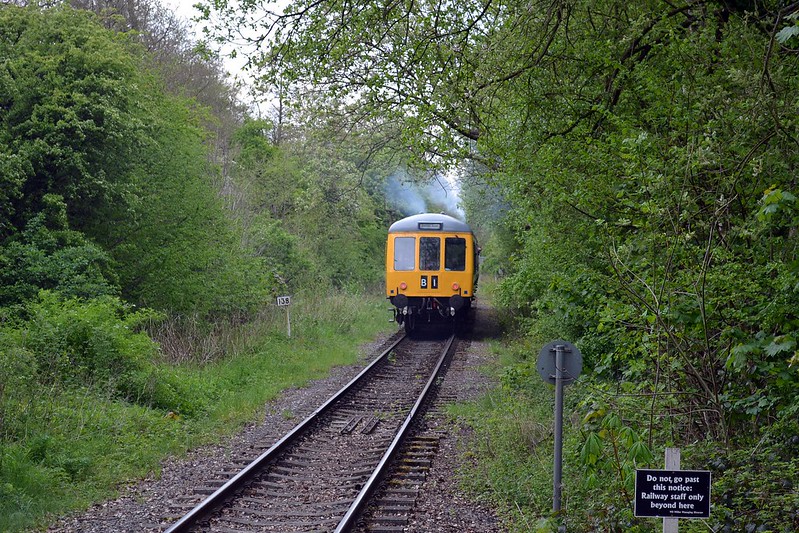
Approaching Idridgehay
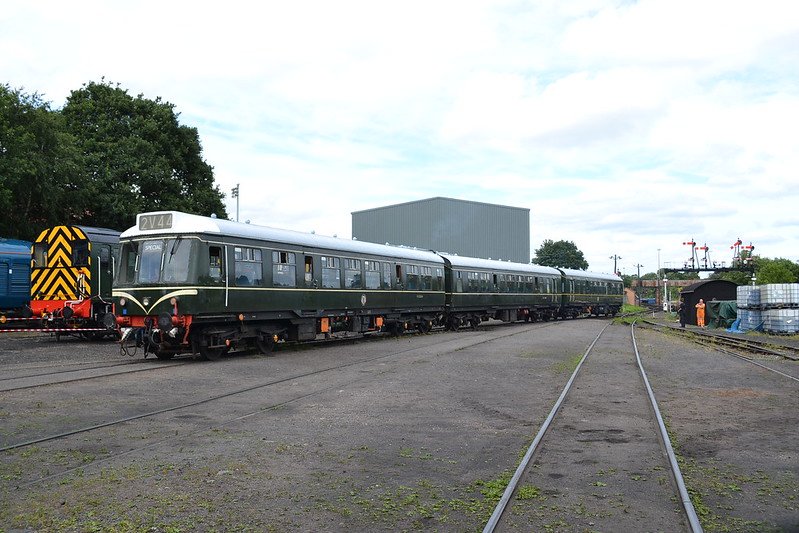
At Kidderminster Town
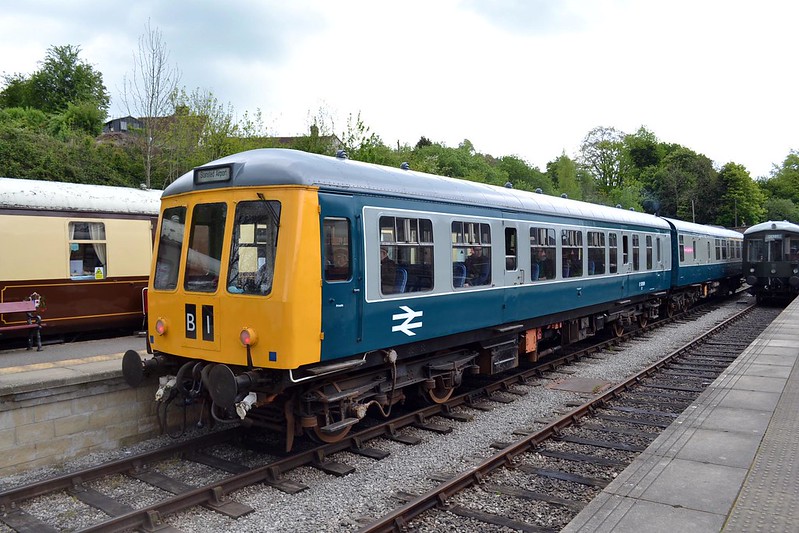
Awaiting the next duty at Wirksworth
[1] Colin J. Marsden, DMU and EMU Recognition Guide (Ian Allan, 2013) p. 134
[2] Colin J. Marsden (ed.), Modern Locomotives Illustrated No. 211 February-March 2015 (Classes 150-156 Second Generation DMUs) p. 52