
The Class 37 has been one of the workhorses of the British Rail network since the 1960s and, while their numbers have decreased in recent years, many still perform a valuable role day in and day out for both the main line and preserved railways.
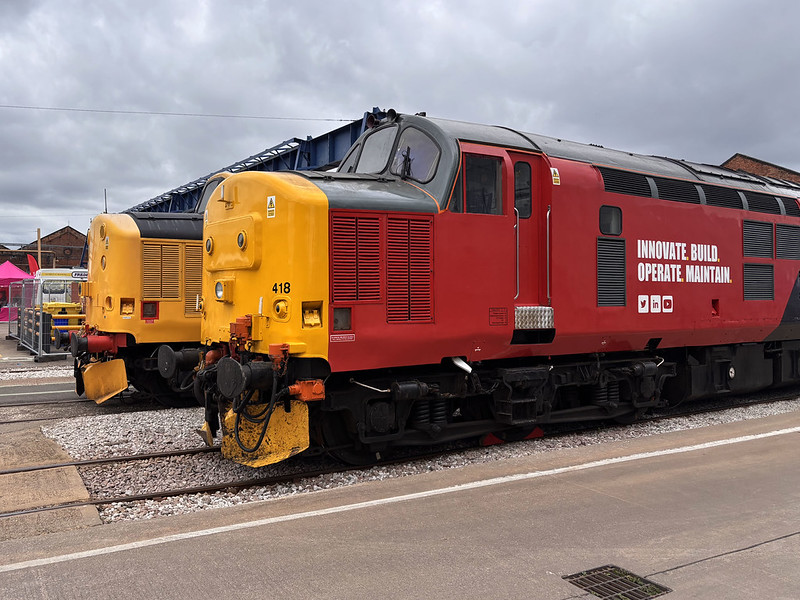
37 418 at Derby Litchurch Lane Works
| Information | |
|---|---|
| Number built: | 309 |
| Built: | 1960-65 |
| Builder: | English Electric |
| Engine: | English Electric 12CSVT diesel (37/9 fitted with Mirrlees Blackstone MB275Tt or Rushton RK270Tt) |
| Power: | 1,750 hp (1,305 kW) |
| Wheel arrangement: | Co-Co |
The Class 37 is a Type 3 diesel locomotive, after its introduction in the early 1960s it was found that it's power rating made the locomotive highly versatile compared to the Type 2s which had dominated most early dieselisation efforts and often were underpowered. The Class 37's power coupled with a relatively low axle loading for a locomotive of this size meant the locomotive could handle a wide variety of mixed traffic from secondary passenger services to freight and engineering trains across much of the network. This is work it continues to this day, Class 37s can be found hauling freights, engineering trains and often passenger trains on the network.
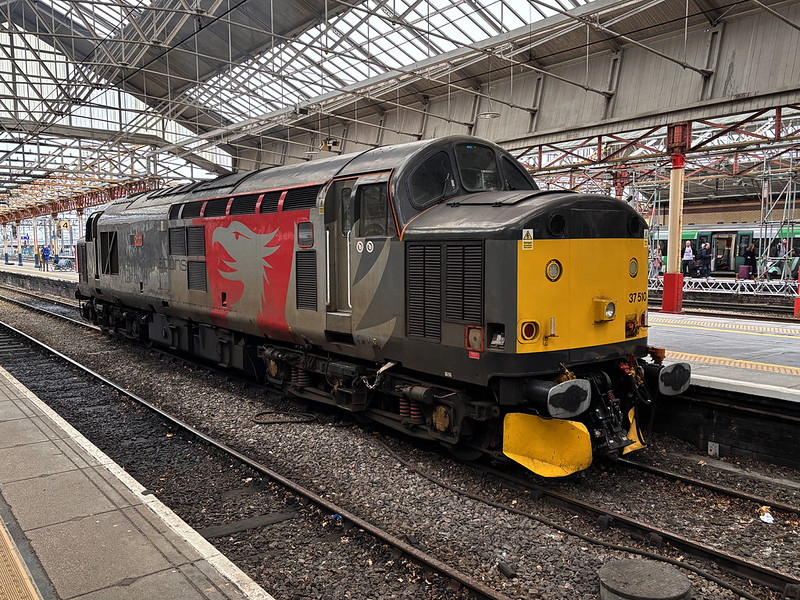
37 510 at Crewe
Between 1960 and 1965 three hundred and nine Class 37s were built by English Electric and proved to be one of the most reliable classes of diesel locomotive built for British Rail [1]. Though with their front end "noses" they were rather dated in appearance when they entered service as other locomotive types had moved to flat fronted designs (indeed they were the last class built for BR with front noses).
However, this appearance was due to English Electric being reluctant to leave the American styling they had championed since Deltic [2] and the locomotives reused some tooling and equipment from the earlier Class 40. This reduced the unit price to British Rail which no doubt helped to overcome any doubts over the aesthetics! [3]
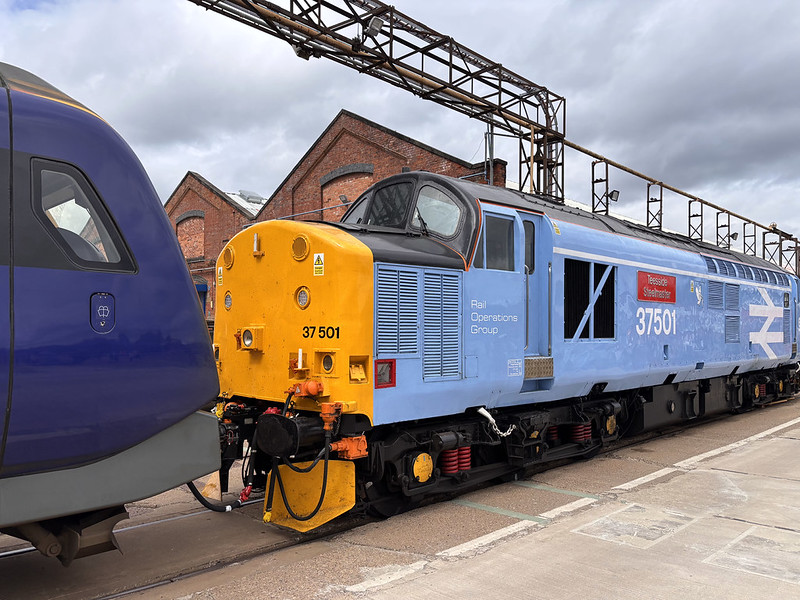
37 501 at Derby Litchurch Lane Works
Around thirty five are still registered for use on Network Rail and some will remain in service for some time following refurbishments. Many Class 37s have also been preserved.
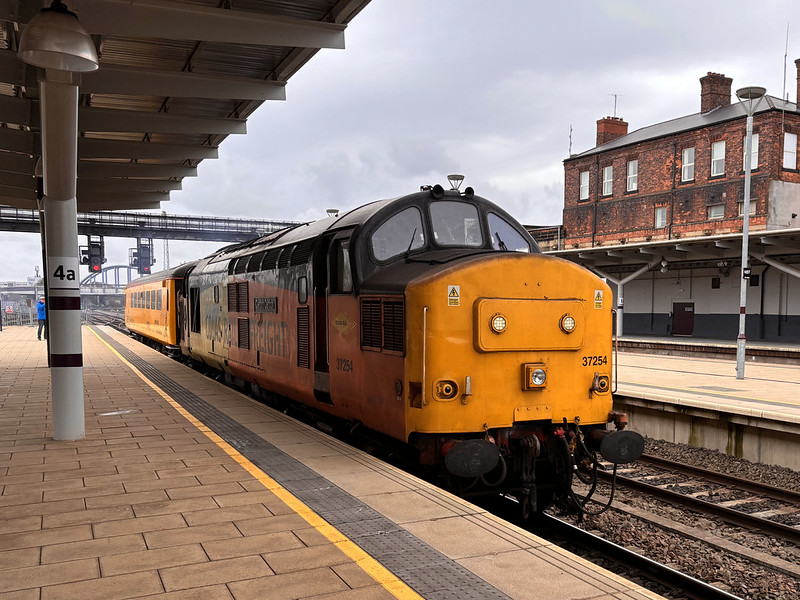
37 254 with a Network Rail coach at Derby
As can be expected with a large fleet that has remained in service for over fifty years there have been a number of sub-class variants of the Class 37 mostly following a series of refurbishments in the 1980s [4].
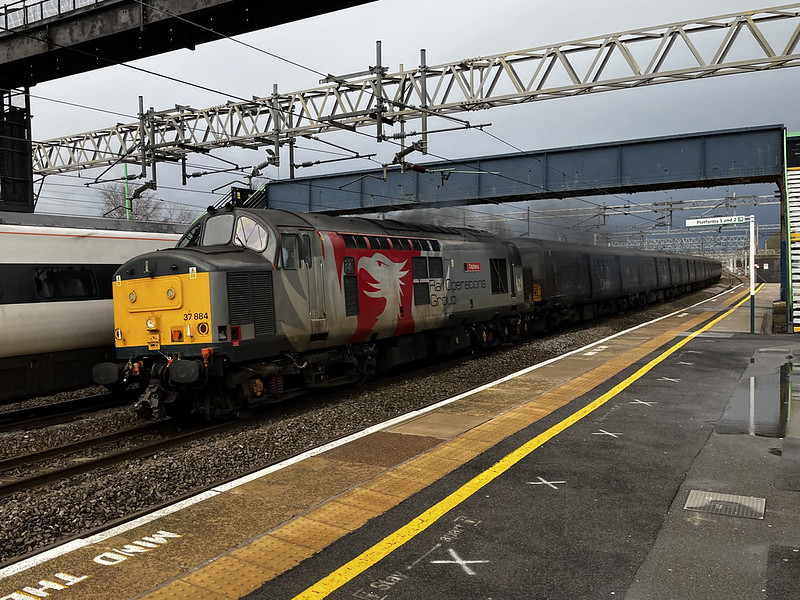
37 884 hauls a Class 768 through Rugeley Trent Valley
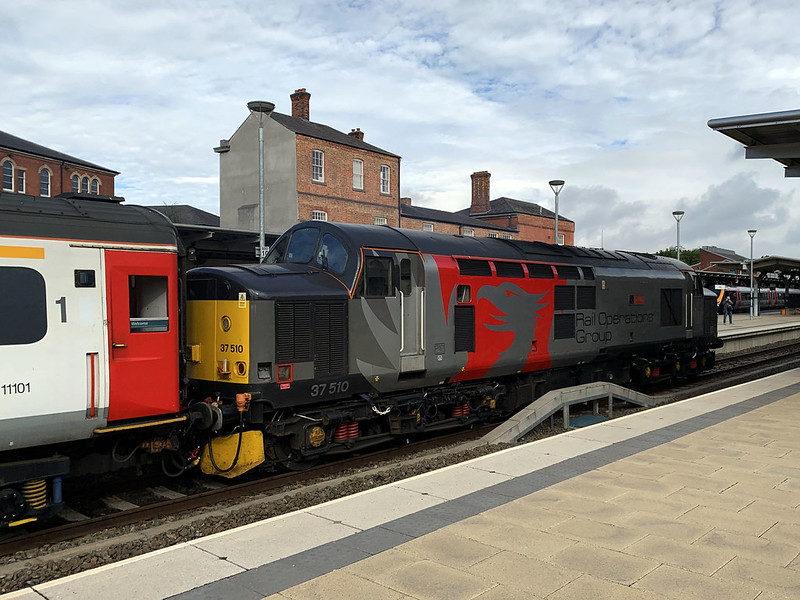
37 510 again, this time at Derby
[1] Colin J. Marsden, Traction Recognition (2nd Edition) (Ian Allan, 2008) p. 28
[2] David Lawrence, British Rail Designed 1948-97 (Ian Allan, 2016) p. 145
[3] Brian Haresnape, Production Diesel-Electrics Types 1-3 (Ian Allan, 1983) p. 67
[4] Pip Dunn, British Rail Main Line Locomotives Specification Guide (Crowood Press, 2013) p. 65