
The Class 20 is the most successful Type 1 diesel bought by British Railways (by some margin) and indeed the only one still in service - nearly seventy years after it was first introduced! After early trials with prototype diesels BR ordered a number of "pilot scheme" diesels in the mid-1950s as part of its Modernisation Plan to eliminate steam. Twenty of these diesels were from what would become the Class 20 and in fact the first one built (D8000) was the very first diesel delivered to BR under this pilot scheme [1].
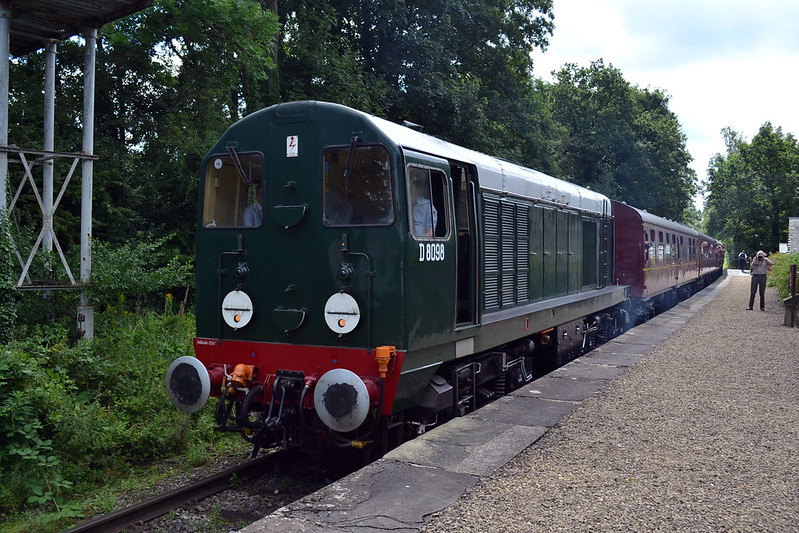
D8098 in original BR green at Idridgehay
| Information | |
|---|---|
| Number built: | 228 |
| Built: | 1957-68 |
| Builder: | English Electric |
| Engine: | English Electric 8SVT Mk2 diesel |
| Power: | 1, 000 hp (746 kW) |
| Wheel arrangement: | Bo-Bo |
The Class 20 has a cab only at one end, though it often works in pairs with the cabs outer most, to make one "virtual" 2, 000hp locomotive. When it is operated bonnet first, drivers have had problems with seeing the line ahead (as they did with large steam locomotives). Because of this, BR decided to standardise the Type 1 diesel category on the Class 17, which had a central cab and much better visibility, however various problems with the Class 17 forced BR to do an about face in the late 1960s and restart Class 20 production. [2]
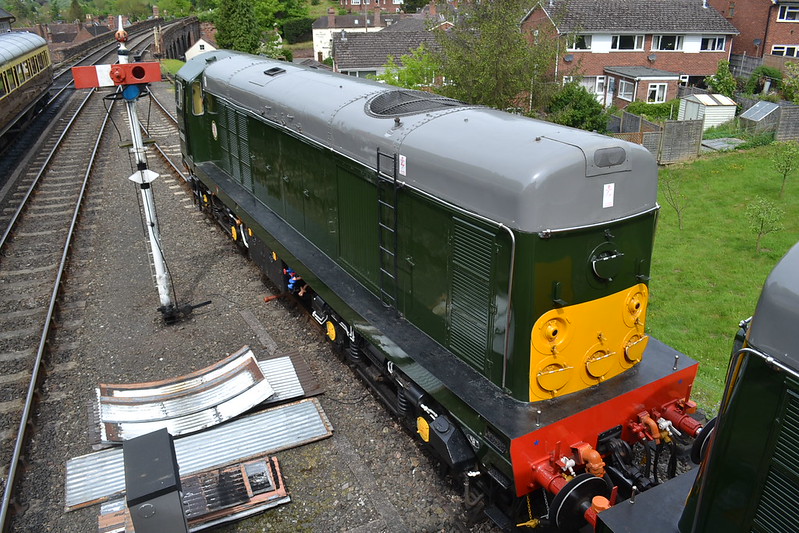
A Class 20 in later BR green with yellow warning panel at Bewdley
The Class 20 became one of BR's most reliable locomotives popular with BR and enthusiasts who have given them the name "Choppers". They were usually found on freights with the occasional passenger service in the Summer (they have no train heating provision) [3]. There have been a number of sub-classes, most Class 20s have remained as standard (20/0) but a small number were modified as 20/3 for aggregate workings in the 1980s. 20/3 was later re-used for locomotives modernised and refurbished post-privatisation. A few locos have also been modified for remote control trials as 20/9.
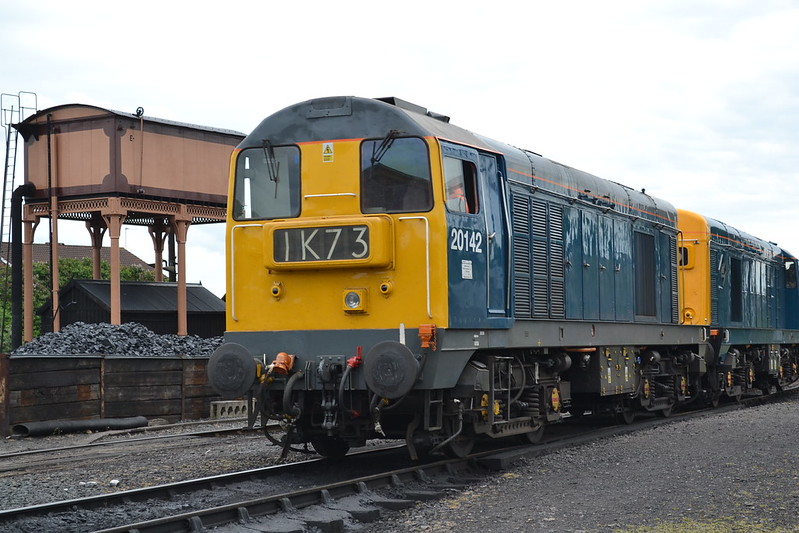
20 142 leads a BR blue pair into Kidderminster Town
The fleet was run down in the 1980s with most withdrawn by the time of privatisation but since then the Class 20 has seen a bit of a renaissance and has found a niche on spot hire trains and a number remain in service to this day [4]. A large number has also been preserved including the very first one, and pilot scheme loco, built which is with the NRM.
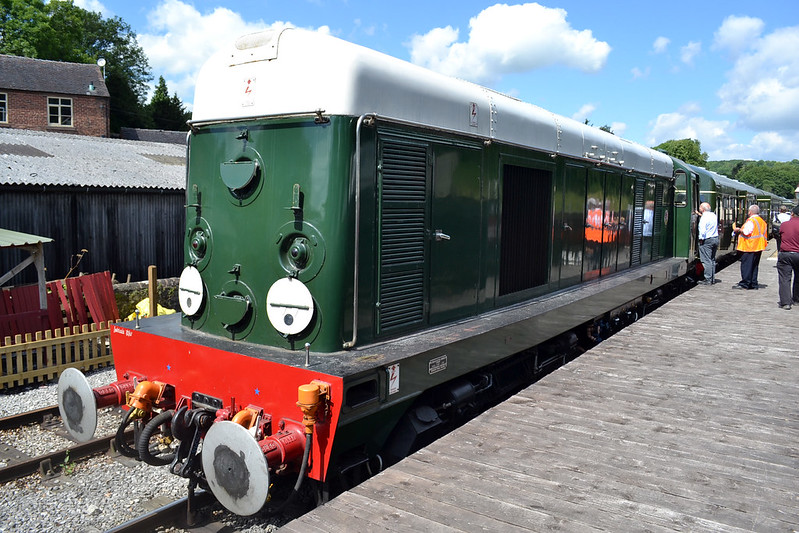
D8098 at Duffield
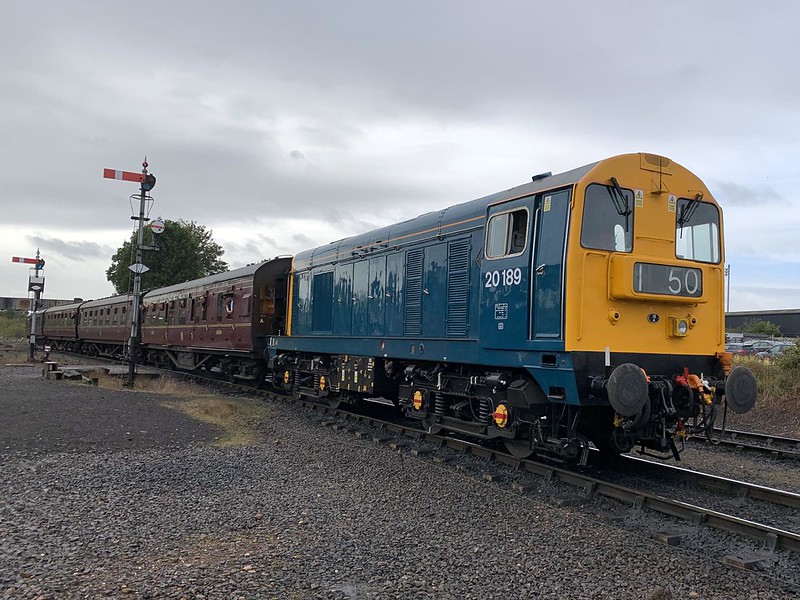
20 189 at Kidderminster Town
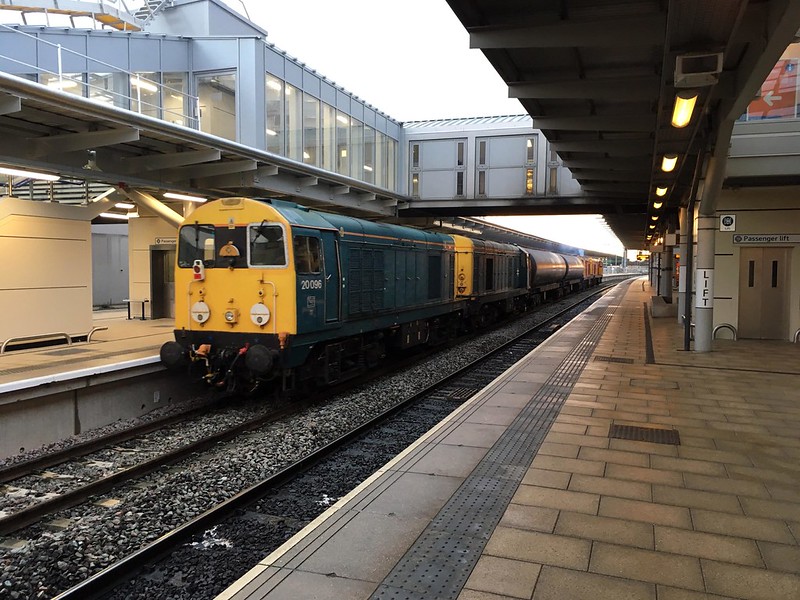
20 096 leads three other Class 20s into Derby
[1] Brian Haresnape, Early Prototype & Pilot-Scheme Diesel-Electrics (Ian Allan, 1981) p. 35
[2] Brian Haresnape, Production Diesel-Electrics Types 1-3 (Ian Allan, 1983) p. 26
[3] J.A.M. Vaughan, Profile of the Class 20s (OPC, 1984) p. 3
[4] Colin J Marsden, Traction Recognition (2nd Edition) (Ian Allan, 2011) p. 14