
The Centurion is easily the most successful British postwar main battle tank design. Development began in 1943 and, althopugh it was just too late for the Second World War, the tank had served in many conflicts including the Korean War. Israeli Centurions have seen combat in the 21st century.
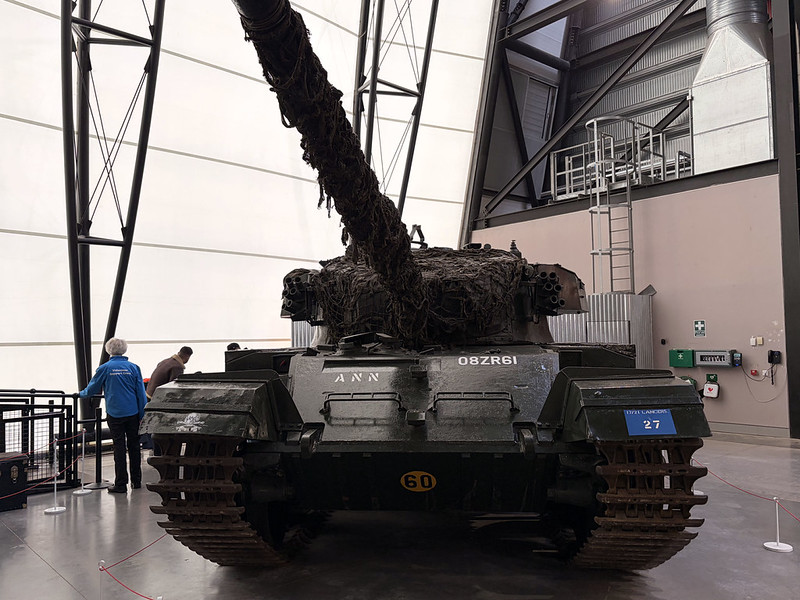
Centurion at RAF Museum Cosford
| Information | |
|---|---|
| Built: | 1945-62 |
| Builders: | Leyland Motors, Royal Ordnance, Vickers |
| Engine: | Rolls-Royce Meteor 4B |
The Centurion was a Cruiser tank design, intended to be able to survive being hit by rounds from heavy German guns such as the 88mm. It also needed be light enough to be able to use existing Army transport vehicles and Bailey bridges. The original Mark 1 Centurion was a 40 ton tank with a 76.2mm gun. Later versions such as the Mark 3 had an increased weight up to 50 tons and a larger gun.
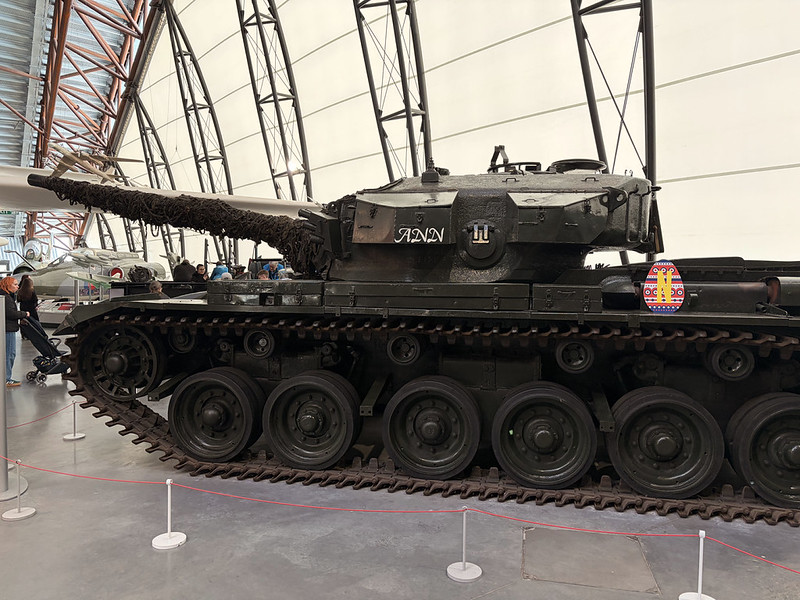
Centurion at RAF Museum Cosford
The Centurion was built in large numbers and has served with the British Army and many other armed forces. The Centurion survived in British service until the early 1990s (in an engineering tank role) and fought in Desert Storm.
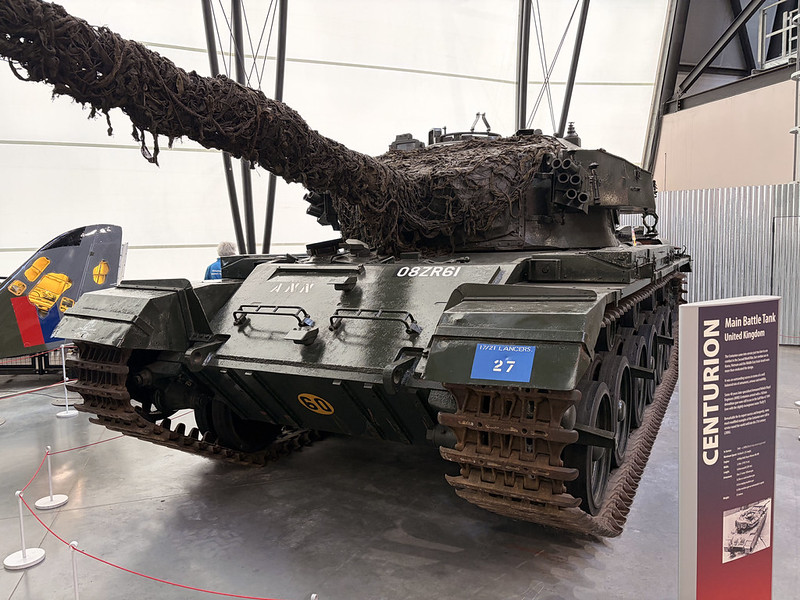
Centurion at RAF Museum Cosford
Three countries still operate the Centurion. The Israeli Defence Forces no longer use them as tanks but have converted hulls into armoured personnel carriers and engineering vehicles. Jordan have also re-used Centurion hulls for an APC. South Africa have developed their Centurions into the upgraded Olifant tank.