
Ewell is a town on the north eastern edge of the county on the borders of London.
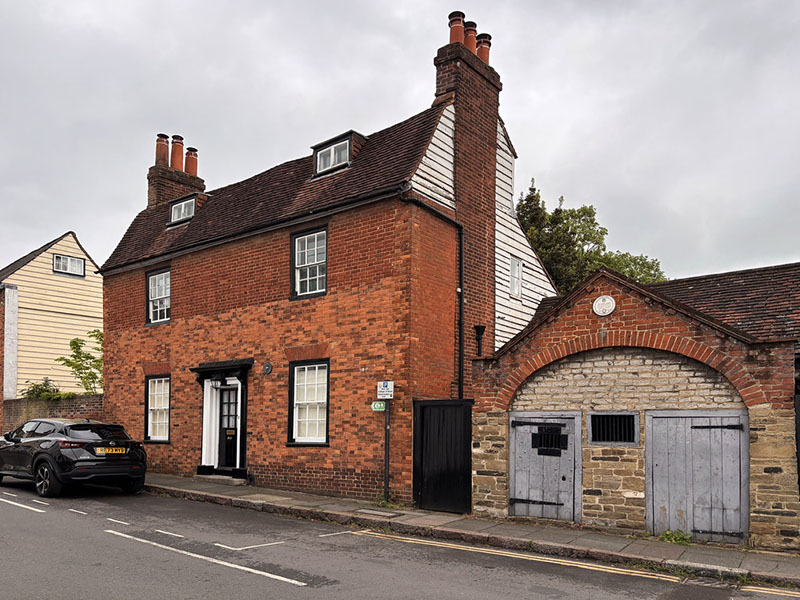
House in Ewell
There has been settlement in the area since at least the Bronze Age, traces of Roman settlement has also been found. Ewell is derived from the Old English æwell which means river source or spring. Ewell was founded as a spring line settlement. The chalk of the North Downs meeting London Clay and causing a spring to rise. This is the source of the Hogsmill river which is a tributary of the Thames.
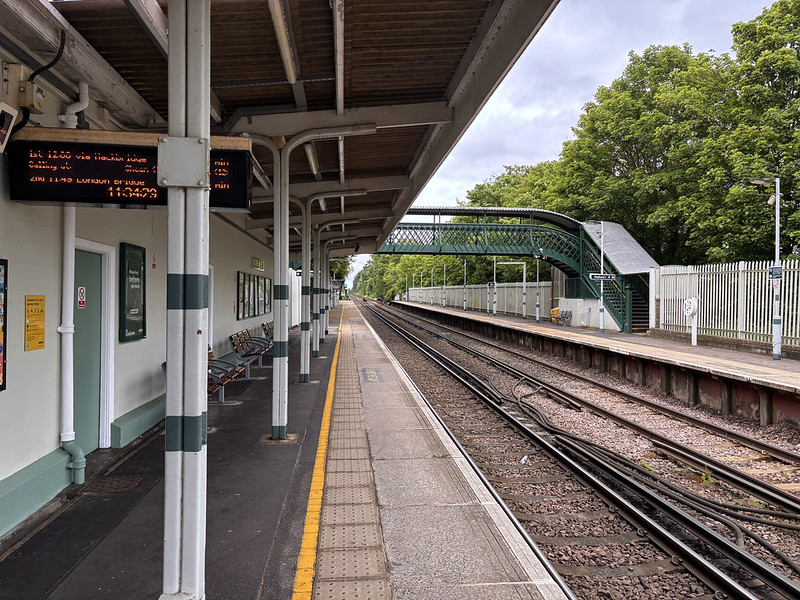
Ewell East railway station
Ewell appeared in the Domesday Book as Etwelle. Henry VIII had built Nonsuch Palace in the area which was one of his favourite hunting grounds. The palace no longer exists. One major landmark that does exist is Bourne Hall which is a modernist circular structure built in the centre of Ewell in the late 1960s. It, and the public park which surrounds it, was built on the grounds of the original Bourne Hall which was an 18th century mansion. The entrance to the park is the early 19th century Dog Gate.
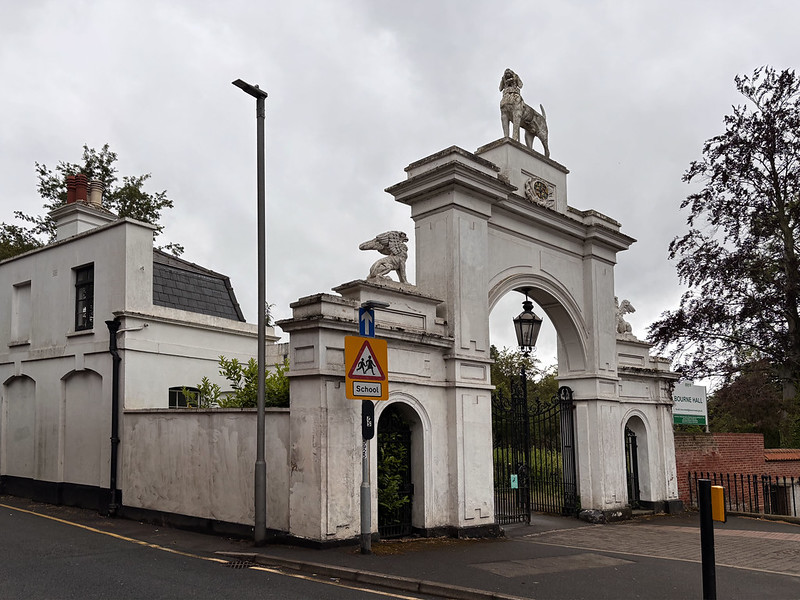
Dog Gate to Bourne Hall gardens
Another landmark of Ewell is the tower of the old parish church of St Mary the Virgin. This was replaced as the parish church in the 19th century and partially demolished. The 15th century tower and parts of the nave survive.
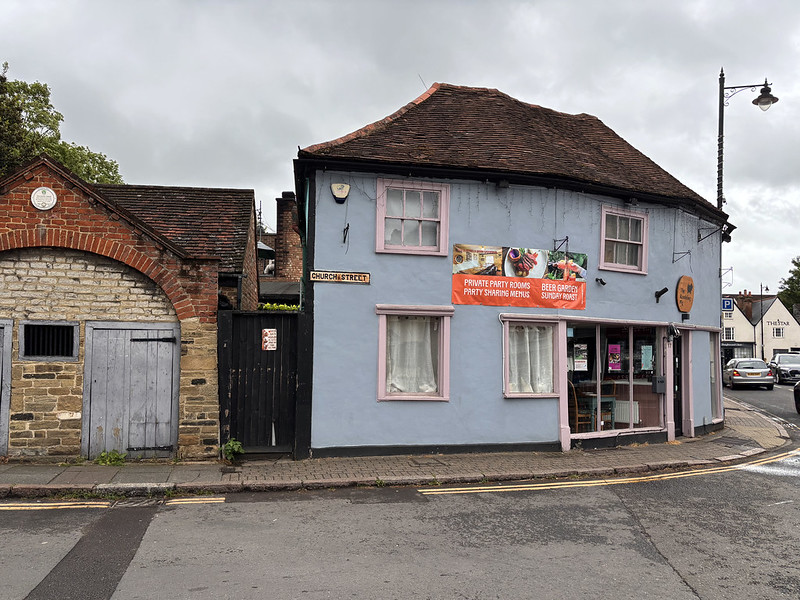
Shop in Ewell
The population of Ewell grew with new housing in the 1930s. It is now part of the greater London surburbs.
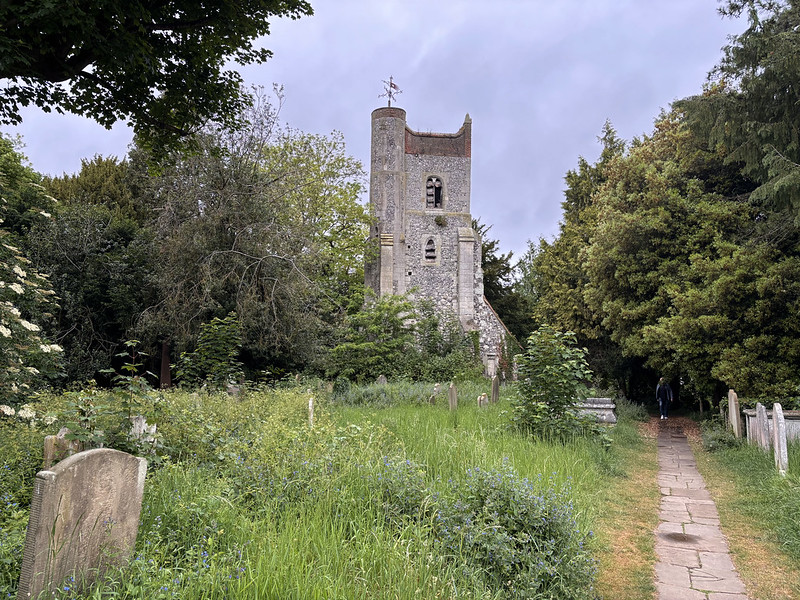
Tower of the former parish church of St Mary the Virgin
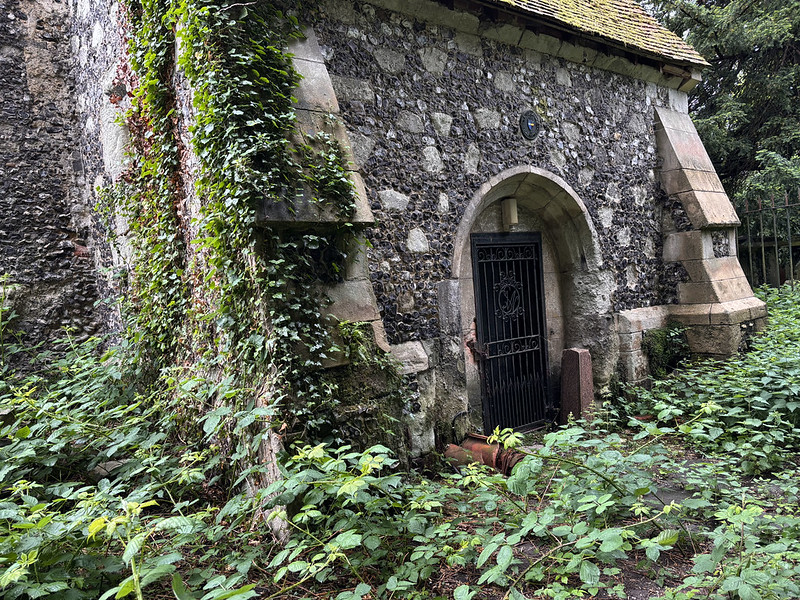
Entrance to the tower
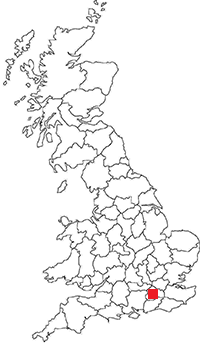
Location