
Whitchurch is a market town at the very north of the county.
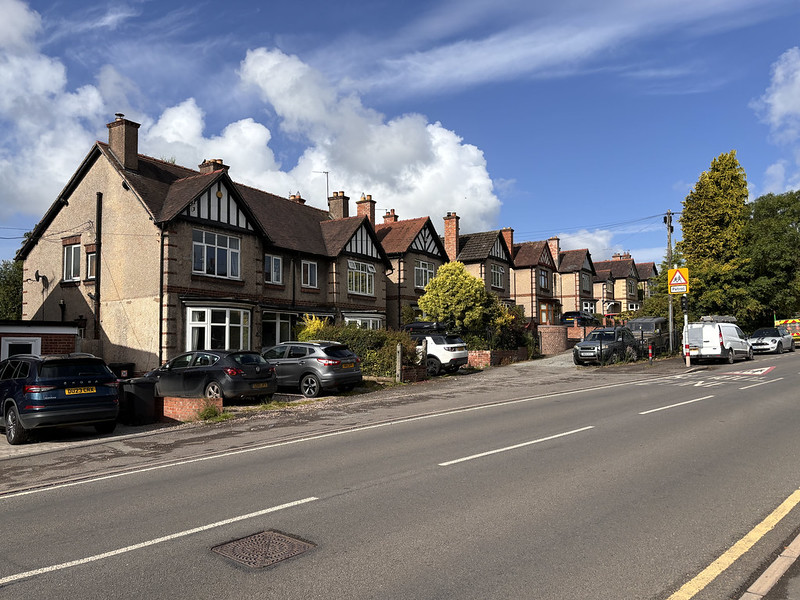
Houses in Whitchurch
Whitchurch is the oldest continually inhabitated town in Shropshire and there has been traces found of human activity in the area since the Neolithic. During Roman times there was a settlement in the area called Mediolanum. It is thought that St Alkmund, son of Alhred, King of Northumbria was buried in Whitchurch in 800CE, the parish church is dedicated to him.
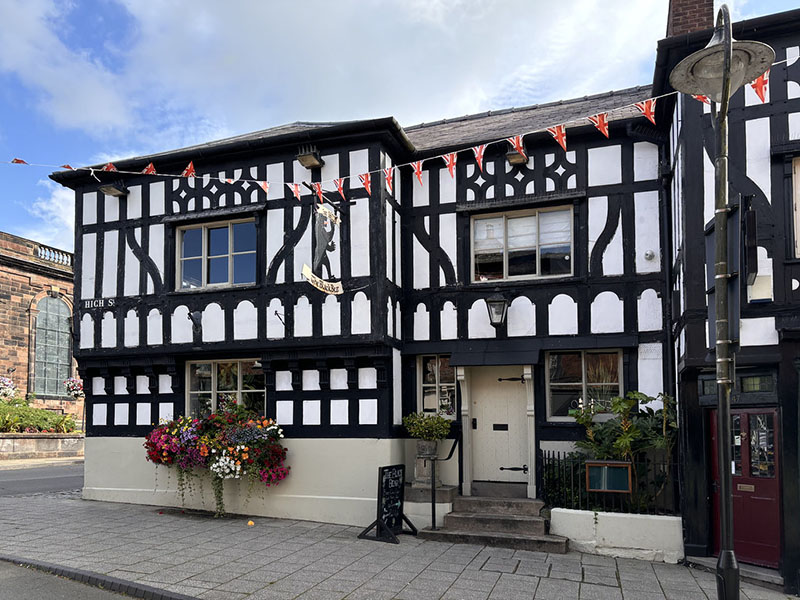
Pub in Whitchurch
By the time of the Domesday Book the settlement was known as Westune, or West Farmstead. Due to the location near the Welsh Marches, the town was in a strategic location and the Normans built a castle and a church from white Grinshill stone. The name Whitchurch is middle English for White Church.
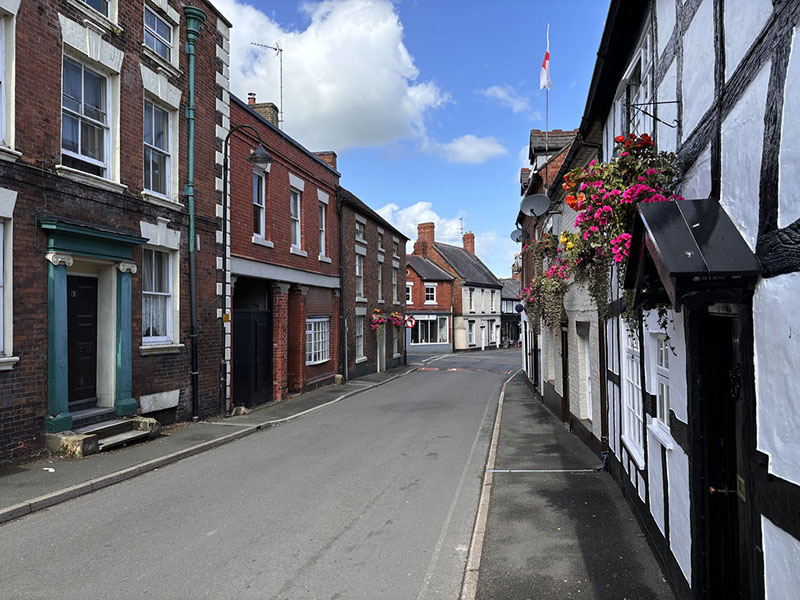
In central Whitchurch
Whitchurch became a town in the 14th century. Whitchurch became an important centre for Cheshire cheese production, with regular cheese fairs held in the town. The arrival of the Llangollen Canal in 1811 and the railways in 1858 helped the town gain good transport links.
St Alkmund
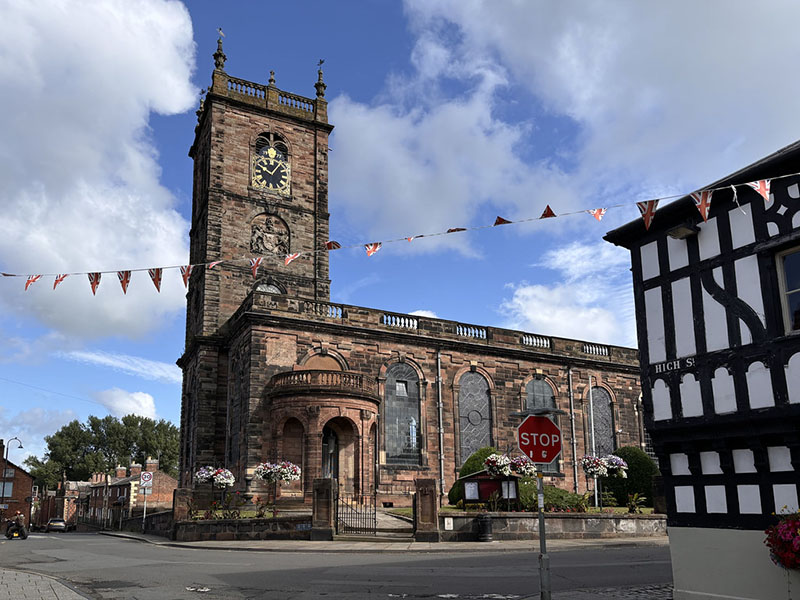
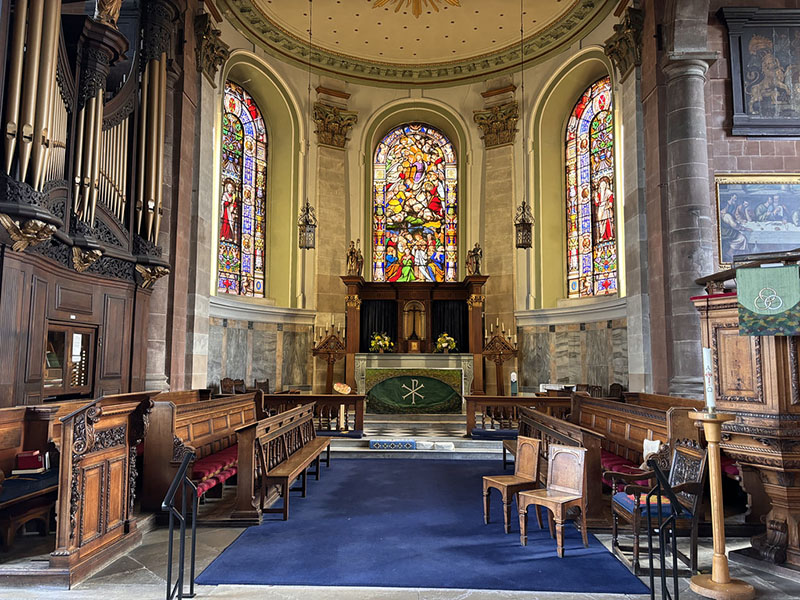
The first church of St Alkmund in Whitchurch was founded in 912CE, though the relics of St Alkmund were removed to Shrewsbury at the same time. A new church was built in 1089 from white stone, which gave the future town it's name. The current church dates from a complete rebuilding in the early 18th century after the collapse of the tower of the medieval church in 1711.
The new church was consecreted in 1712 though there have been a number of alternations and restorations over the following centuries. The church is in the neo-classical style with a six bay nave with north and south aisles. There is a three bay aspidal chancel. There is a south porch and a west tower.
The church is built from red sandstone ashlar.
Location