
The market town of Oakham is the county town (and largest settlement) of Rutland.
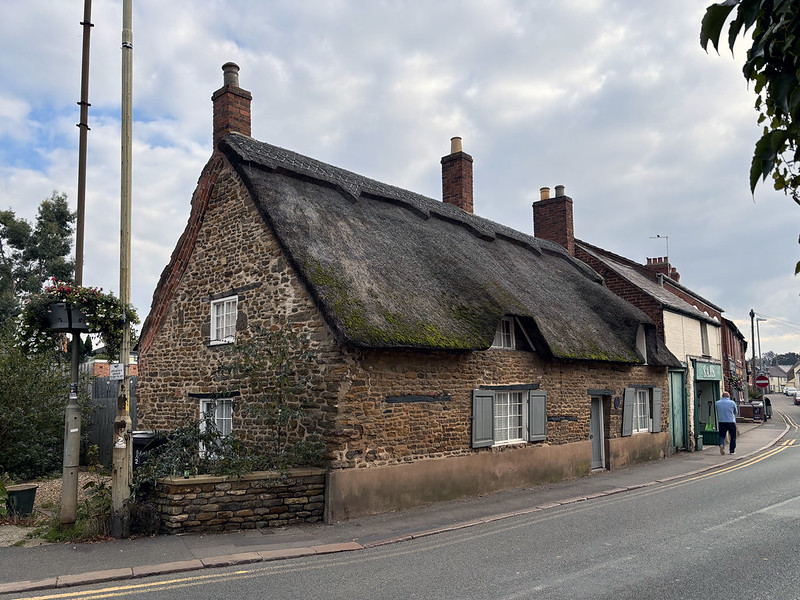
Thatched cottage in Oakham
Oakham has Saxon origins, the name may mean Homestead or Farm of Occa. In Norman times Oakham became an important administrative centre. Baron Walkelin de Ferrers fortified his manor house next to the market place and turned it into Oakham castle, of more see below.
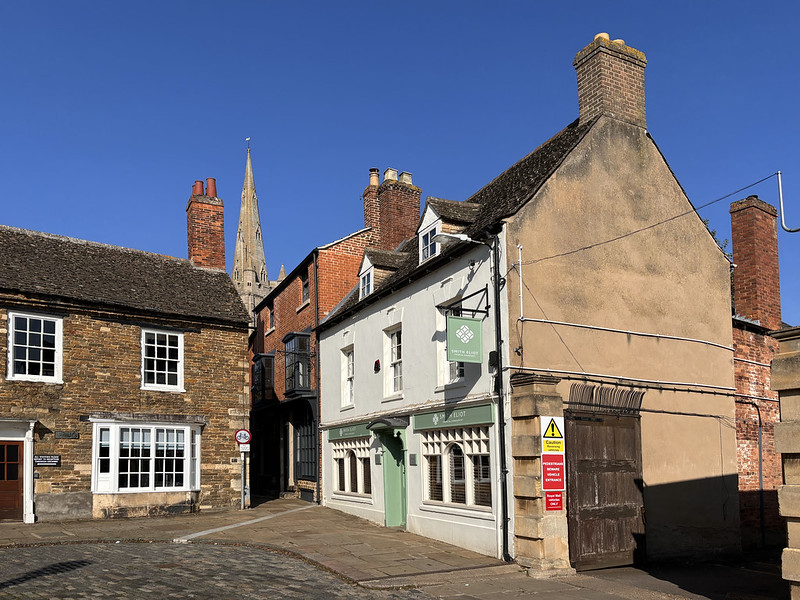
Commercial properties in Oakham, All Saints' spire can be seen in the background
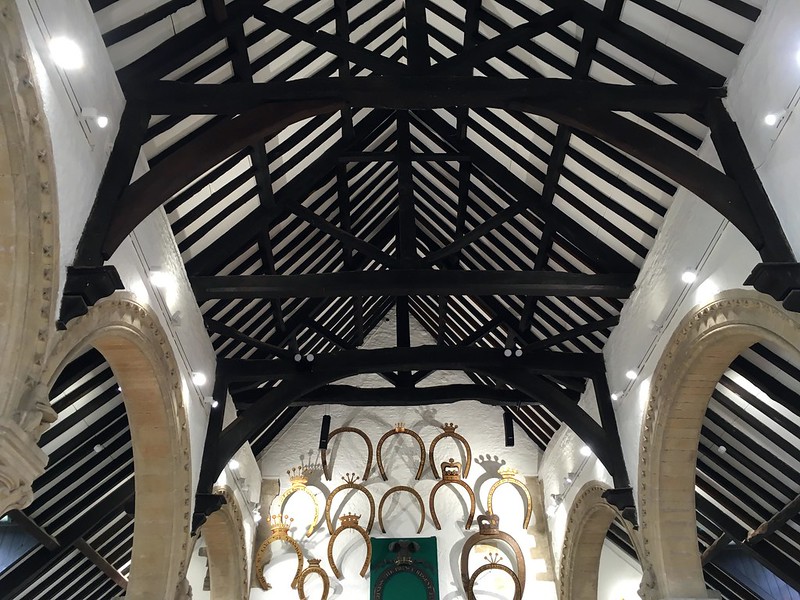
Oakham and it's surrounding area has remained rural to the present day. Much of the county was forested in the Middle Ages and used for hunting. In the latter Middle Ages the wool trade was important in Rutland. One of Oakham's most famous symbols is the horseshoe. By tradition, members of the the royal family or peers who visited Oakham had to pay a forfeit in the form of a horseshoe. This tradition continues to the present day though nowadays these horseshoes are outsized ceremonial horsehoes, over two hundred are on display on the walls inside Oakham castle.
Oakham is the home of the county's county council, as well as the county library, archives and museum. Oakham has the only surviving railway station in the county.
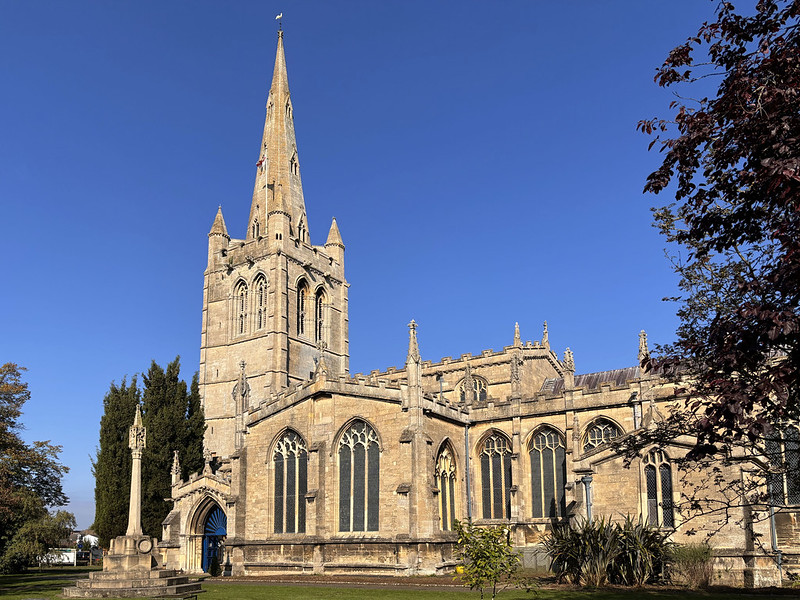
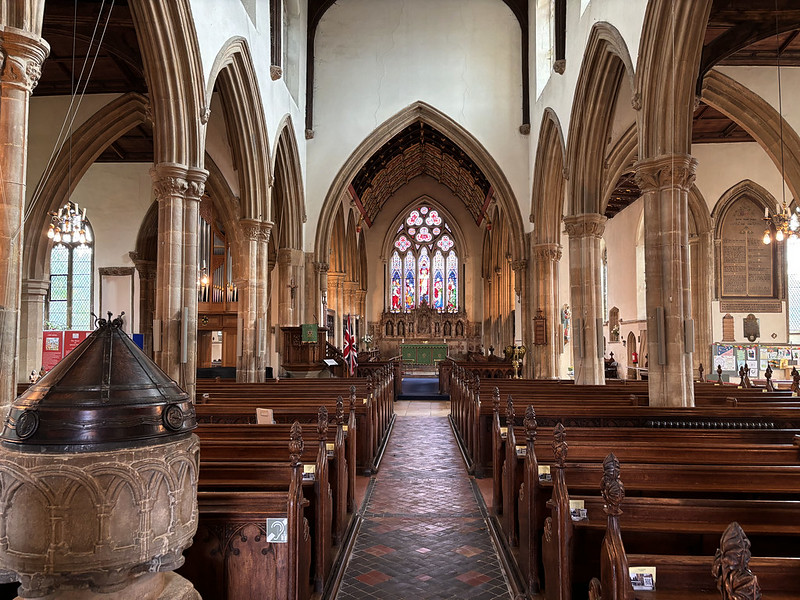
All Saints
The parish church of All Saints dates from the 13th century, the tall west tower and spire being from the 14th century. These are in the Decorated Gothic style and are slightly older than most of the rest of the surviving church apart from the south doorway. The church has a nave with aisles, clerestory and transepts. The chancel has north and south chapels.
Most of the rest of the surviving church is 15th century Perpendicular. It was restored in the 19th century. The church is built from limestone with an ashlar dressing.
Oakham castle
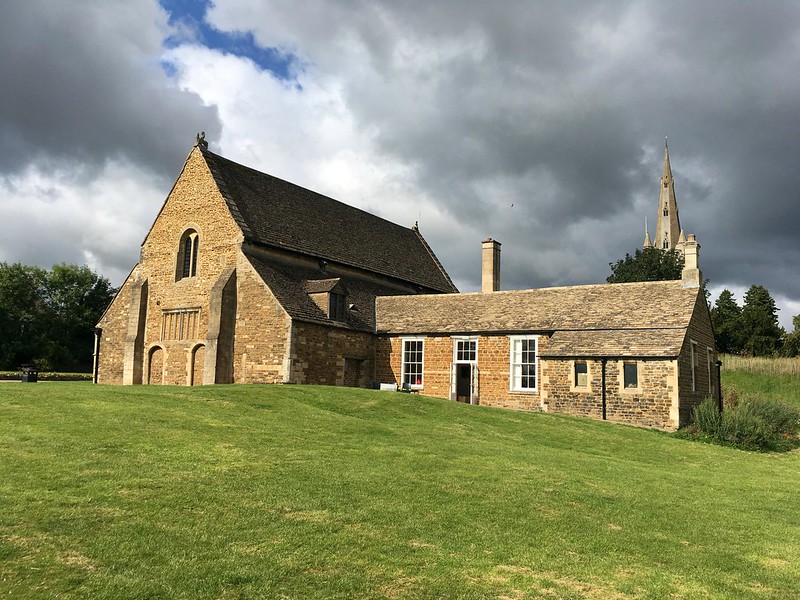
Oakham castle was a fortified Norman manor house, but has probably the earliest surviving complete hall of any castle. Only the hall survives today surrounded by earthworks which once were the castle's bailey
The castle was used s an assize court until 1970 and is still occaisionally used as a coroner's or Crown court.
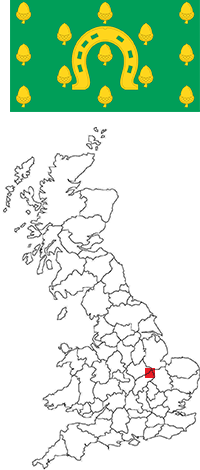
Location