
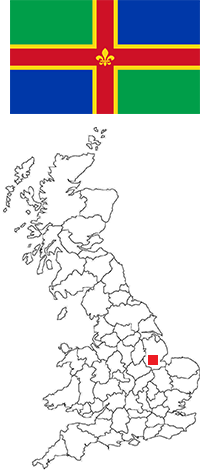
Stamford is a town at the south western edge of Lincolnshire.
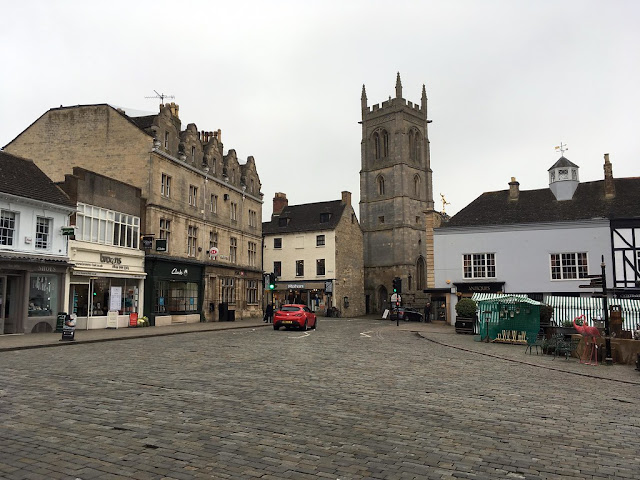
Stamford
Stamford first appears in the Anglo-Saxon Chronicle in 922 as Steanford, however the Romans are known to have forded the river Welland near to the current town much earlier. In the Domesday Book it appears as Stanford which means stony ford.
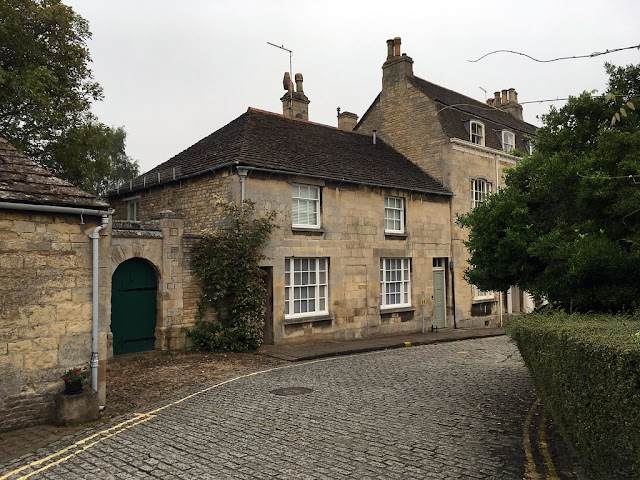
Stamford
Stamford became known for it's woollen cloth in the medieval period and was an inland port on the Great North Road. The town gained a wall for protection. Stamford was granted an annual fair, it remains a fixture and is the largest street fair in the county.
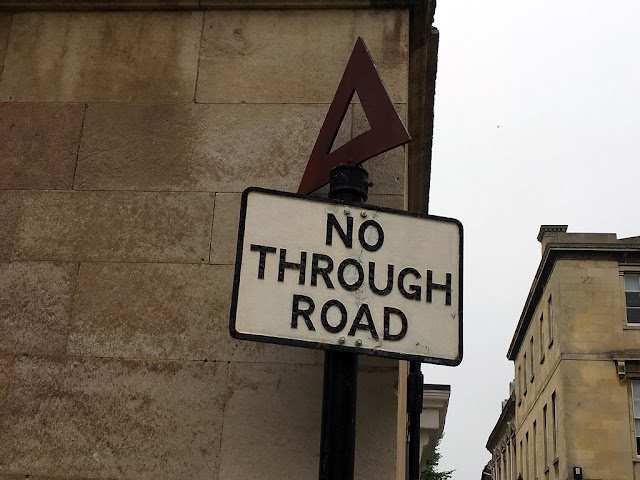
Vintage sign
During the 16th century the town went into decline as the woollen cloth trade fell away. New leather, weaving and rope making industries in the following century helped Stamford arrest it's decline and grow again.
The town was an important religious centre during the Middle Ages and has a number of historic churches including All Saints, which has Saxon origins, and St John the Baptist which dates from the 12th. Of more recent vintage is Stamford railway station which was opened in 1848.
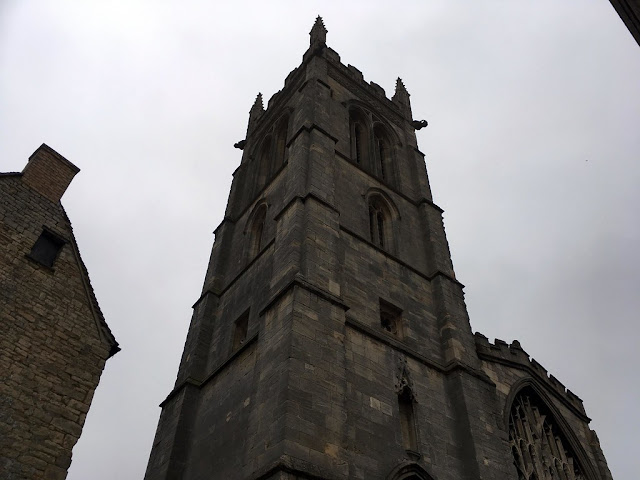
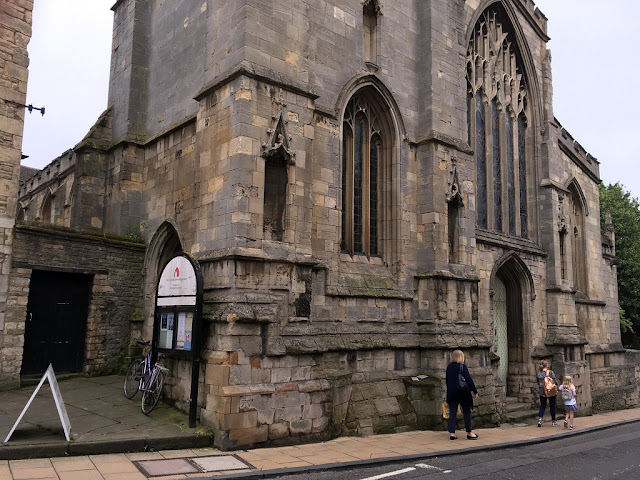
John the Baptist
The church of John the Baptist in the Lincolnshire town of Stamford is now redundant as a place of worship though has been preserved. The church's origin is 12th century though little from that age survives apart from scattered examples of stone work. Most of the current Perpendicular style church dates from the early 15th century including the five stage tower.
The church was restored by the Victorians. Other work took place on the church in the 1950s to address problems caused by subsidence in the vaults. The church has been disused since 2003, it is under the care of the Church Conservation Trust.
Stamford castle
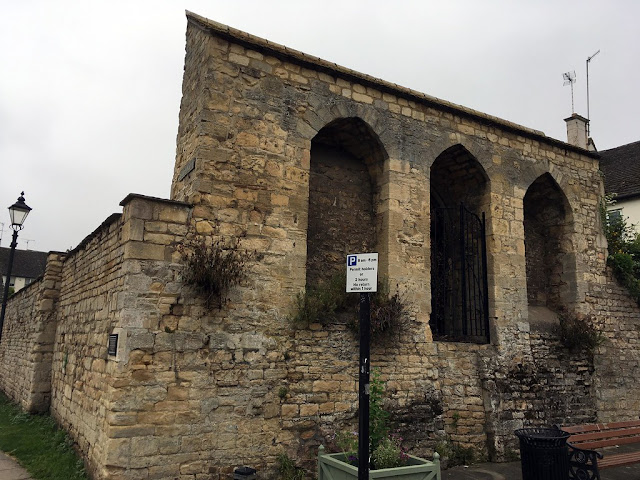
Stamford Castle was a Norman structure built around 1075. It was built on a small hill overlooking the river Welland and the west of the town of Stamford. Little details of the castle's early existence are known though it thought to have been a standard motte and bailey design. The castle may have been built on the site of earlier fortifications.
The castle was besieged in the civil wars of the twelfth century but fell into decay in the following century when it was described as old and decayed.
The castle was largely demolished in 1484, the site remaining vacant for hundreds of years before being built on in the twentieth century. All that remains of the castle now are a small part of the curtain wall.
All Saints
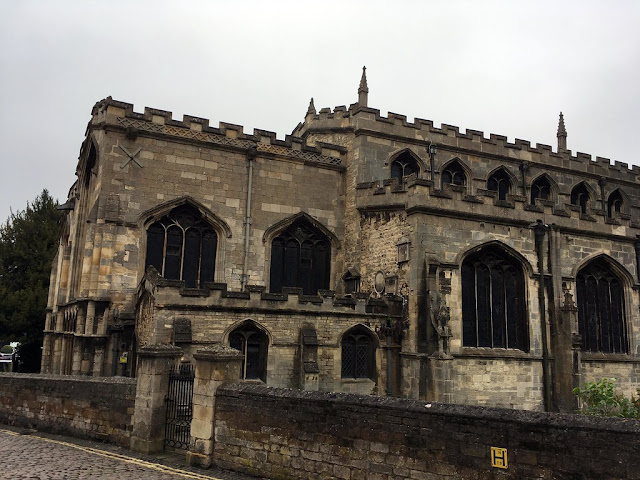
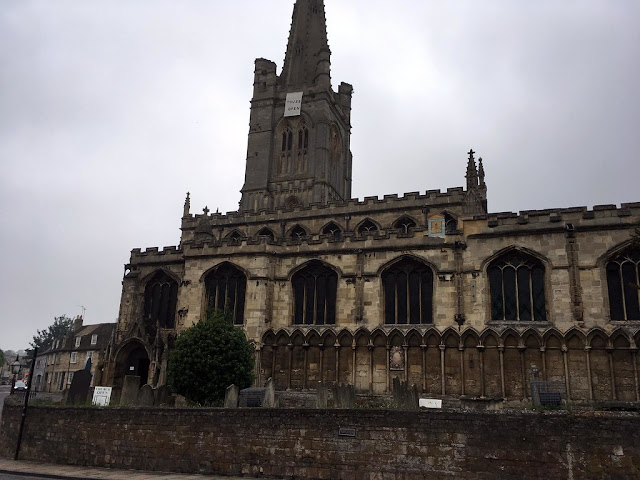
The parish church of All Saints in Stamford, Lincolnshire has existed since before the Domesday Book though no parts of the church remain from this time. Most of the current church dates from the 13th century with some remains from the previous century including part of the nave.
The church had a number of additions in the 15th century, including the steeple and clerestory. The church was restored in the mid-19th century. The church is made from coursed limestone and rubble.
Location