
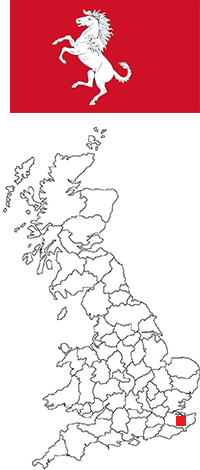
The village of Headcorn is in central Kent, near to Maidstone.
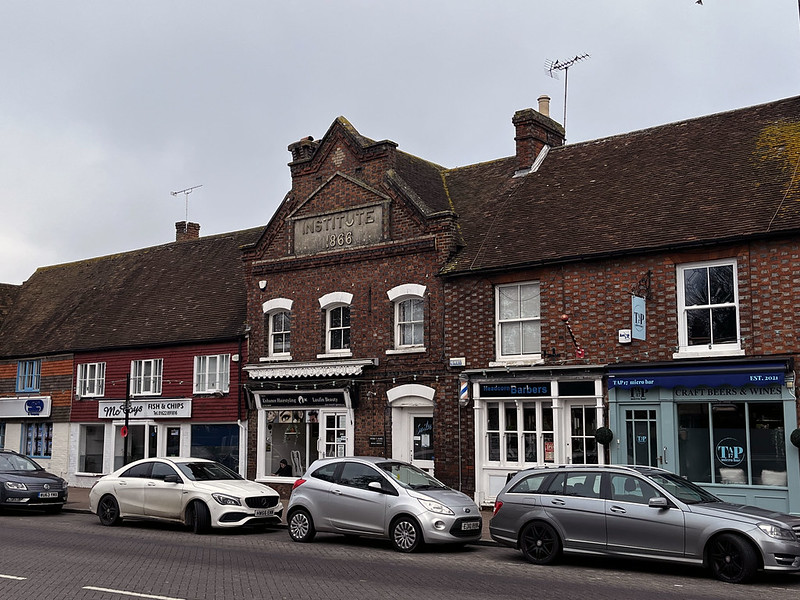
Headcorn
There has been settlement in the area since at the Palaeolithic with flint stone axes found north of the village that may be 250,000 years old. There is also evidence of farming from the Iron Age and Roman periods. In the Domesday Monachorum there is listed a church at Hedekaruna. This name may mean the bridge of Hydeca. The location was an important crossing over the river Beult.
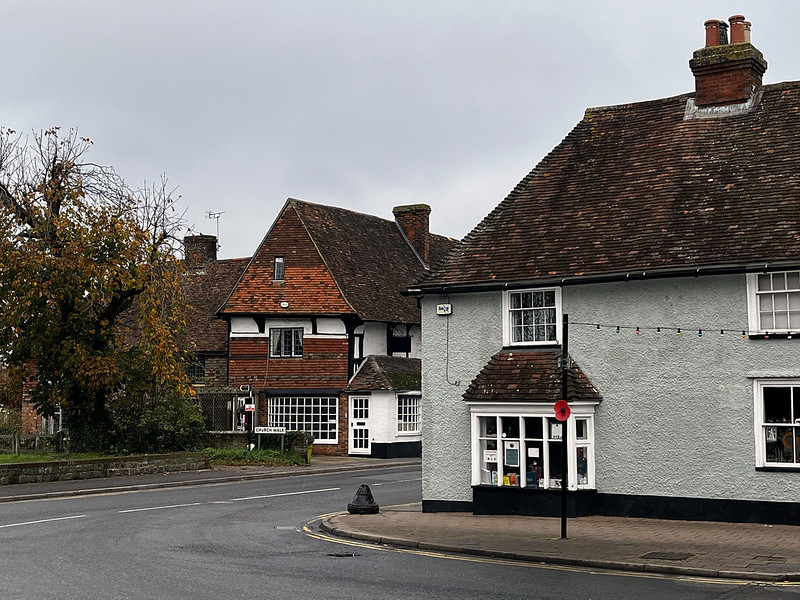
Houses near the church
The village grew in the early medieval period, being granted a market and an annual fair in 1251. A Trinitarian priory was established in 1224, this lasted until 1538. The village grew wealthy due to a weaving industry established during the reign of King Edward III.
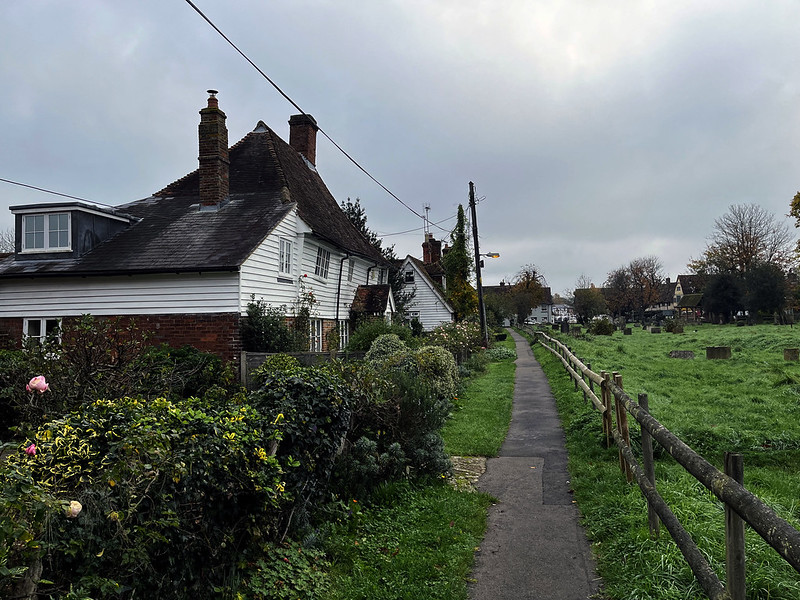
Next to the churchyard
Headcorn was an important transport hub during the age of stage coaches, the railway reached Headcorn in 1842. A nearby aerodrome was opened in the 1920s and remains open for Air Cadets and flight training.
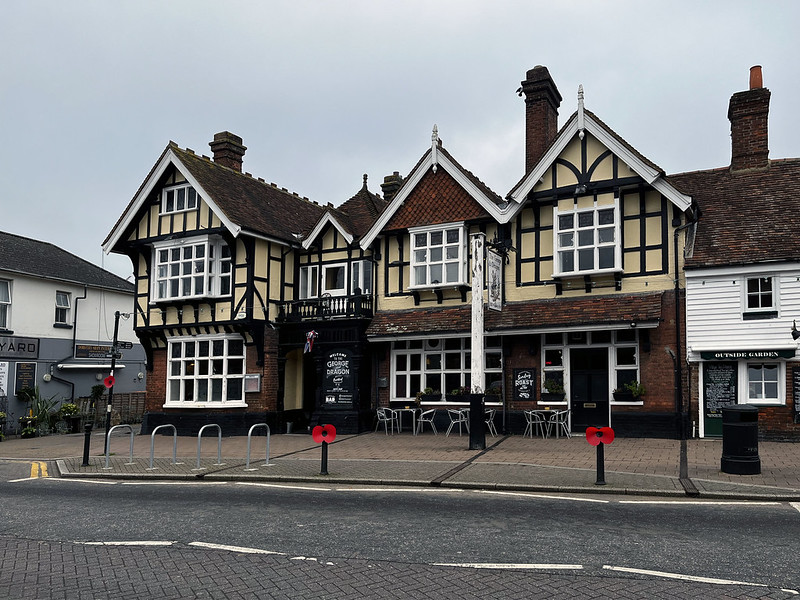
George & Dragon pub
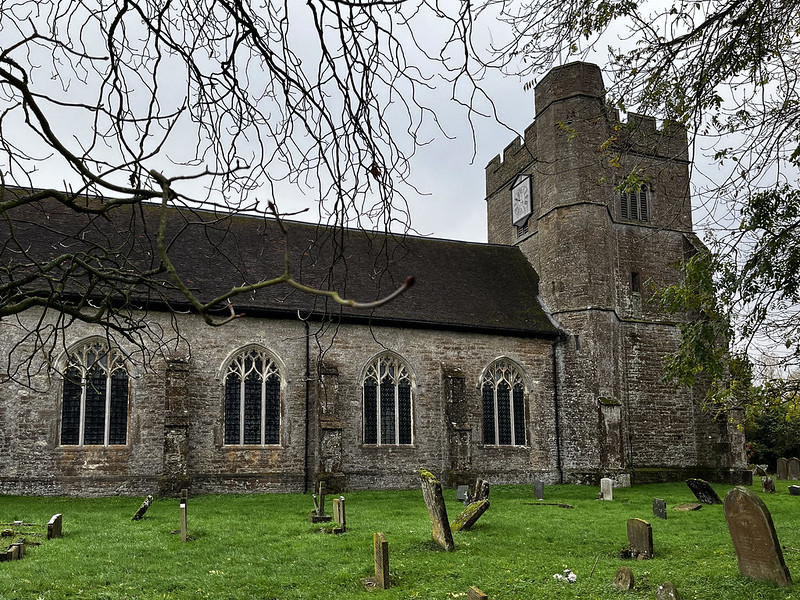
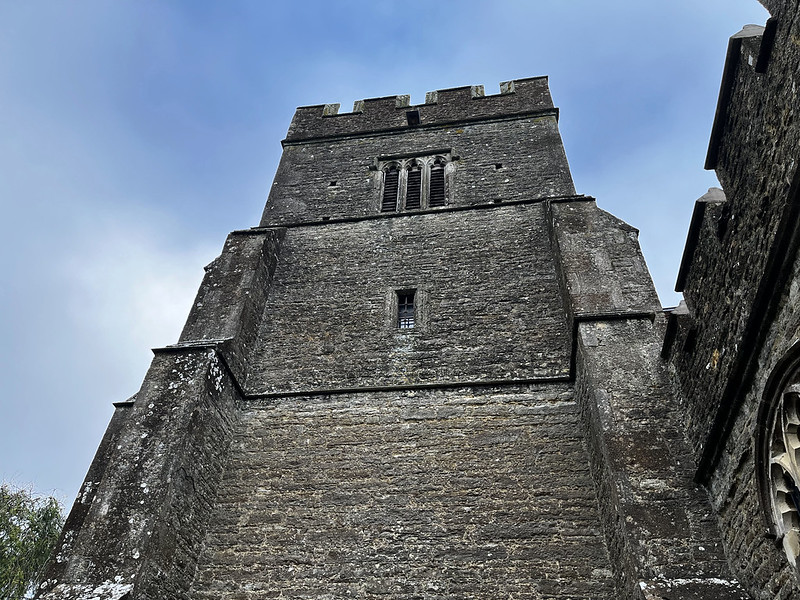
St Peter & St Paul
The parish church dates from the 13th century, with additions in the 14th and 15th, and was built on the site of an earlier church. The church has an aisled nave with a chancel to the south and a tower to the west which was built in the 14th century. The south aisle has a chapel, another 14th century addition.
The church is built from Bethersden marble. It was restored in the second half of the 19th century.
Location