
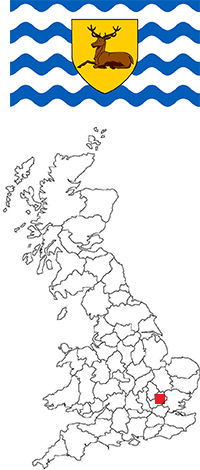
The town of Berkhamsted is in the west of the county.
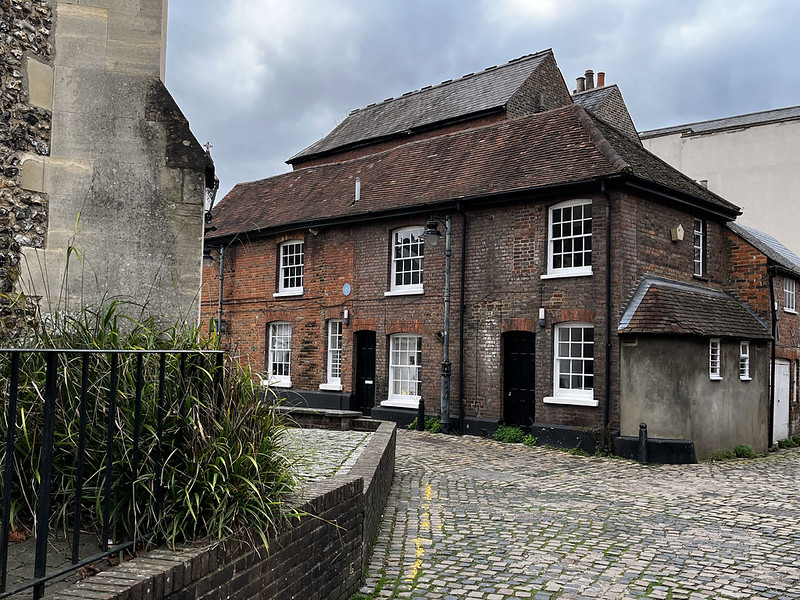
Houses near the church
Berkhamsted has Saxon origins, with the earliest mention being in 970CE (in a will). However, traces of settlement has been found in the area dating back to the Neolithic. Remains of a number of Roman buildings including a temple have also been found in the area.
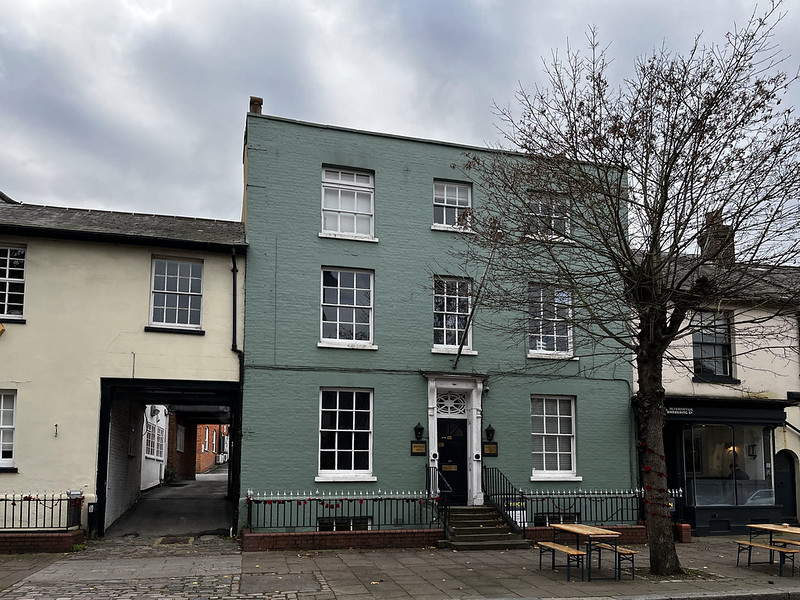
Double fronted property on the high street
During the Middle Ages, Berkhamsted became a centre of the wool trade. Henry II granted Berkhamsted town status in a royal charter in 1156. Berkhamsted was also a religious centre during the early Middle Ages.
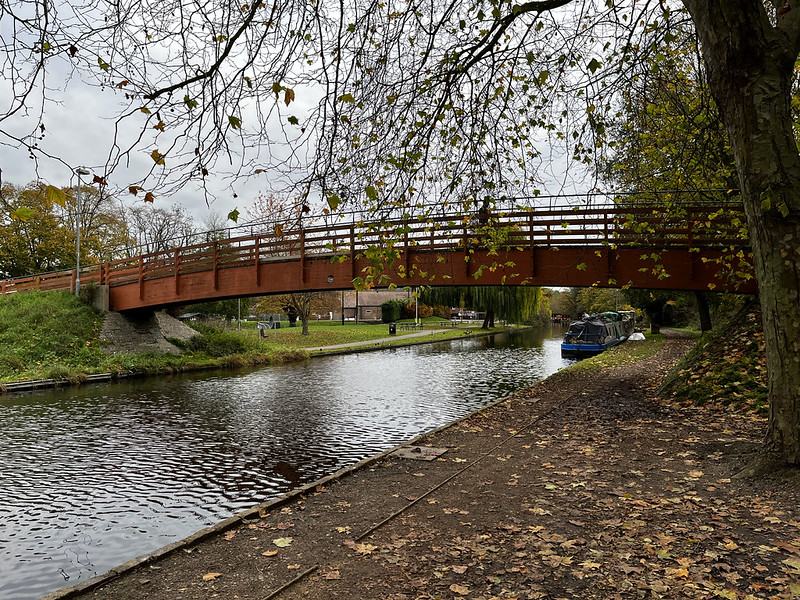
Bridge over the Grand Union Canal
Berkhamsted went into decline in the late 15th century following the abandonment of the castle. In later centuries, the town regained status as a gateway through the Chilterns between London and the growing industrial Midlands. Wood milling and brush making became important industries. The canal and later the railways became important transport links through the town. However, as with many towns near to the capital, industries closed in the 20th century as people commuted to jobs in London.
Berkhamsted castle
Berkhamsted castle dates from the 11th century and was a Norman motte and bailey castle built to help strengthen the grip of William the Conqueror on his new lands. The castle continued to be developed and expanded into the 14th century but in the 15th it fell into decline and later ruin.
The castle was nearly destroyed by the coming of the railways, the London-Birmingham line was originally intended to cut straight through the castle site, but the castle saved by becoming the first building to receive statutory protection in parliament in 1830.
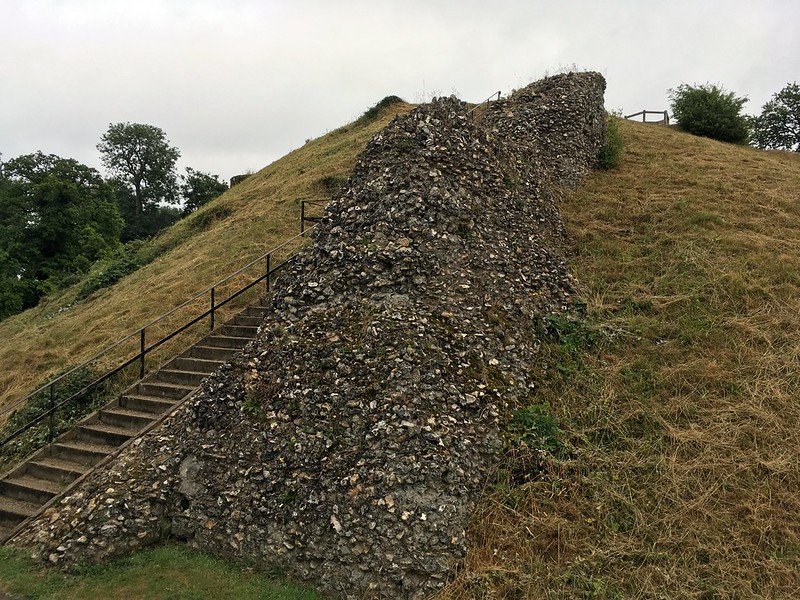
Now the castle is a rather picturesque set of ruins located next to the railway station. No complete building survives though a number of walls fragments and the motte survive.
St Peter
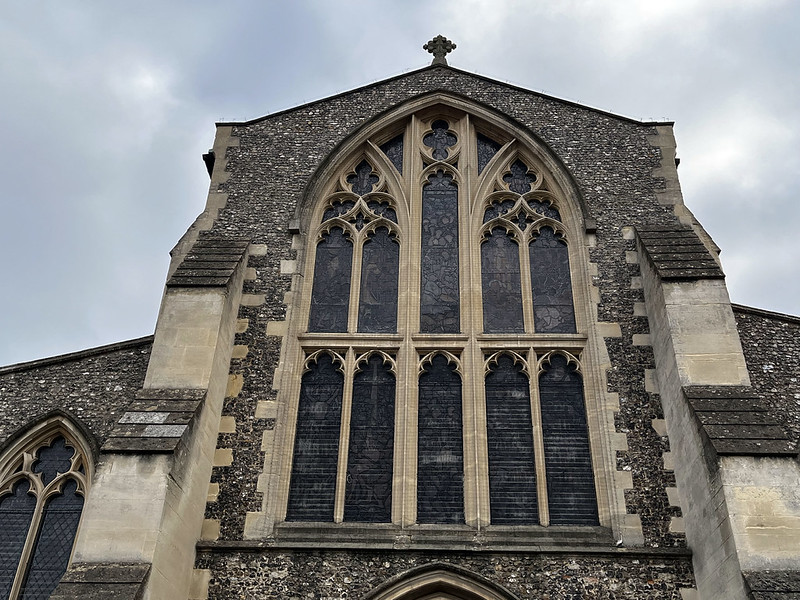
The parish church of St Peter in Berkhamsted, Hertfordshire was founded in around 1222CE though most of the current church dates from the 14th and 15th centuries. The church was altered during a Victorian restoration.
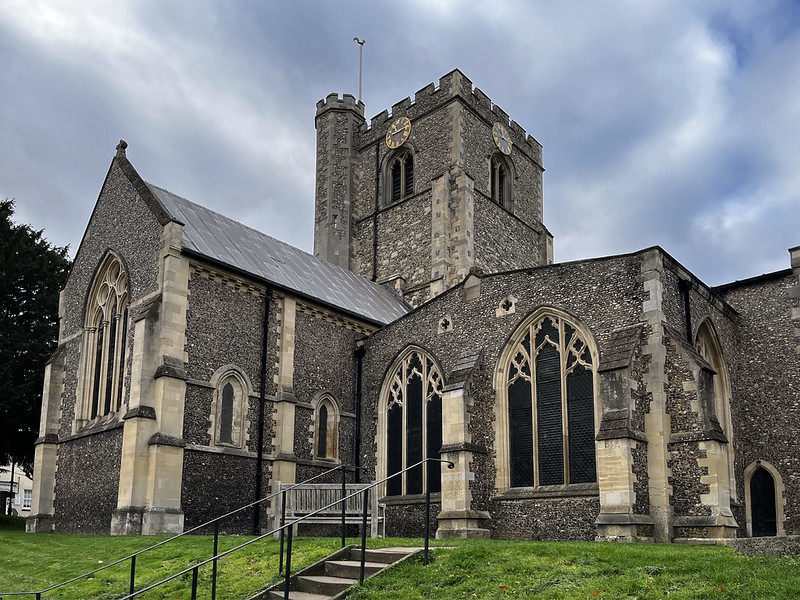
The church is in a cruciform layout with a nave and transepts, the tower atop the crossing. The chancel is the oldest part of the church which dates from the 13th century. The south transept has a lady chapel. During the restoration in the 1870s the exterior was refaced with flint flushwork.
Location