
Leominster is a market town towards the north of Herefordshire between Hereford and Ludlow.
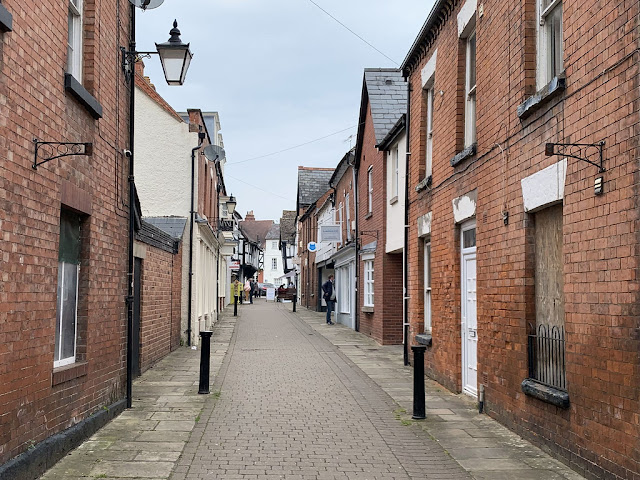
A Leominster street
Leominster takes it's name from the Celtic Leon or Lene and a community of clergy (minster). During the Saxon period Leominster was the home the saint Æthelmod who was probably buried at Leominster. Leominster was raided by the Vikings and later was the site of a battle in 1052 between the Welsh and Saxons, this being the battle of Llanllieni (the Welsh name for Leominster).
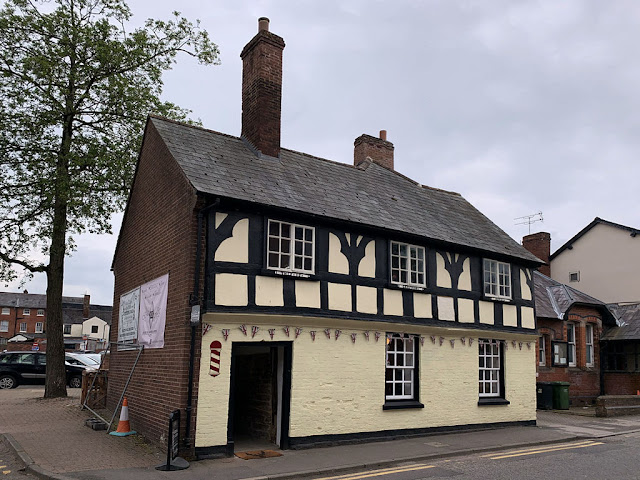
Semi-timbered building, now a barber shop
A priory was founded in Leominster in 1121 by Reading Abbey, who had been granted the land by Henry I (there was a Saxon priory earlier on established around 660). Part of the priory survives as the parish church of St Peter and St Paul.
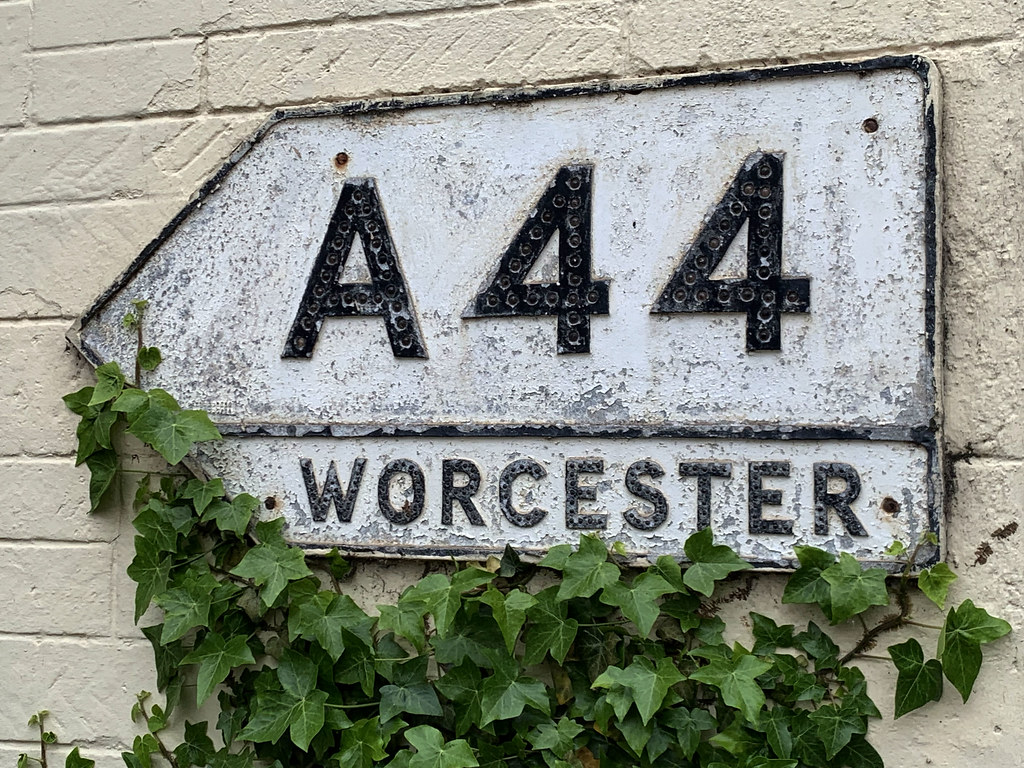
Vintage road sign
As well as Christianity, Leominster is known for it's wool, Ryeland sheep historically came from Leominster and it's wool was much prized in the Middle Ages. In later years Leominster was the site of one of the earliest cotton mills in the world (from around 1748). Leominster railway station, now a stop on the Welsh Marches Line, was opened in 1853.
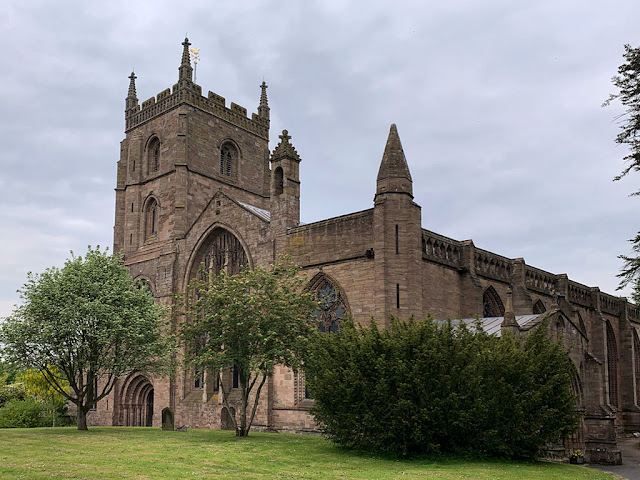
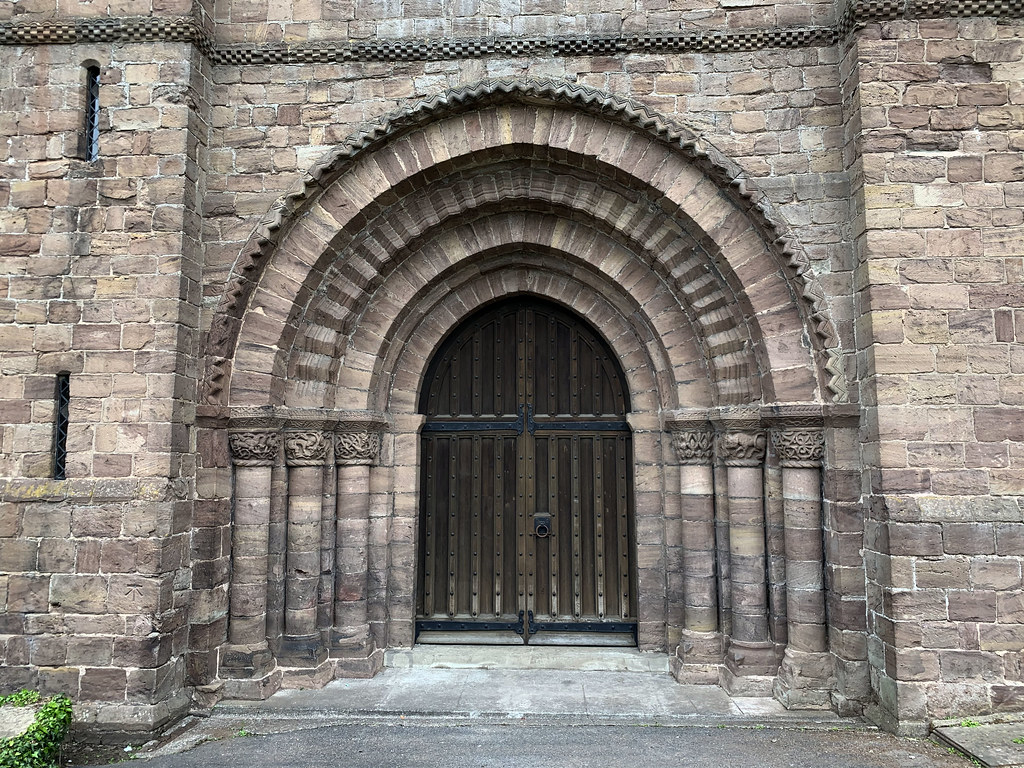
Priory Church
The Priory Church (dedicated to St Peter and St Paul) in Leominster, Herefordshire was originally a Benedictine priory built in the 13th century, possibly on the site of an earlier Anglo-Saxon monastery. In 1539 the East side of the church, and most of the monastic buildings, were destroyed but the rest of the priory survived to become a parish church.
The church has a two-tier West tower, a South aisle which dates from the 16th century and a North aisle dates from the 19th. The church is built from ashlar sandstone.
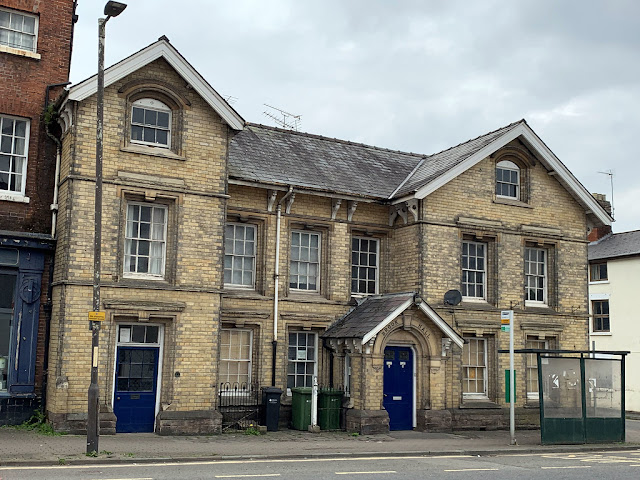
Brook Hall
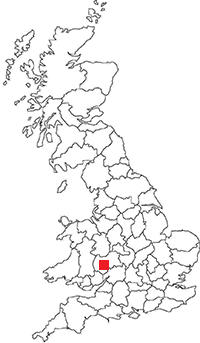
Location