
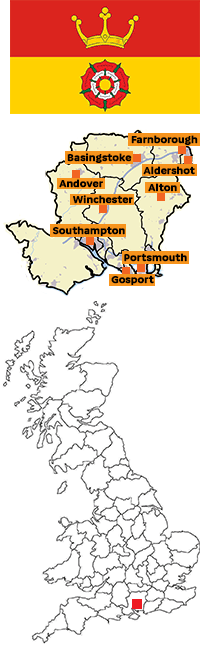
The town of Farnborough is in the far north eastern corner of the county.
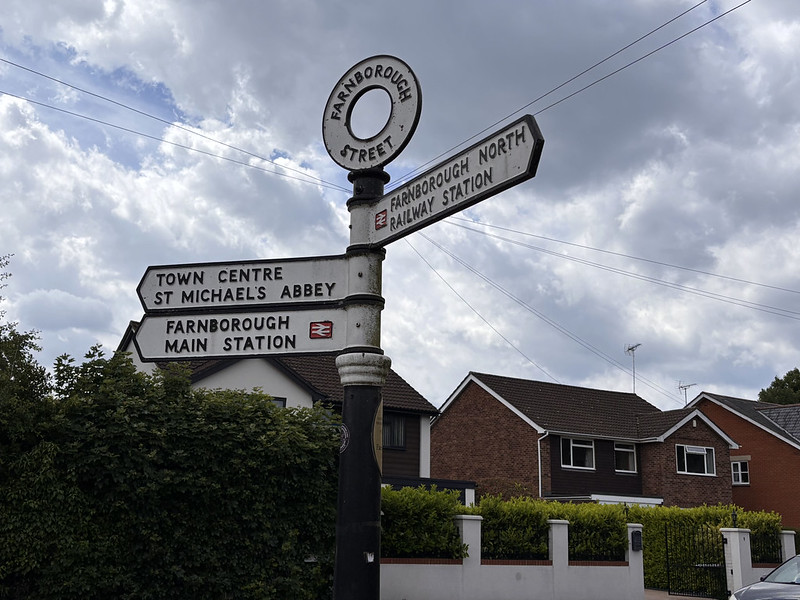
Which way now?
There has been settlement around the Farnborough area since the Mesolithic. A Roman road, the Devil's Highway passed through the current location of Farnborough (see also Crowthorne for more on this Roman road). Farnborough has Saxon origins, the name being derived from Ferneberga or fern covered hill.
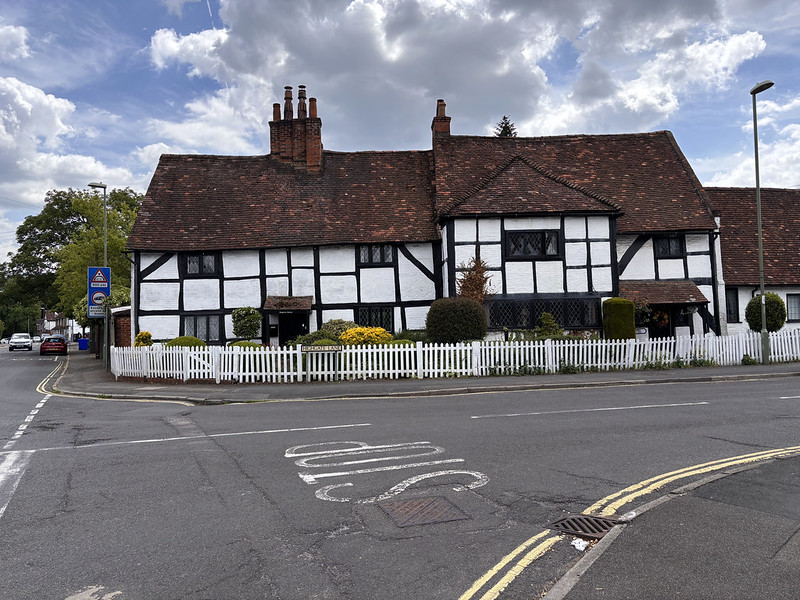
Old houses in Farnborough
By the time of the Domesday Book, Farnborough was a small hamlet. It remained a small settlement for centuries with a mostly agricultural economy, however as with so many other places that was changed by the arrival of new transport links in the 19th century, especially the railways.
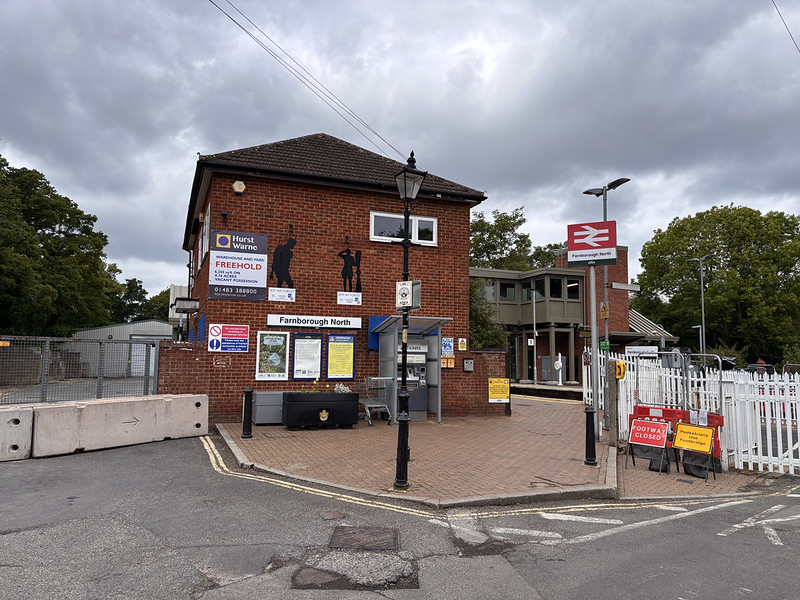
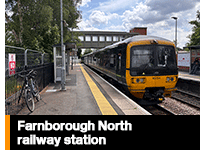
Farnborough North railway station
Farnborough doubled in size in the first half of the 19th century, thanks to a new influx of middle class residents and London commuters. However, what made Farnborough's name was another mode of transport: the aeroplane. The Royal Engineers moved their balloon school to Farnborough in 1905 and opened a factory [1]. A couple of years later Samuel Cody built the first British aeroplane in Farnborough which first flew in 1908. Several aircraft manufacturers based themselves in the area, the Royal Aircraft Establishment being formed in the town in 1918 and led the way with development and testing of the latest aviation technology.
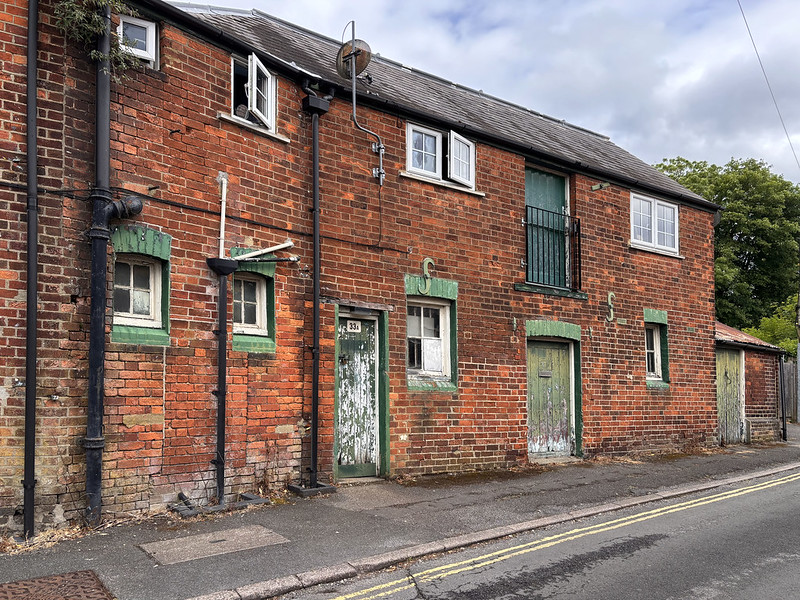
Building in Farnborough
The town has greatly grown from a few hundred in the 19th century to nearly sixty thousand today. Farnborough is host to a biennial airshow, one of the major aerospace trade events and home to the Farnborough Air Sciences Trust (FAST) Aviation Museum, where a replica of Cody's first aeroplane can be seen.
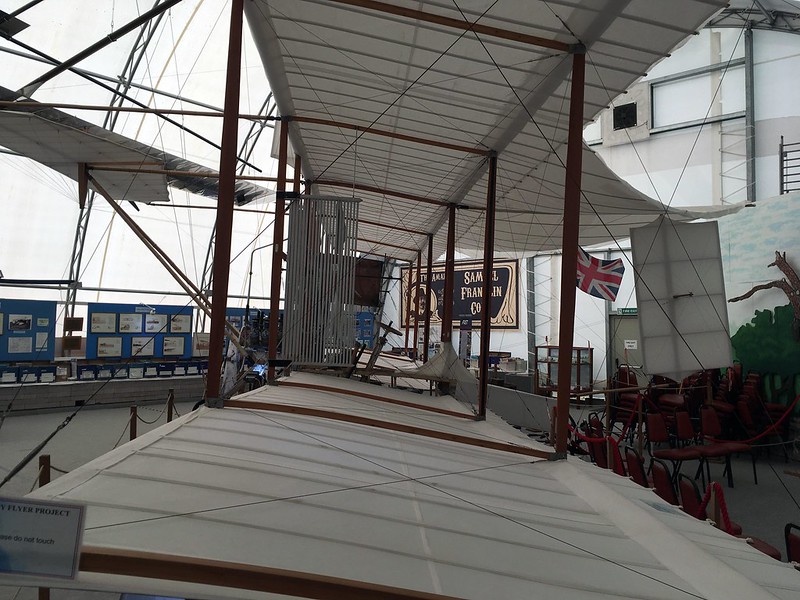
Cody Flyer replica at FAST
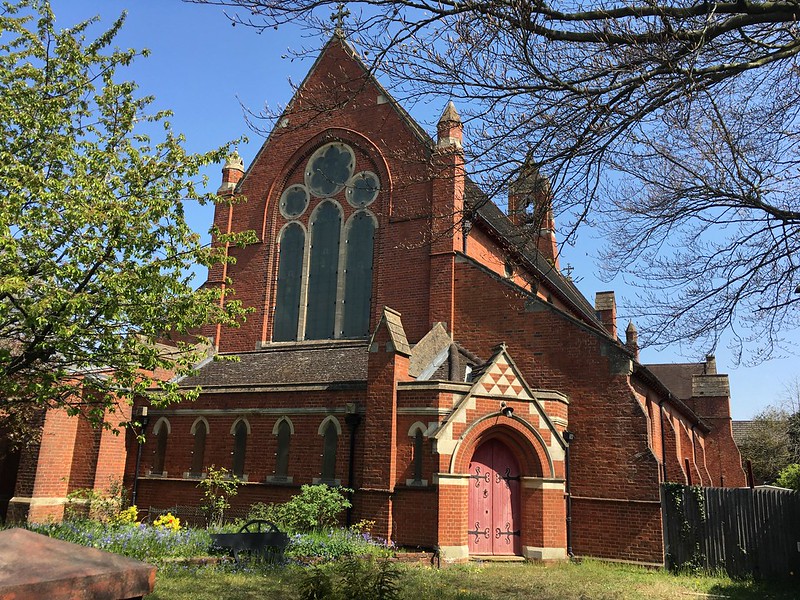
St Mark
The Church of St Mark in south Farnborough was built in 1881 in the Victorian Gothic style harking back to the 13th century. The church has a small nave with North and South aisles. The church also has a chancel and North and South transepts.
There is a single bell in a bell gable. The church was built from red brick with stone dressing.
[1] Percy B. Walker, Early Aviation at Farnborough (MacDonald, 1971) p. 65
Location