
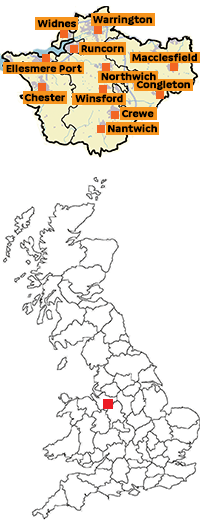
The market town of Nantwich is to the south of the county.
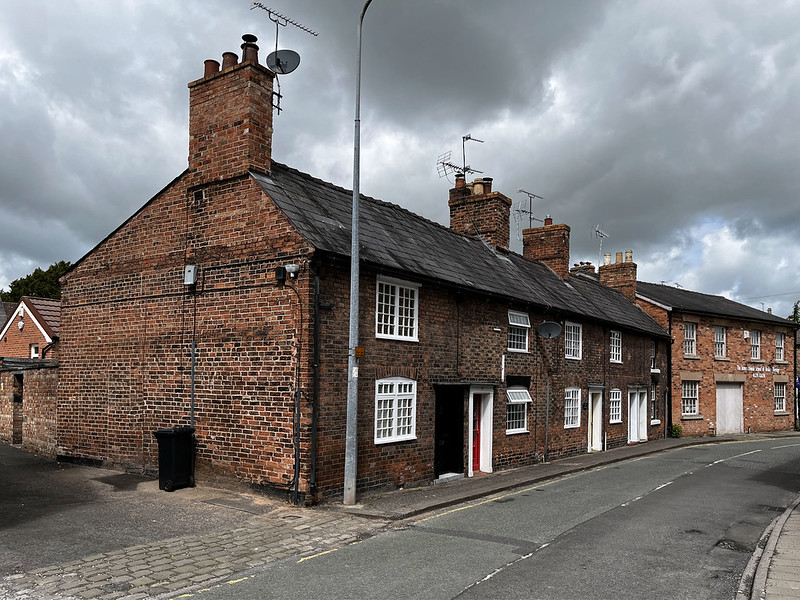
Houses in Nantwich
Nantwich has Roman origins, salt from Nantwich being used at Roman garrisons at Chester and Stoke-on-Trent. The name Nantwich has Welsh origins, meaning brook and brine springs. By the time of the Domesday Book, Nantwich was listed as having eight salt houses. Nantwich remained the most important salt town in Cheshire into the Medieval period. Nantwich was granted a market charter in the 14th century.
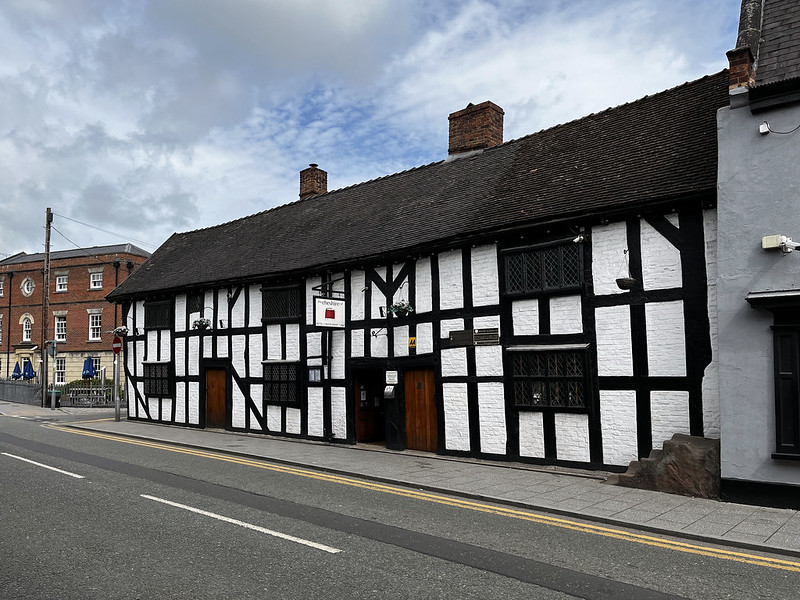
Timber-framed buildings
The salt industry continued to grow, by the 16th century there were around 400 salt houses in the town. However, the industry declined quickly after this and by the end of the 18th century the salt industry had almost disappeared. As well as salt, another important trade in Nantwich was the tanning industry, this survived in the town until 1974.
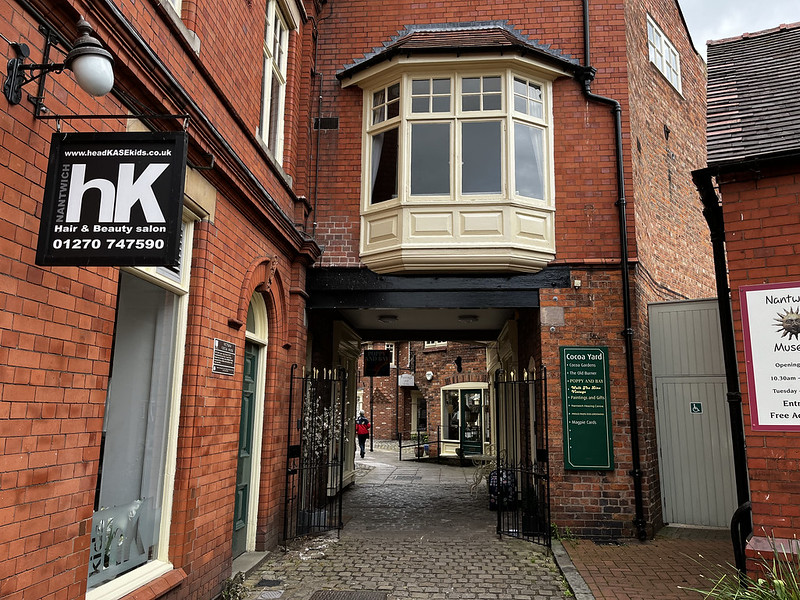
What is through here?
The town was largely burned down in 1583. The town was rebuilt with the help of Queen Elizabeth and to this day the town has a fine selection of Elizabethian timber-framed buildings. The parish church of St Mary is 14th century and one of the few surviving buildings in the town from before the fire.
Nantwich railway station opened in 1858. The Shropshire Union Canal runs through the west of the town.
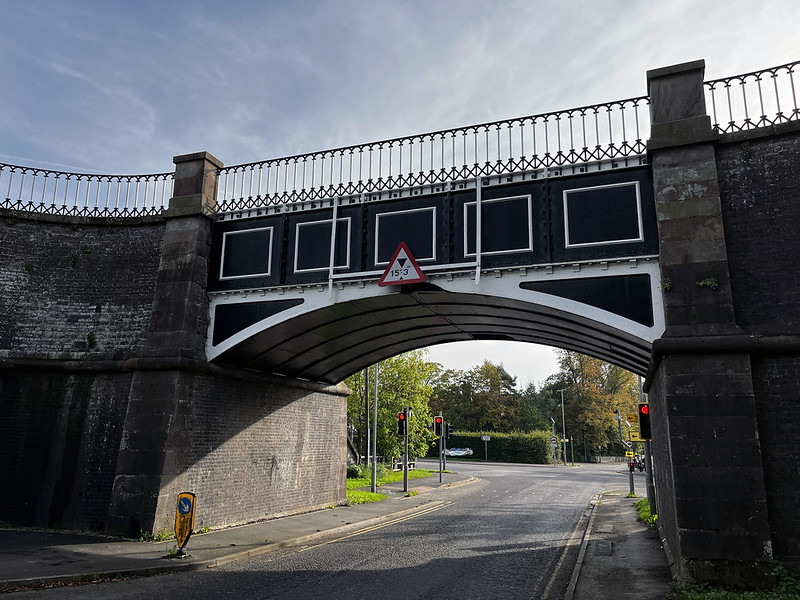
Canal aqueduct
St Mary
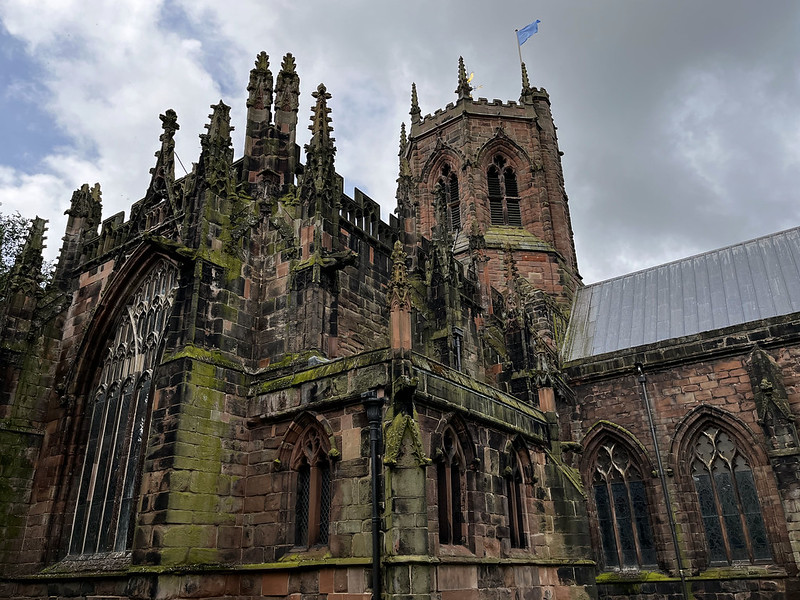
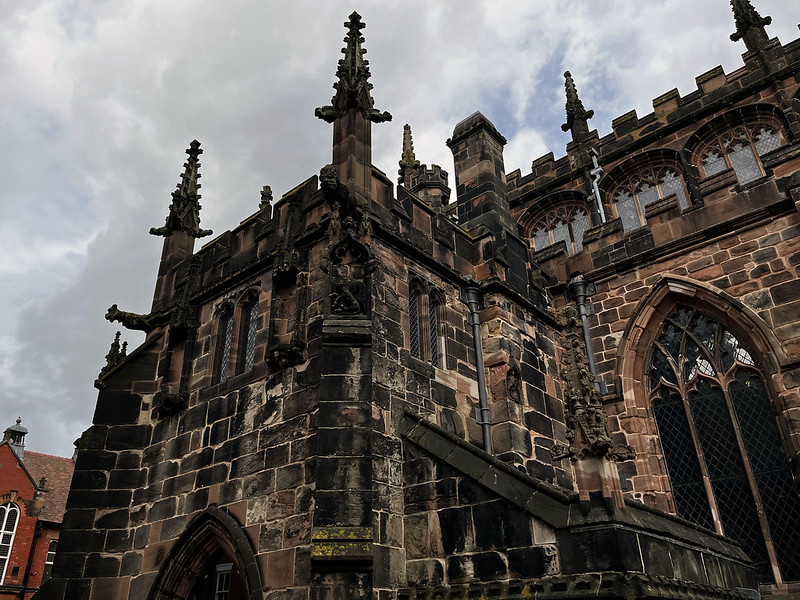
The parish church of St Mary in Nantwich, Cheshire dates from the 14th century. There were changes made to the church in subsequent centuries and a major restoration in the 19th century. Work began on the church in 1340 and it is built in the Decorated style. The south transept was endowed as a chantry chapel. The tower is octagonal.
Amongst the changes made the church was to raise it's floor due to flooding. The nave roof was also raised and a south porch added. North and south galleries were added in the 18th century. The church is built from red sandstone.
Location