
The Sopwith Dolphin was a fighter designed late in the First World War to use the Hispano-Suiza 8B engine. An interesting feature of the Dolphin was the negative stagger of the top wing. This allowed the pilot an excellent view though could be difficult for new pilots to fly.
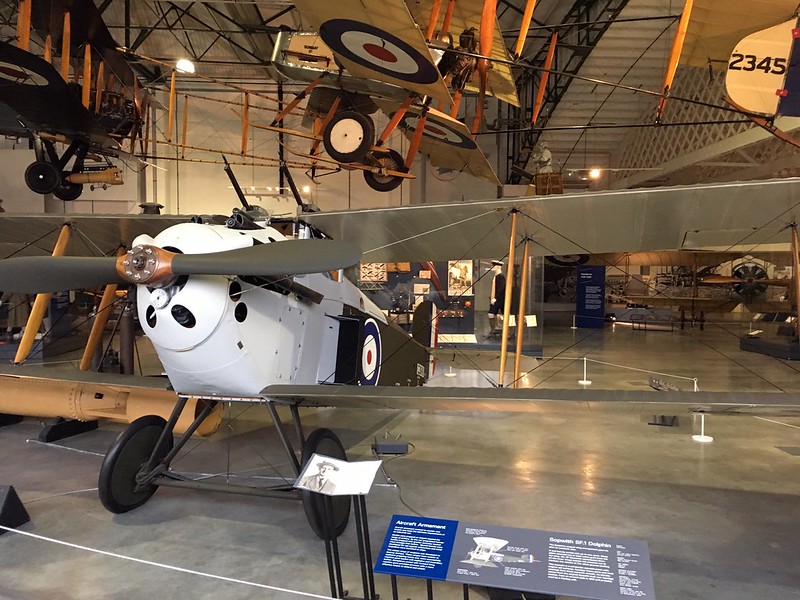
C3988 at RAF Museum London
| Information | |
|---|---|
| Manufacturer: | Sopwith Aviation Company |
| First flight: | 1917 |
| Propulsion: | Hispano-Suiza 8B 12A V8 piston-engine |
| Withdrawn: | Early 1920s |
| Number built: | 2,072 |
The Dolphin first flew in May 1917 with series production, after a number of changes to the design following testing, beginning later in the year. The Dolphin entered service early in 1918 and was found to be fast and agile with a good high altitude performance, though not without some engine problems. One key role for the Dolphin was to intercept high flying German reconnaissance aircraft.
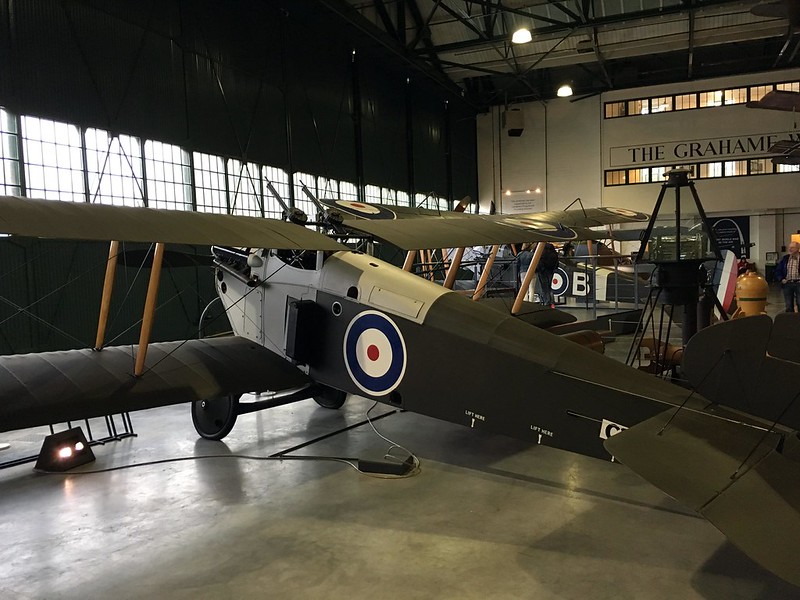
Another view of C3988
Although a good aircraft, the Dolphin was quickly retired after the end of the war due to the massive reduction in the size of the Royal Air Force. A small number served into the early 1920s, seeing service with the Polish and Ukrainian Air Forces. No whole Dolphin has survived but one aircraft (C3988) has been built out of surviving spare parts and a new fuselage. It is on display at RAF Museum London.