
The Airco DH.9A was a light bomber that entered service in the last few months of the First World War. The DH.9A was a development of the underpowered and unsuccessful DH.9.
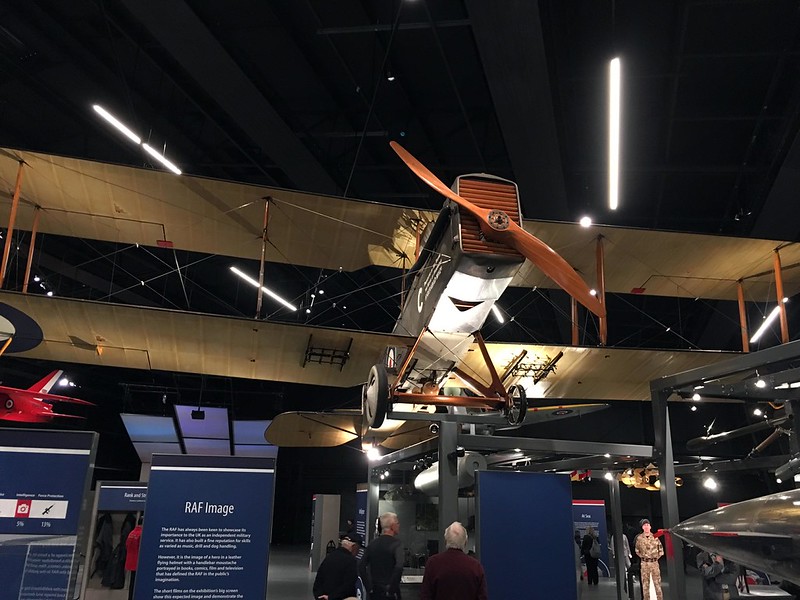
F1010 at RAF Museum London
| Information | |
|---|---|
| Manufacturer: | Airco |
| First flight: | 1918 |
| Propulsion: | Liberty 12A V12 piston-engine |
| Withdrawn: | 1931 |
| Number built: | 1,997 |
The DH.9 entered service in 1917 but had a number of problems, not least it's underpowered and unreliable engine. The DH.9A was fitted with a more powerful Liberty engine from the US. It also had a strengthened fuselage and longer-span wings compared to the DH.9. The DH.9A first flew in March 1918 and entered service in June. After the war production continued as it was chosen as a standard type for the Royal Air Force. Just short of 2,000 were built. It could carry up to 340kg of bombs plus was armed with forward and rearward firing machine guns.
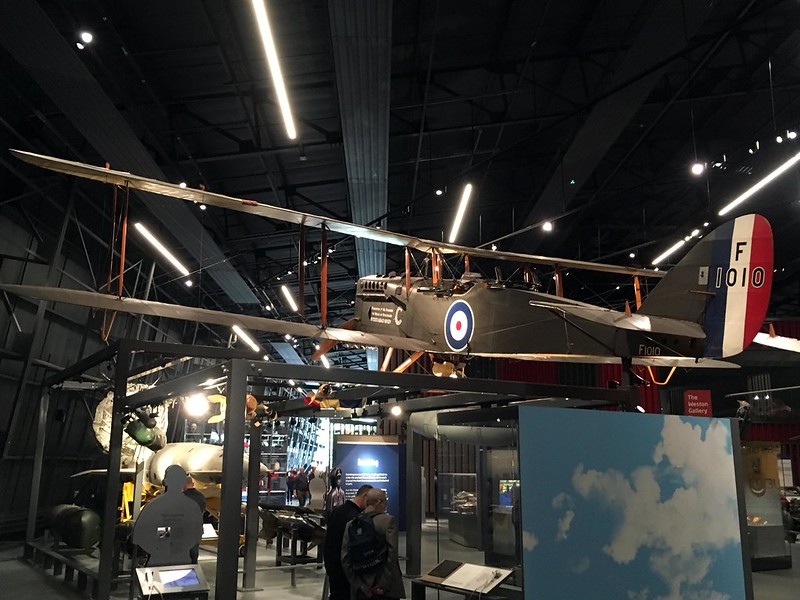
Another view of F1010
Unlicenced copies were also built by the Soviet Union called the R-1. The DH. 9A continued to serve with the RAF as a bomber until 1931. It was also used by a number of other air arms including those of Australia, Canada and the US Marine Corps. One of these US DH.9A was fitted with a pressurised cockpit and made the world's first high altitude flight in a pressurised aircraft in 1921.
Only one DH.9A is known to have survived, F1010 is now on display the RAF Museum London.