
The Hawker Hart was one of the last biplane light bombers developed for the Royal Air Force, it was a development of the Hawker Hart.
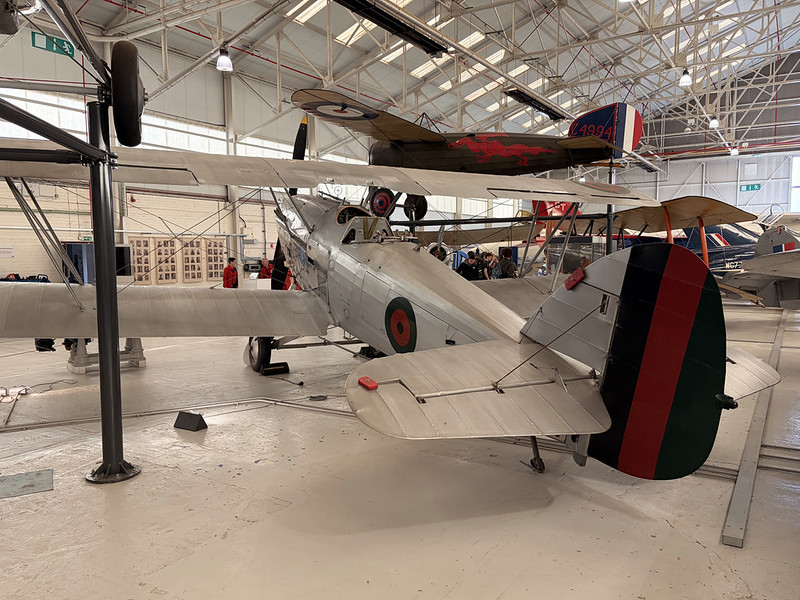
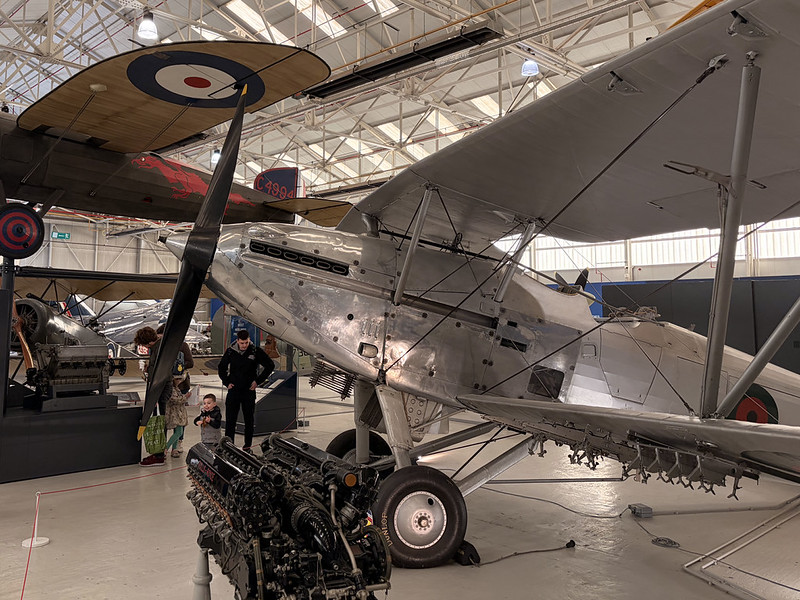
Hawker Hind at RAF Cosford
| Information | |
|---|---|
| Manufacturer: | Hawker Aircraft Company |
| First flight: | 1934 |
| Propulsion: | Rolls-Royce Kestrel V V12 piston engine |
| Withdrawn: | Early 1940s (RAF) |
| Number built: | 528 |
The Hind was developed as an interim light bomber pending the development of monoplane bombers in the second half of the 1930s. The Hind first flew in 1934 and entered service the following year. The most notable change from the Hart was the Kestrel V engine.
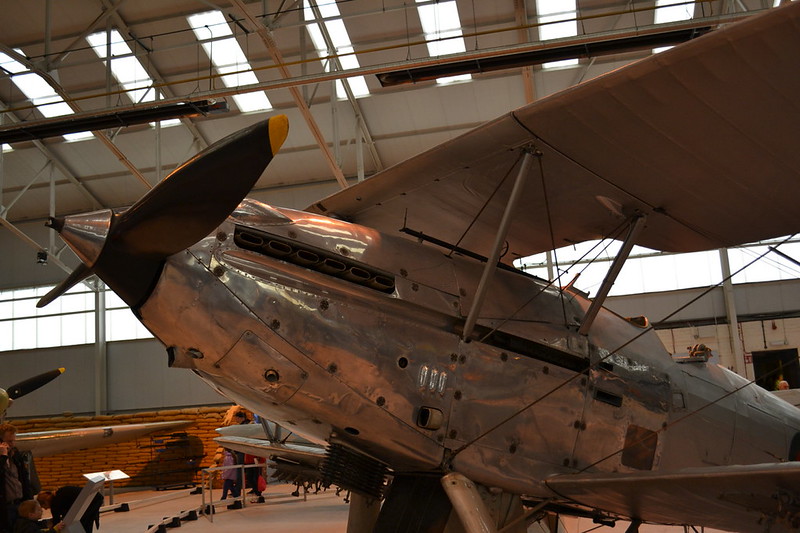
Forward fuselage view
The Hind was already being phased out by 1937 though was still serving with a number of squadrons up until the start of the Second World War. By the war, however, Hinds were mostly used in the training role and remained in use during the early years of the war.
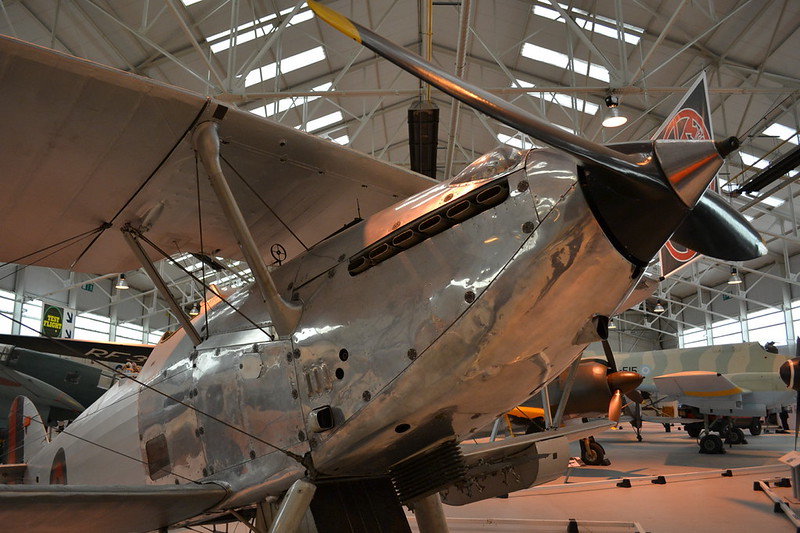
The fuselage is metal, flying surfaces fabric covered
Some Hinds did see combat use as bombers by other air forces such as South African Hinds fighting against Italian forces in Kenya. The Afghanistan Air Force continued to use Hinds against tribal revolts as late as 1947. The final Afghan Hind was not retired until 1956.
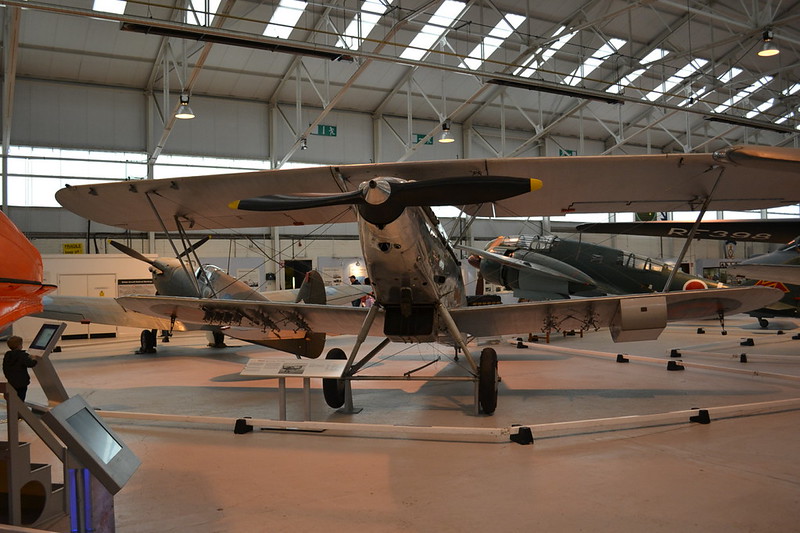
Bombs were carried under the wings, the racks can be seen here
The Hind could carry up to 510lb of bombs and was equipped with two machine guns. Seven Hinds have survived into preservation.
Another side view, this is an ex-Afghan example
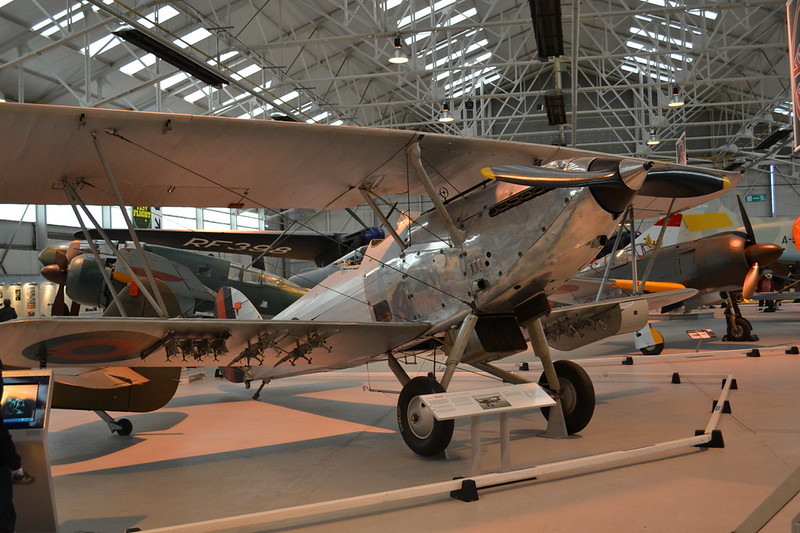
Another view of the bomb racks