
The Gloster Gladiator was the first Royal Air Force fighter to have an enclosed cockpit, it was also the RAF's last biplane fighter. Although obsolete by the Second World War it served throughout the conflict, on both sides!
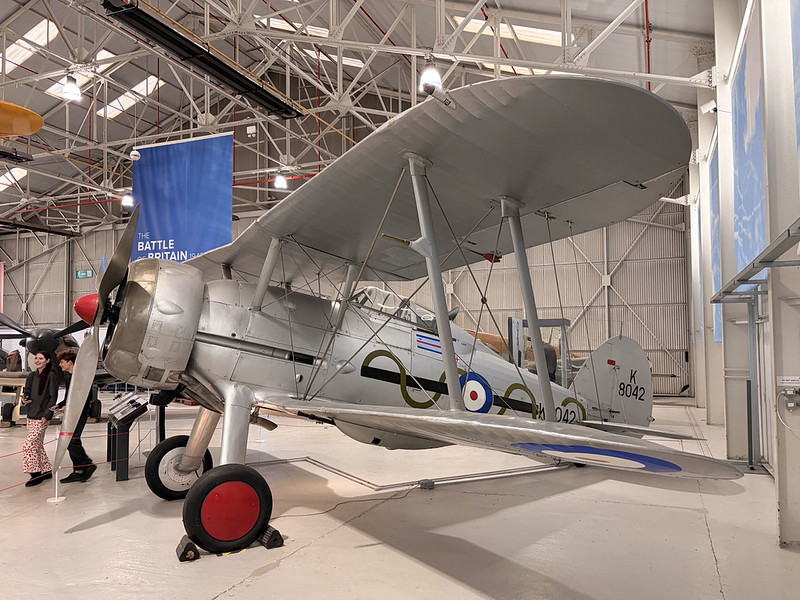
Gloster Gladiator K8042 at RAF Cosford
| Information | |
|---|---|
| Manufacturer: | Gloster Aircraft Company |
| First flight: | 1934 |
| Propulsion: | Bristol Mercury IV radial piston engines |
| Number built: | 747 |
The Gladiator had it's origin in a Gloster private venture, which was adapted to meet a requirement for a new RAF fighter that was capable of over 250mp/h and had four machine guns. It first flew in 1934 and entered RAF service in 1937 though was almost immediately obsolete. The Fleet Air Arm also accepted the Sea Gladiator into service.
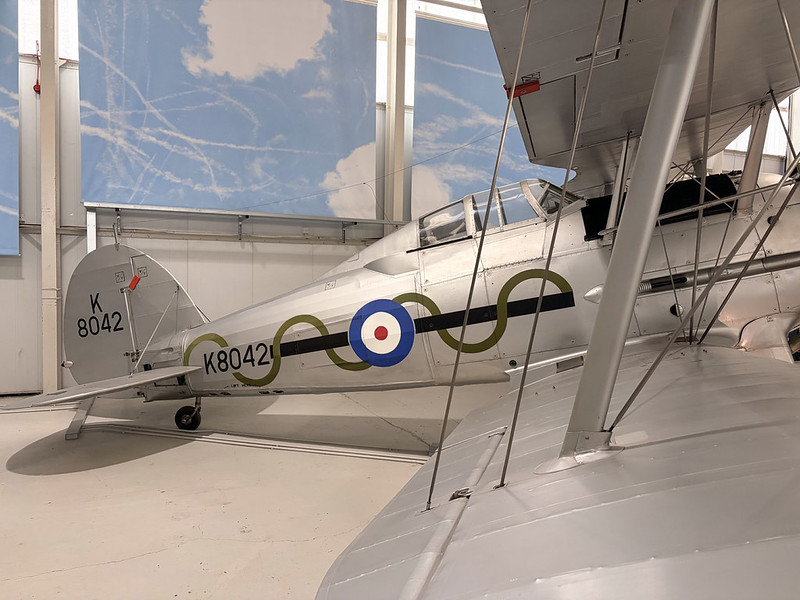
View of the Gladiator's enclosed cockpit
When the Second World War began, the Gladiator was thrown into battle in a number of theatres. One of the Gladiator's most notable (and iconic) engagements was in the defence of Malta in 1940, achieving a number of kills against attacking technically superior Italian fighters. Gladiators also fought in the Middle East and elsewhere in the Mediterranean in 1940 and 1941, though were quickly relegated to secondary roles such as weather reconnaissance as more advanced monoplane fighters became available. A few managed to survive in RAF service until the end of the war.
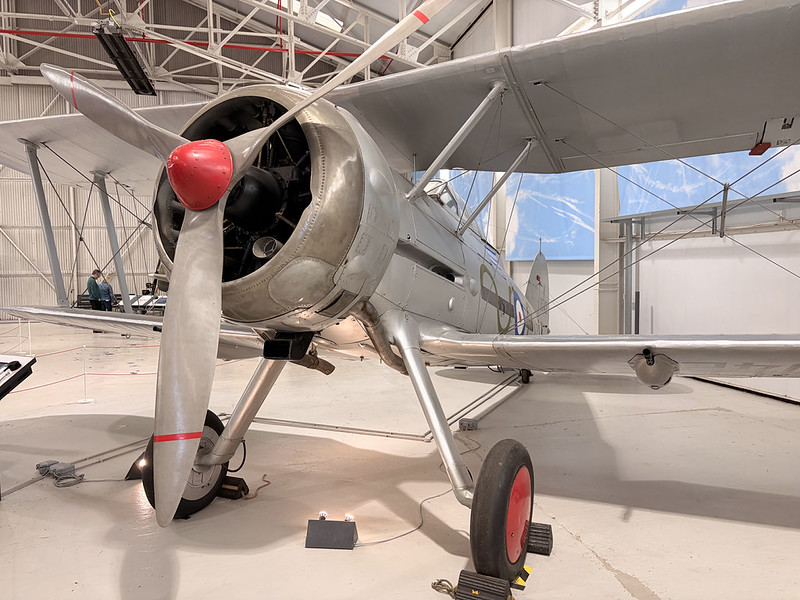
The Gladiator had fixed landing gear
Gladiators were also used by a number of other airforces, seeing service on both sides in the Second World War. Finnish Air Force Gladiators were still in combat operations against the Soviets as late as 1943.
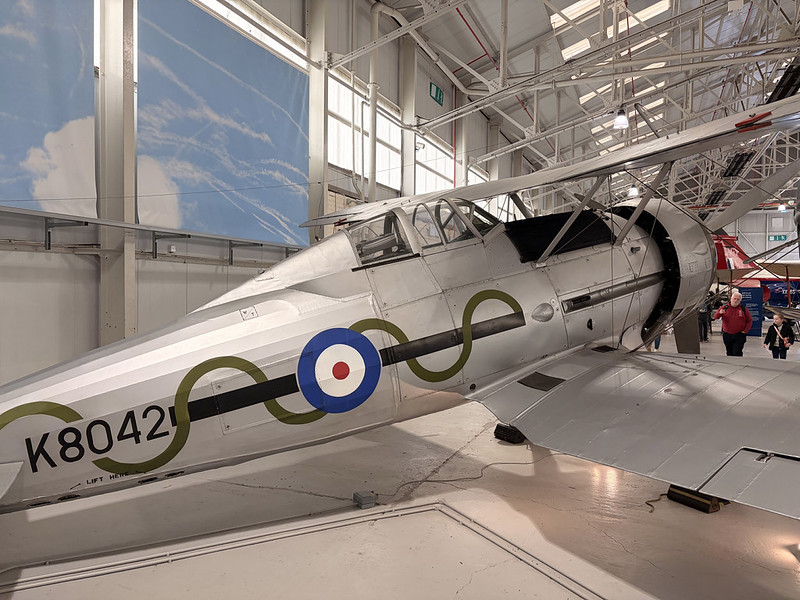
K8042 is in the typical livery of an Interwar Period RAF fighter
The Gladiator remained in service after the war with a number of airforces until the early 1950s. Not bad for an aircraft arguably obsolete by the time it first entered service!
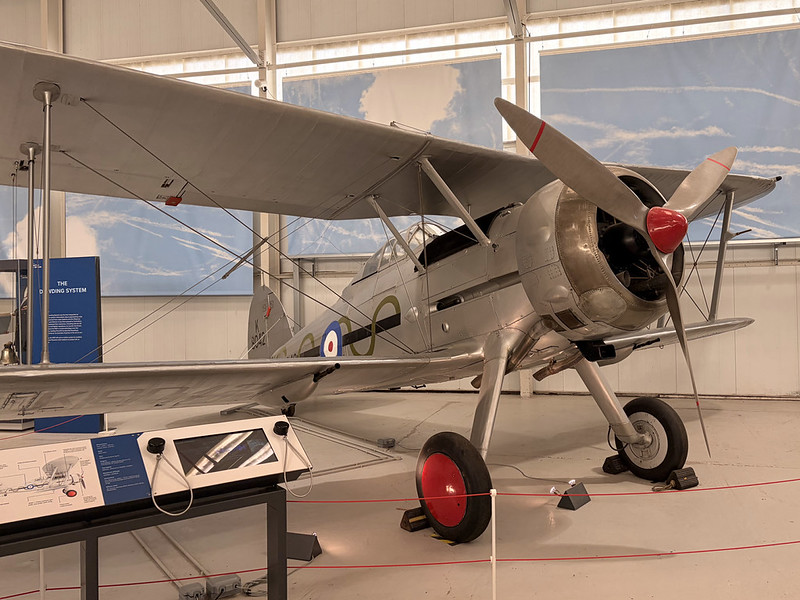
Another view of K8042