
The Bristol Bulldog was a fighter designed for the Royal Air Force in the late 1920s and is one of the better known RAF fighters of the Interwar Period.
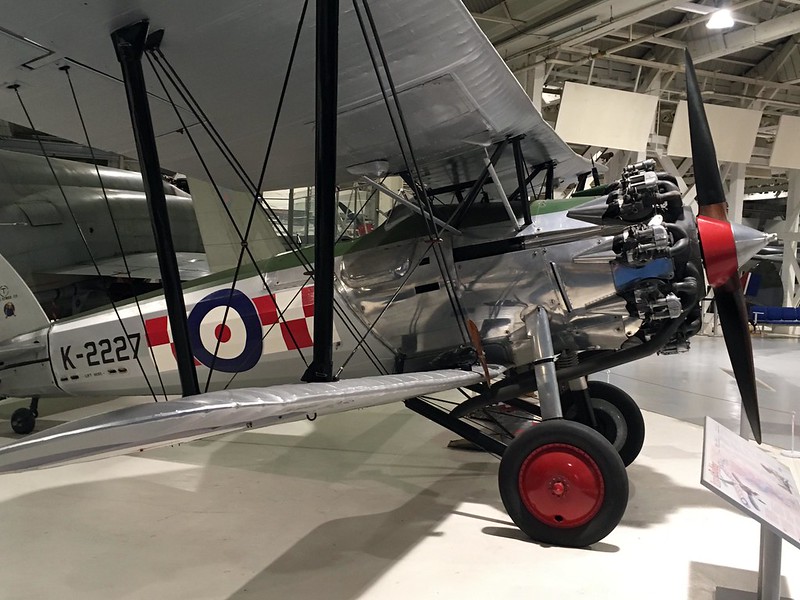
K2227 at RAF Museum Hendon
| Information | |
|---|---|
| Manufacturer: | Bristol Aeroplane Company |
| First flight: | 1927 |
| Propulsion: | Bristol Jupiter VII radial piston engine |
| Withdrawn: | 1940s (Finland) |
| Number built: | 443 |
The Bulldog was an unequal span biplane powered by a Jupiter VII radial engine, also from Bristol. This gave it a high performance with a top speed of 177mph [1]. The fighter was also fitted with a radio and oxygen breathing equipment for the pilot. The Bulldog entered service with the RAF in 1929 and by 1931 formed the bulk of the RAF's fighter force. The Bulldog never saw combat with the RAF, being withdrawn as a fighter in 1937, though Bulldogs sold abroad saw combat in the Spanish Civil War and early in the Second World War in Finnish Air Force service. They remained in use as trainers in Finland into the 1940s.
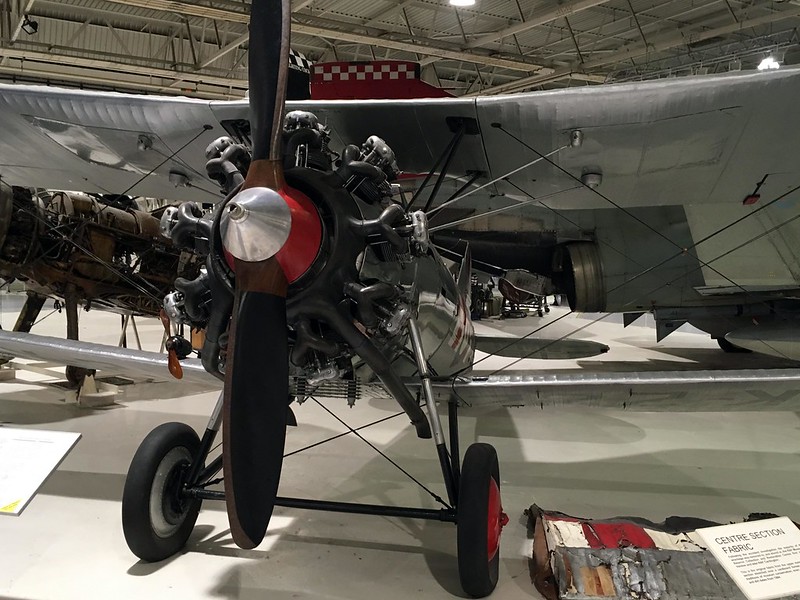
Another view of K2227
One notable incident involving a Bristol Bulldog was the crash of one piloted by Sir Douglas Bader in 1931 in which he lost both of his legs.
Two Bulldogs are in display in museums.
[1] Michael J. H. Taylor, Warplanes of the World 1918-1939 (Ian Allan, 1981) p. 29