
The Bristol Blenheim was a light bomber heavily used by the Royal Air Force early in the Second World War. It had it's origin, unusually, in a challenge by a newspaper owner to create the fastest commercial aircraft in Europe! Lord Rothermere issued the challenge in 1934, Bristol though were already looking into a design inspired by the Lockheed Electra Junior.
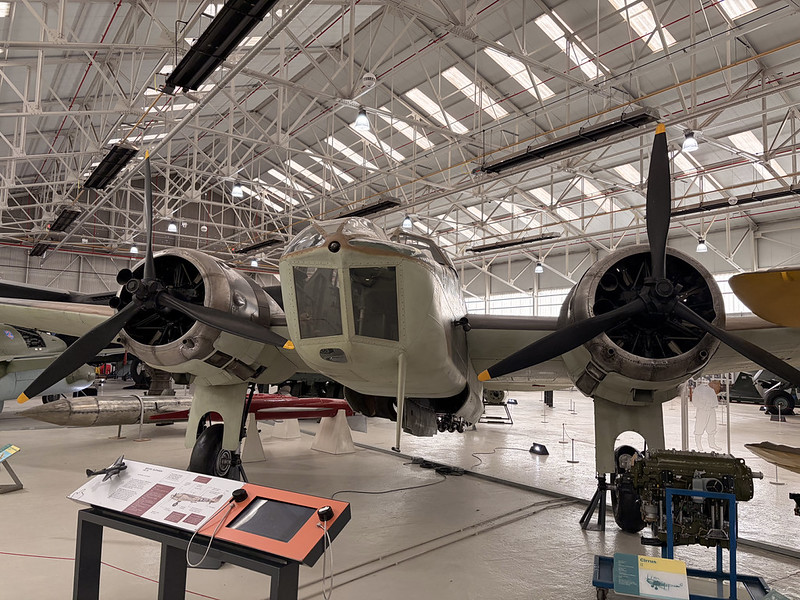
Bristol Blenheim IV at RAF Cosford
| Information | |
|---|---|
| Manufacturer: | Bristol Aeroplane Company |
| First flight: | 1936 |
| Propulsion: | 2 Bristol Mercury XV radial piston engines |
| Number built: | 4.022 |
Bristol built the Type 142 in 1935, Lord Rothermere covering half of the cost. The plane had twin engines and was the first British aeroplane with an all-metal stressed skin and retractable undercarriage. The Type 142 was faster than the RAF's current fighters which obviously caused the Air Minstry to be interested in the type.
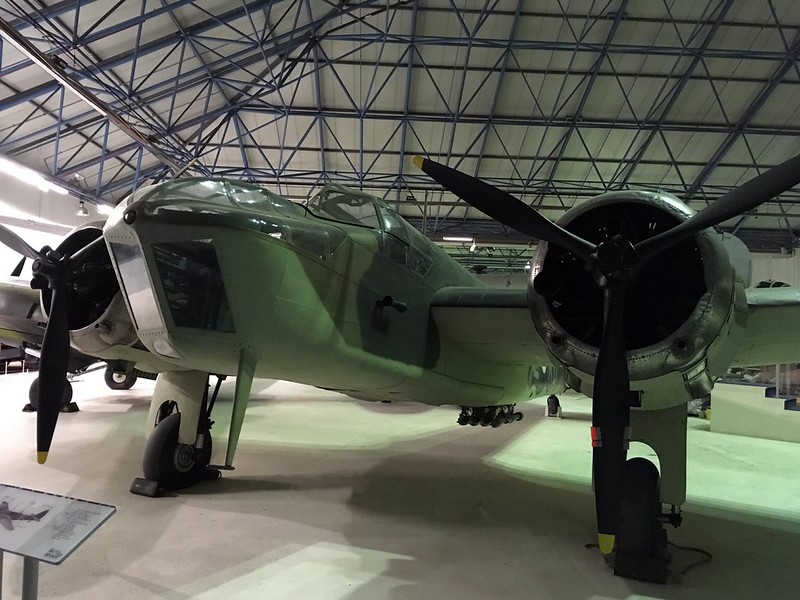
The same Blenheim when it was at RAF London
Bristol developed the Type 142 into a light bomber, first flying in 1937 and it entered service the following year. At the start of the war the type, given the name Blenheim, was in service with a number of RAF squadrons. They were involved in some of the first bombing missions of the war and also served in the battle of France. However, by 1940 the Blenheim's performance had been eclipsed by a new generation of fighters and they were vulnerable to enemy fighters and ground fire.
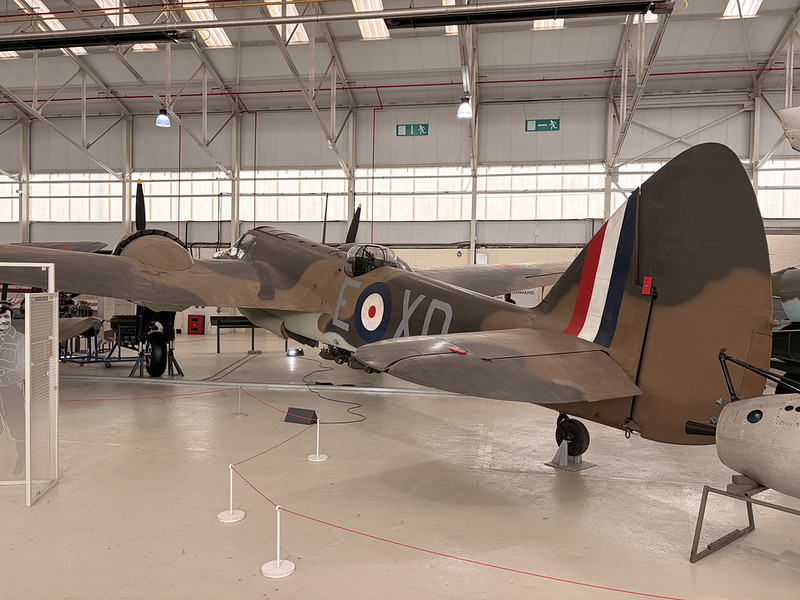
Rear view
The Blenheim continued to serve, though losses were heavy. Some were also modified into long-range heavy fighters to support Fighter Command, later being used as night fighters were they had some success. The Blenheim continued in combat roles until mid-war when they were replaced by more modern types. The Blenheim continued in secondary roles with the RAF until the latter stages of the war, though continued with other air forces into the late 1950s.
The aircraft shown is a Canadian built Bristol Fairchild Bolingbroke, a maritime patrol development of the Blenheim. It was rebuilt as a Blenheim and is now on display at RAF Cosford. In fact, apart from one Blenheim in Finland, all other surviving "Blenheim"s are converted Bolingbrokes!