
The Westland Lynx is a highly successful military helicopter that continues to serve with a number of armies and navies around the world. The Lynx first flew in 1971 and was originally intended as a utility helicopter but has become a battlefield and anti-submarine warfare helicopter as well as transport roles.
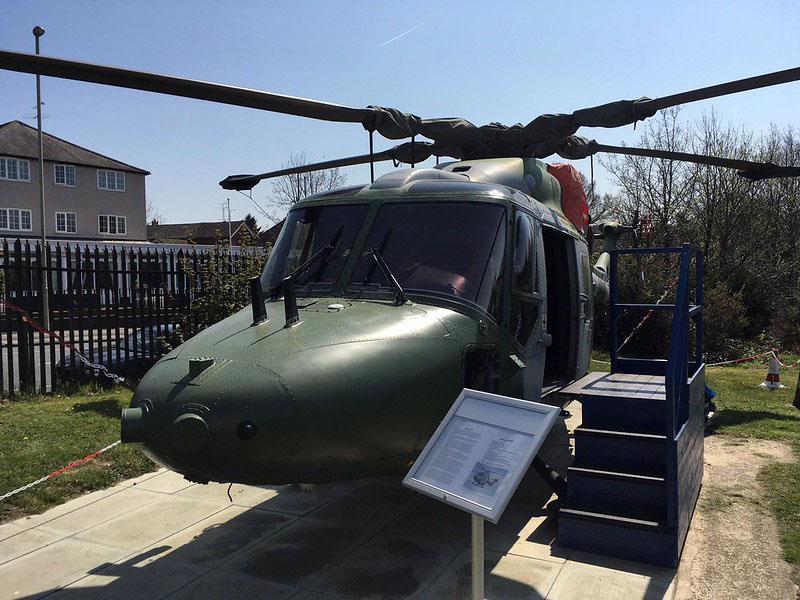
Former Army Lynx ZD280 at FAST Museum, Farnborough
| Information | |
|---|---|
| Manufacturer: | Westland Helicopters |
| First flight: | 1971 |
| Propulsion: | 2 LHTEC CTS800-4N turboshafts |
| Withdrawn: | 2018 (British Army) |
| Number built: | 450 |
Work began on the Lynx in the 1960s to replace helicopters in British service such as the Westland Wasp. The Lynx turned out to be a highly agile helicopter and an excellent performance. Indeed, a modified Lynx set the speed record for helicopters in 1986, a record it still holds.
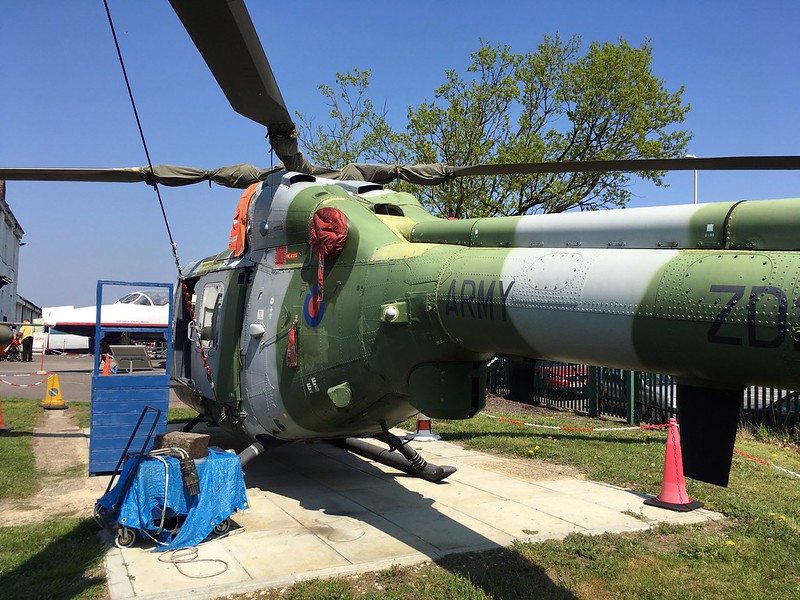
Another view of ZD280
The British Army adopted the Lynx for a variety of roles including reconnaissance and anti-tank. The Royal Navy have used the Lynx for anti-submarine warfare and transport. The Lynx was also widely exported and used by countries such as France, Germany and South Korea. Although the Lynx is no longer in British service it is still serving with a number of militaries. The Lynx has been developed into the Westland Wildcat which has replaced the Lynx in British service.