
The story of the iconic Harrier jump-jet began with the experimental Hawker P.1127 which established the viability of vectored thrust to create a vertical take off & landing aircraft. Naturally, the military were very keen on this idea as it allowed aircraft to be stationed away from vulnerable air bases. The Hawker Siddeley Kestrel was a development of the P.1127 to see if it could be turned into a viable military aircraft.
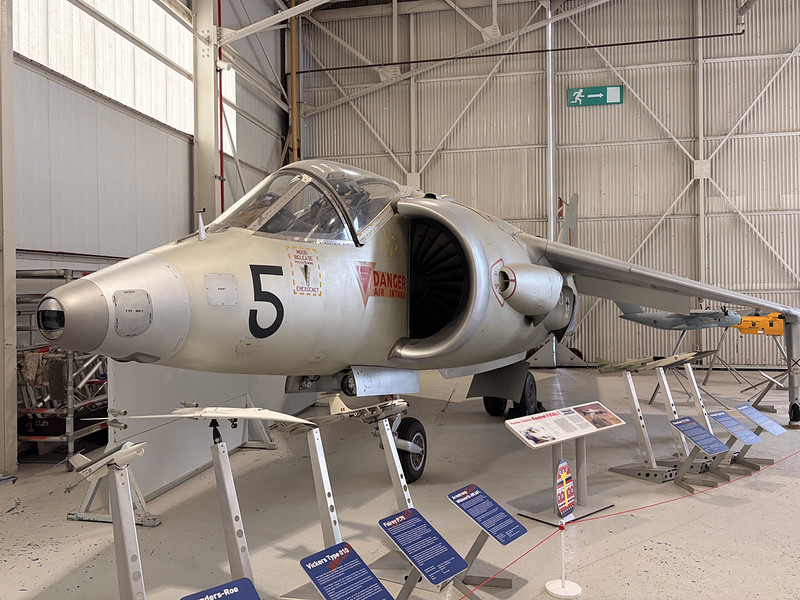
XS695 at RAF Cosford
| Information | |
|---|---|
| Manufacturer: | Hawker Siddeley |
| First flight: | 1964 |
| Propulsion: | Bristol Siddley Pegasus 5 turbofan |
| Number built: | 9 |
Compared to the P.1127, the Kestrel had fully swept wings and a larger tail. It had added equipment for military use including the ability to carry weapons on two underwing pylons. The Kestrel first flew in 1964.
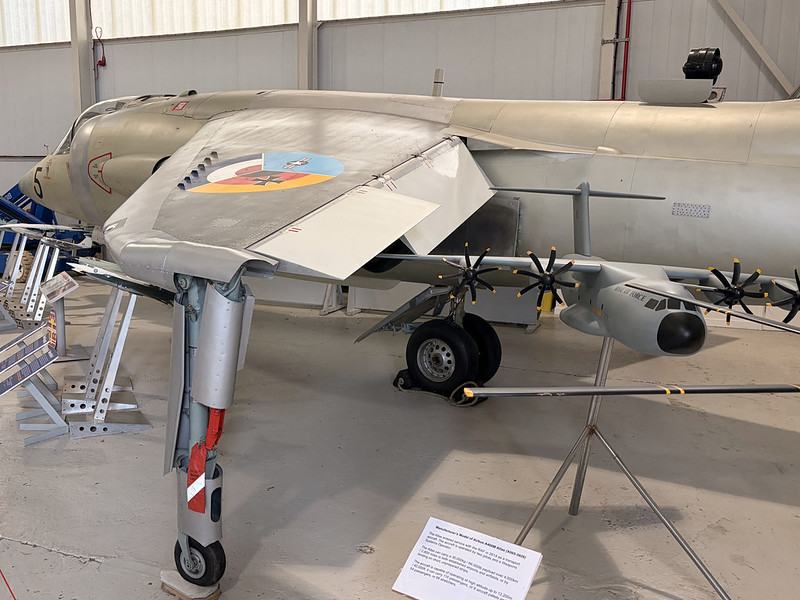
Rear view of XS695, notice the unusual udnercarriage arrangement
The Kestrel was evaluated by a tri-partite squadron including pilots from the Royal Air Force, German Luftwaffe and United States Air Force. The Kestrels took part in a number of trials from rough strips and temporary ground coverings.
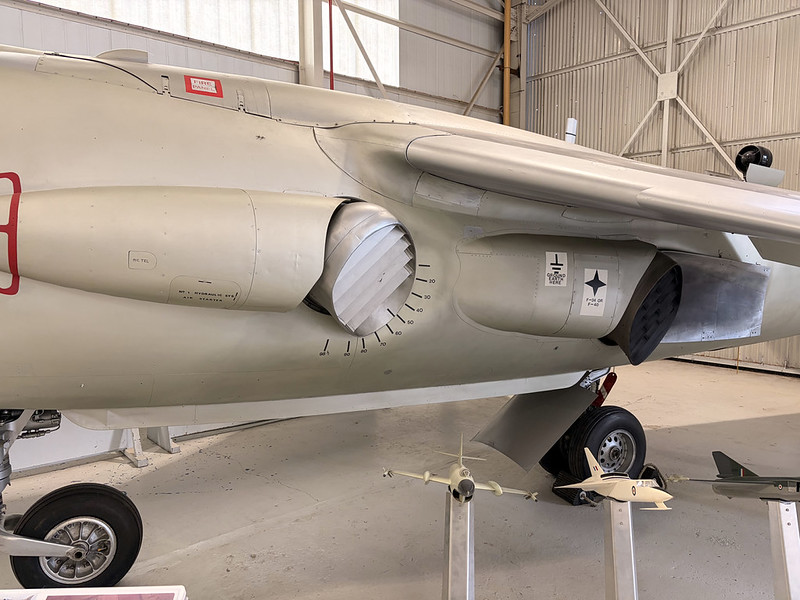
VTOL is achieved by four rotating nozzles from the turbofan
In USAF service the Kestrel was known as the XV-6A and was also evaluated by the US Navy. The Kestrel became the basis of the first production model of the Harrier which arrived later in the decade.
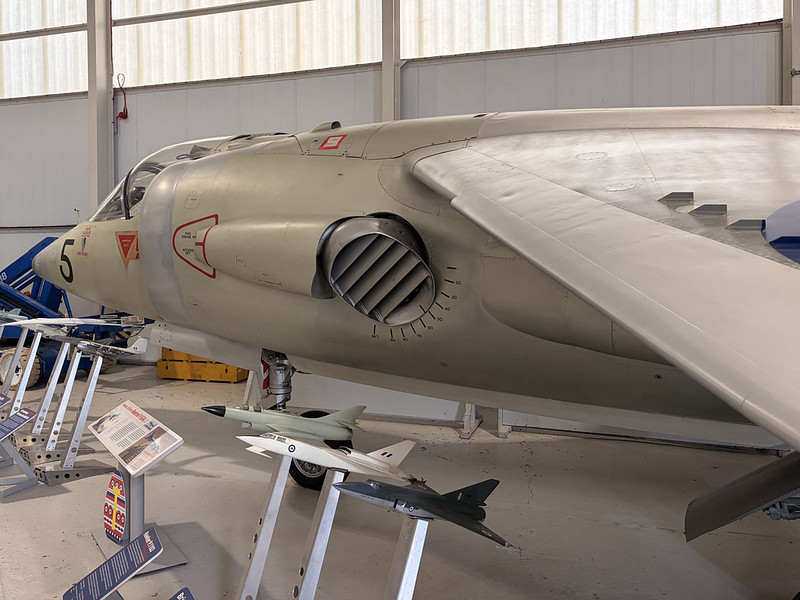
Another view of the front nozzle
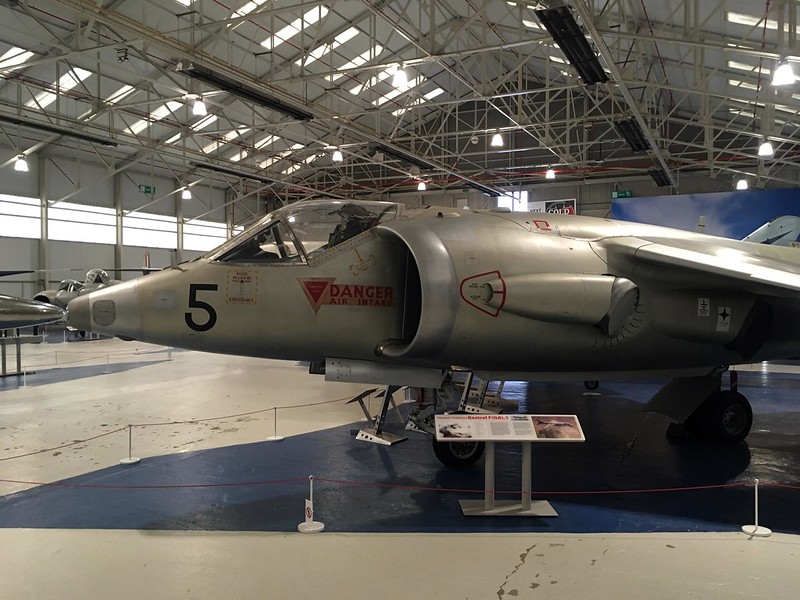
Six of the nine Kestrels have been preserved including XS695
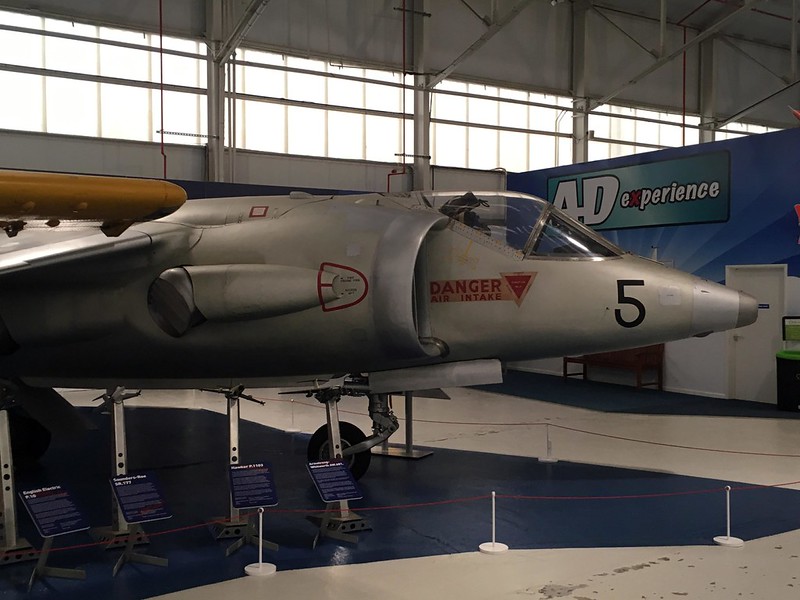
Another view of XS695