
In the 1960s, with jetliners having largely taken over commercial aviation it seemed obvious that the next big leap would be with supersonic travel. Unfortunately, oil prices and environmental concerns put paid to this dream and only two supersonic airliners were ever built, the Russian Tupolev Tu-144 and the Anglo-French Concorde.
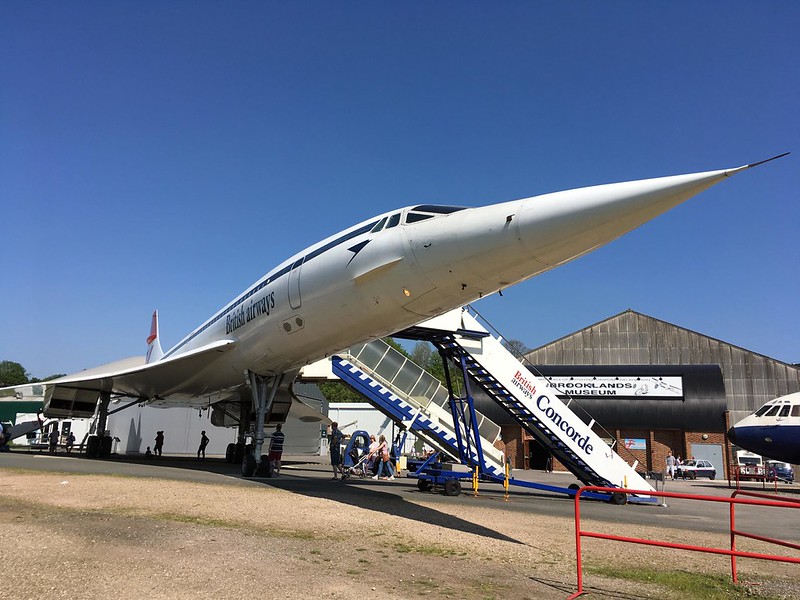
Concorde at Brooklands Museum
| Information | |
|---|---|
| Manufacturer: | British Aircraft Corporation & Aérospatiale |
| First flight: | 1969 |
| Propulsion: | 4 Rolls-Royce/Snecma Olympus 593 Mk610 turbojets |
| Withdrawn: | 2003 |
| Number built: | 20 |
Concorde grew out of British and French design studies in the 1950s. As the project was considered too big to go alone on, the two countries decided to work together on an airliner project later given the name Concorde (initially British aircraft were to have been called Concord but by the time of the roll-out of the prototype in 1967 the British had decided to use the same spelling).
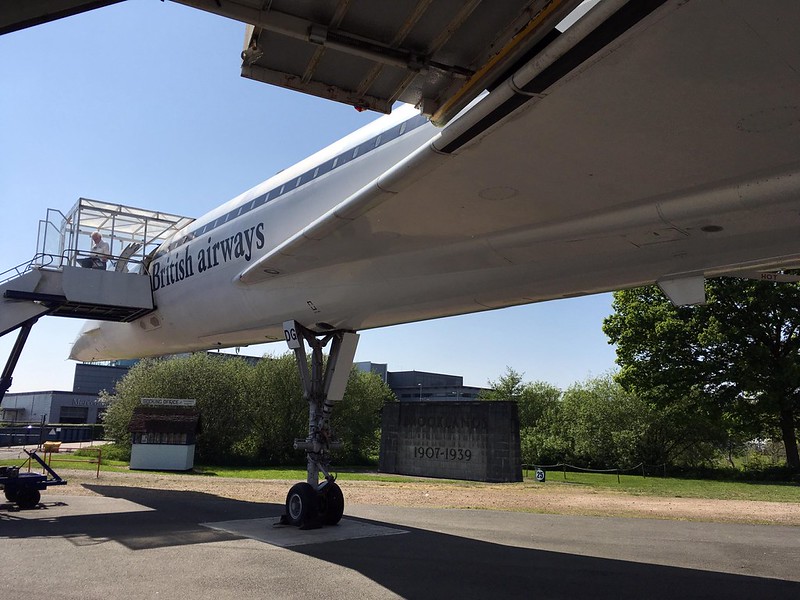
The forward fuselage
The first flight of Concorde took place in 1969, the aircraft being built at two factories in the UK and France. The initial order book was healthy but was soon hit by a number of problems including the noise and pollution as well as the rising cost of oil. A number of countries including the USA also forbid supersonic flight overland due to the sonic booms. In the end only British Airways and Air France received Concordes. For a short while, a Concorde wore Singapore Airlines livery, one was also operated for a short time by Braniff International though neither airline ordered the type.
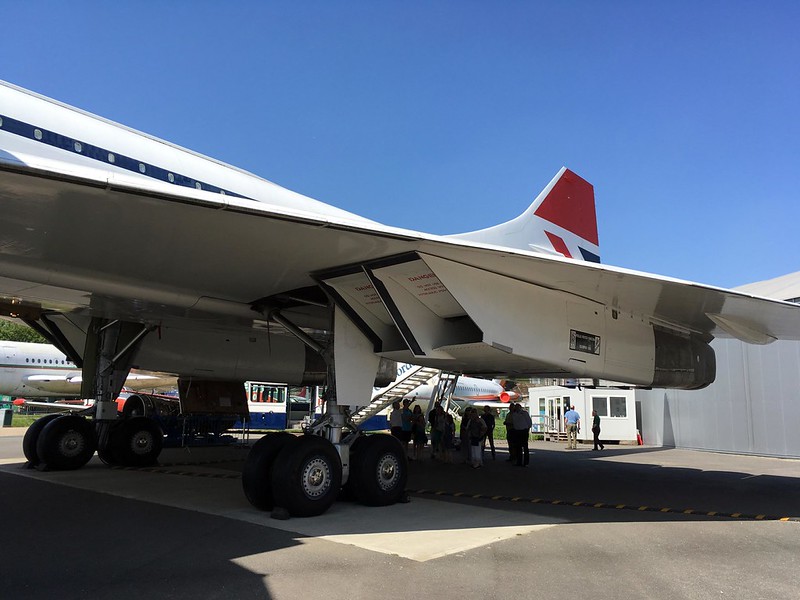
Concorde was the last airliner to use turbojets in regular service
Both airlines operated the type on transatlantic flights. The flights were a niche which appealed to a wealthy clientele. A boutique service for those who could afford it, unlike subsonic airtravel which soon became the preserve of the masses. The beginning of the end of the Concorde came after the crash of an Air France Concorde in 2000 killing all on board. Although Concorde did return to the air, the bad publicity and a slump in air travel after the September 11 attacks meant the economics of the ageing aircraft no longer made sense. Concorde was retired in 2003.
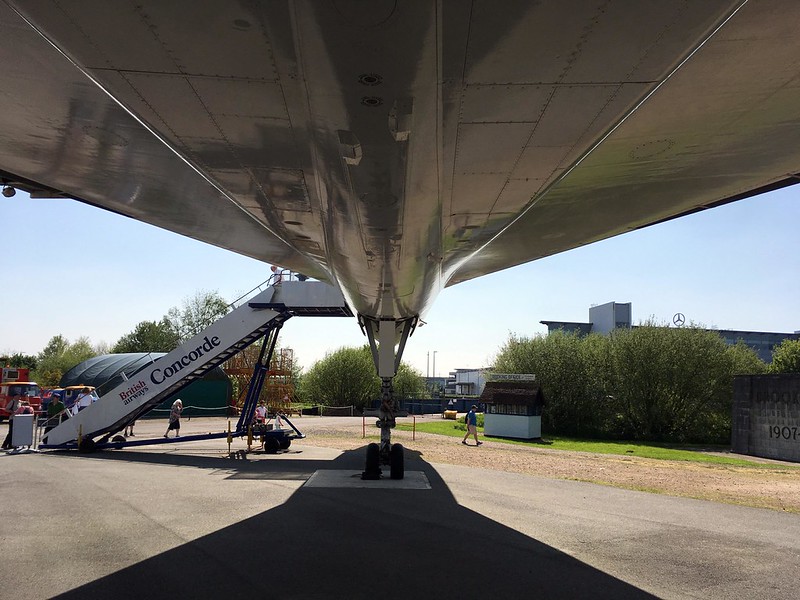
Under the delta-wing
Only twenty Concordes were built but eighteen are on display in various locations around the world!
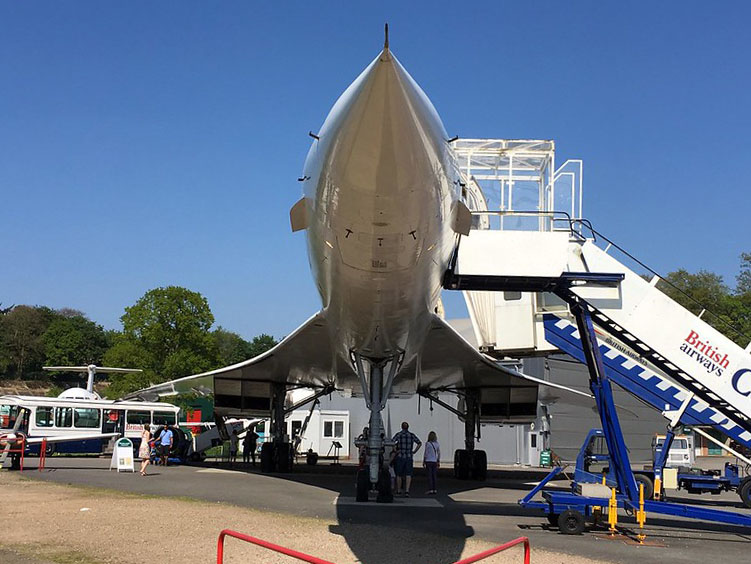
Arguably one of the most beautiful aircraft ever built