
The Bristol Type 188 was a supersonic research aircraft, part of the development of a later cancelled Mach 3 bomber project (Avro 730). As well as high speed flight, the 188 was intended to explore the effects of the resultant high temperatures of supersonic flight on the airframe.
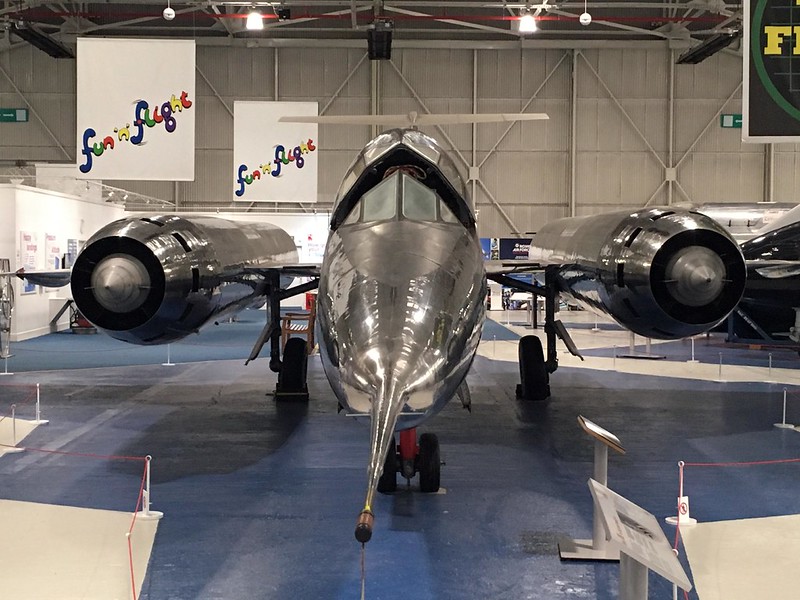
XF926 at RAF Cosford
| Information | |
|---|---|
| Manufacturer: | Bristol Aeroplane Company |
| First flight: | 1962 |
| Propulsion: | 2 de Havilland DGJ10R Gyron Junior turbojets |
| Number built: | 3 |
The Bristol Type 188 had a long slender fuselage (which gained it the nickname of Flaming Pencil). The fuselage was mostly made from stainless steel and had an active refridgeration system. Three aircraft were built though one was kept only for static test and never flew. The first Bristol Type 188 flew in April 1962.
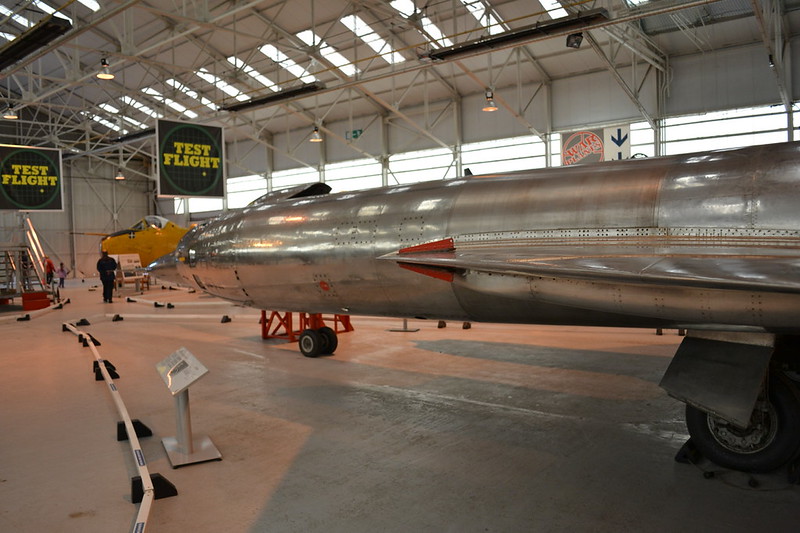
Side view of XF926, the engines are in large nacelles
Unfortunately, the Bristol Type 188's de Havilland Gyron Junior turbojets probed to have too high a fuel consumption. This meant the aircraft could not maintain high speeds long enough to explore thermal effects on the airframe.
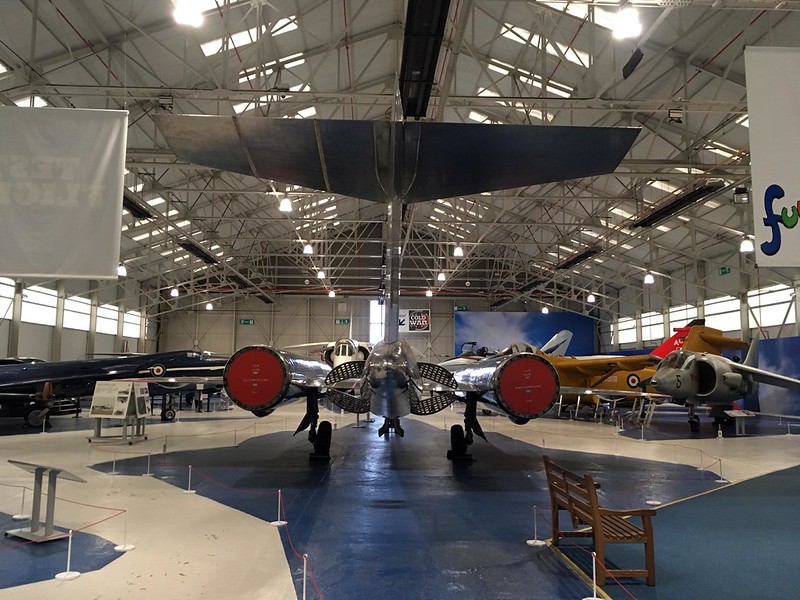
Rear view of XF926
The Bristol Type 188 reached a top speed of Mach 1.88 but after just two years flight testing the programme was cancelled. One of the aircraft became an instructional airframe at RAF Cosford and was later preserved.
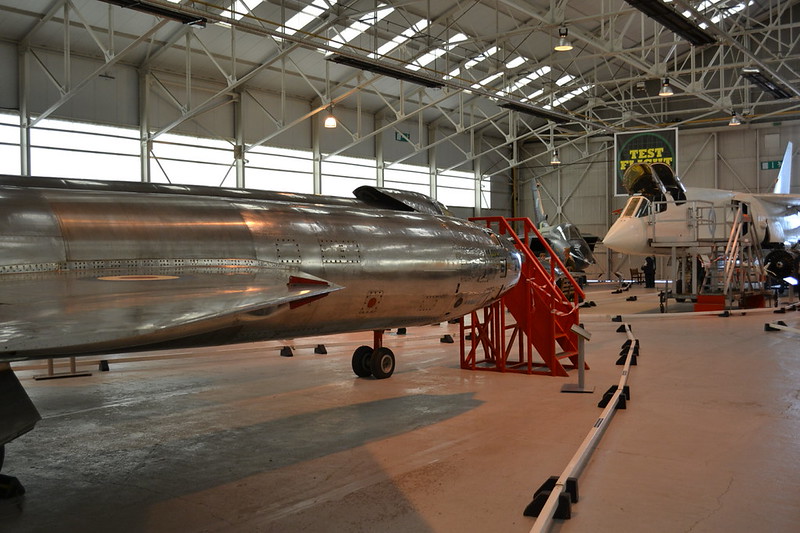
Another side view
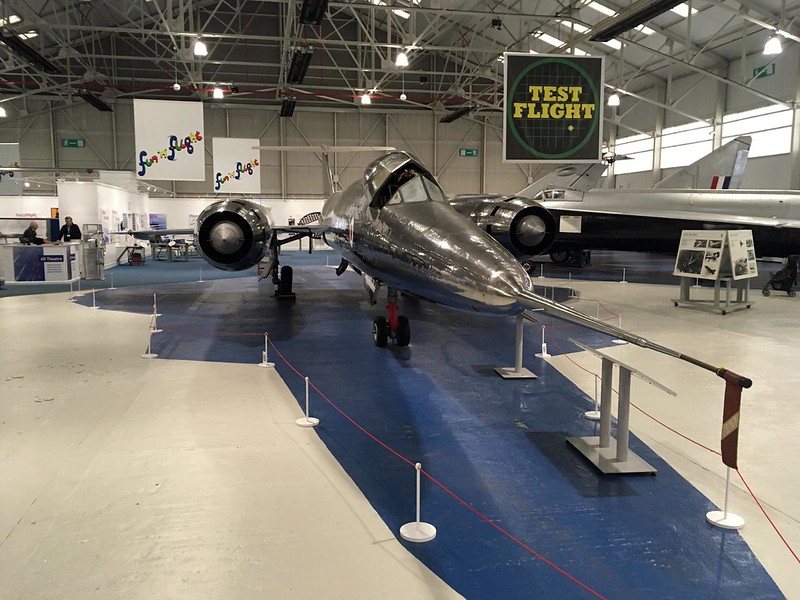
Another view of XF926