
The Gloster Meteor was the only Allied jet aircraft to see combat operations in the Second World War and the first British jet fighter. The Meteor had a long career, only being finally retired by the RAF in the early 1980s.
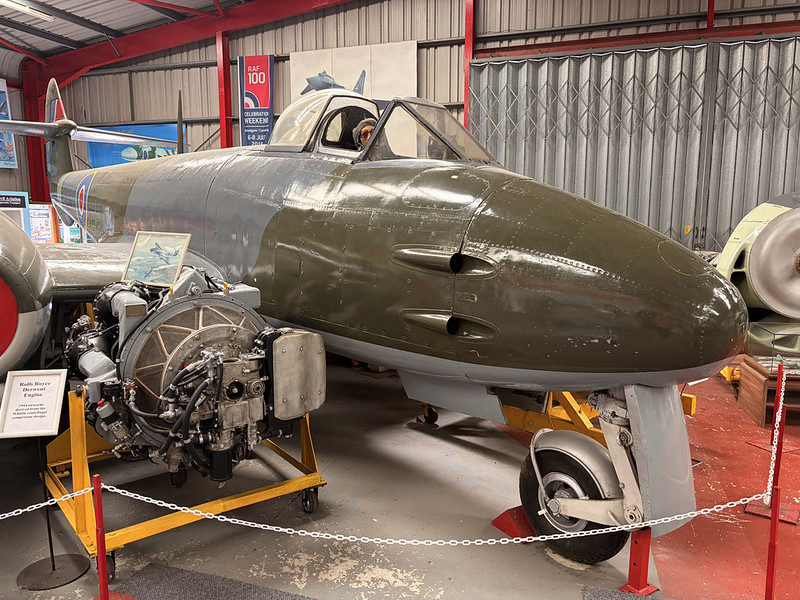
Meteor F.4 at Midland Air Museum
| Information | |
|---|---|
| Manufacturer: | Gloster Aircraft Company |
| First flight: | 1943 |
| Propulsion: | 2 Rolls-Royce Derwent turbojets |
| Withdrawn: | 1982 (RAF) |
| Number built: | 3,947 |
After the successful first flight of the turbojet powered Gloster E28/39 prototype in 1941, attention turned to a production aircraft powered by the new jet engines. Due to the limitations of early jets, the decision was made to use two, wing mounted. Apart from the propulsion, the Meteor was a fairly conventional aircraft with straight wings and a tricycle undercarriage.
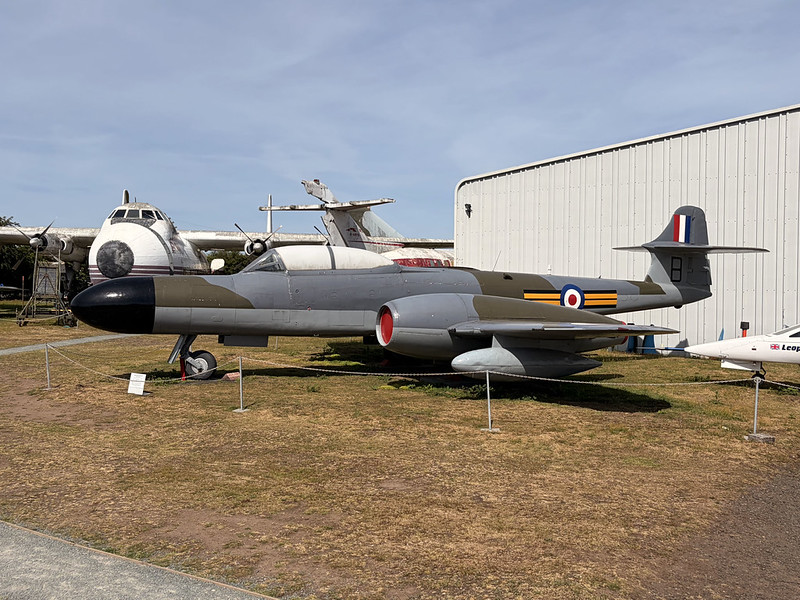
Armstrong Whitworth night fighter Meteor at Midland Air Museum
The Meteor first flew in 1943. Development continued in 1944 with the Meteor entering squadron service in July. The Meteor saw action intercepting V-1 flying bombs, the first kills being made in August. They later were used in the ground attack role during the final months of the war.
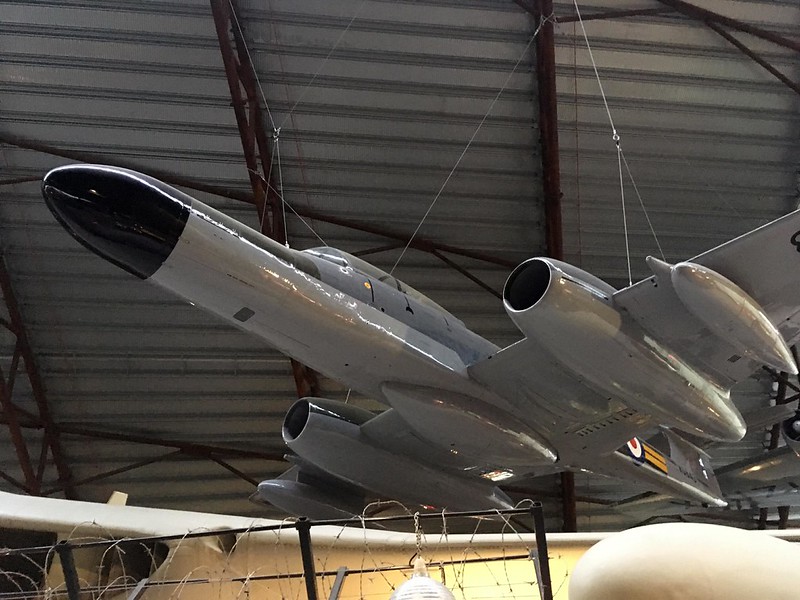
Another night fighter at RAF Cosford
After the war, the Meteor saw large foreign sales and served with a number of airforces. It saw combat service during the Korean War, Suez and early Arab-Israeli conflicts (where they were fielded by both sides!) The Meteor continued to be developed in the 1940s and 1950s, with night fighter variants produced by Armstrong Whitworth. Two continue to be used to this day by Martin-Baker to develop ejector seats.
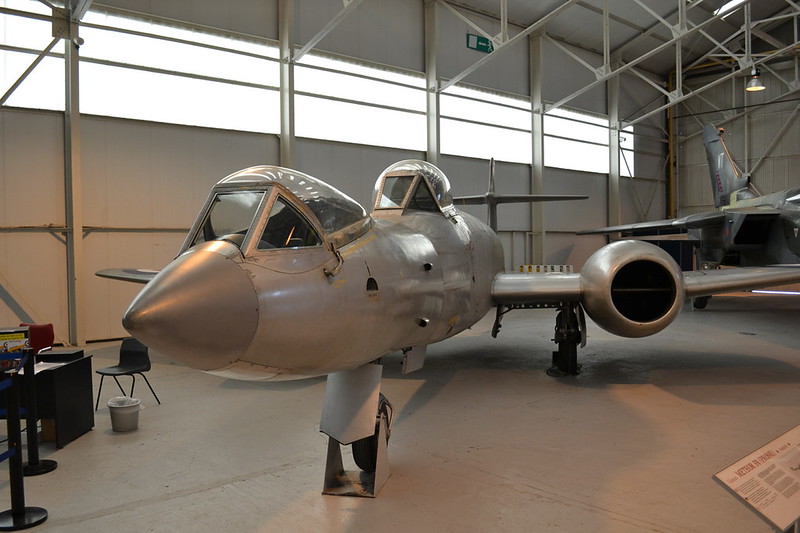
Prototype to test prone pilot position
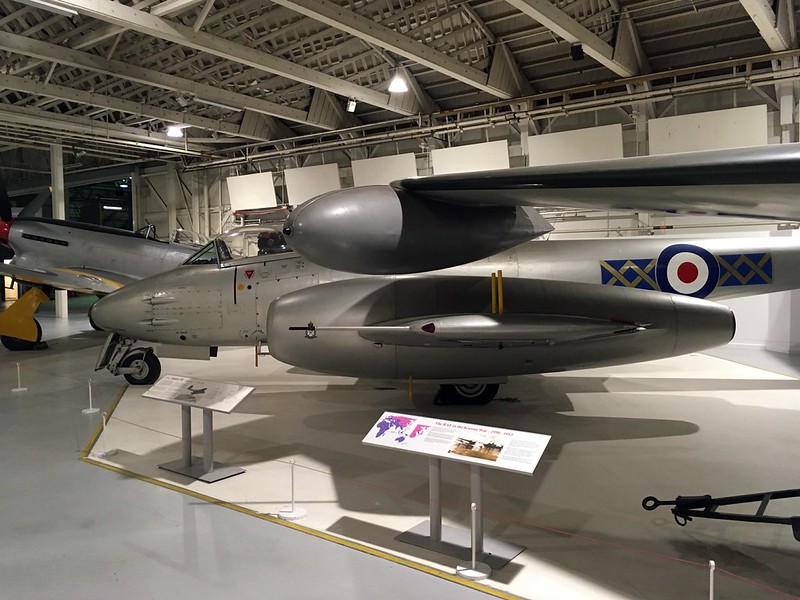
Meteor at RAF London
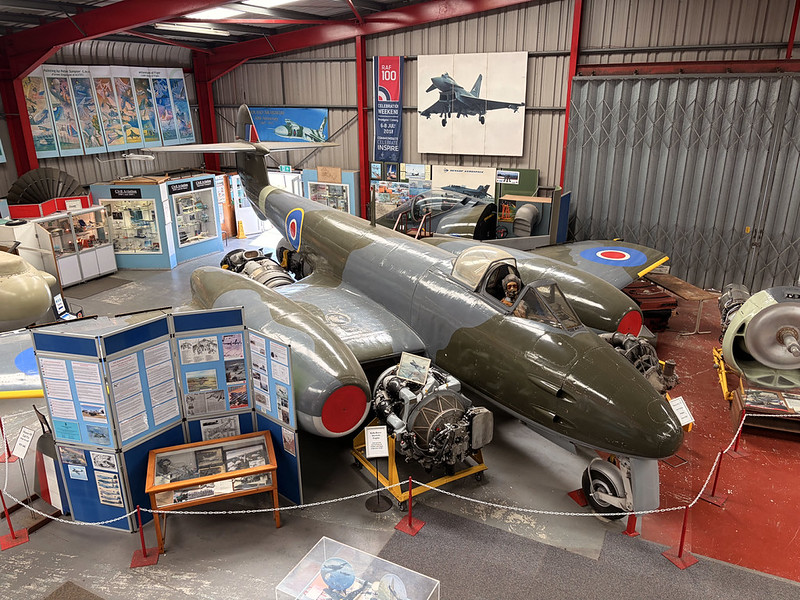
Another view of the F.4, as it would have looked during the Second World War