
Introduced late in the Second World War, the Hawker Tempest was part of the final generation of piston-engined fighters before jet aircraft would take over within a few years. The Tempest was the fastest single-engined propellar aircraft of the war.
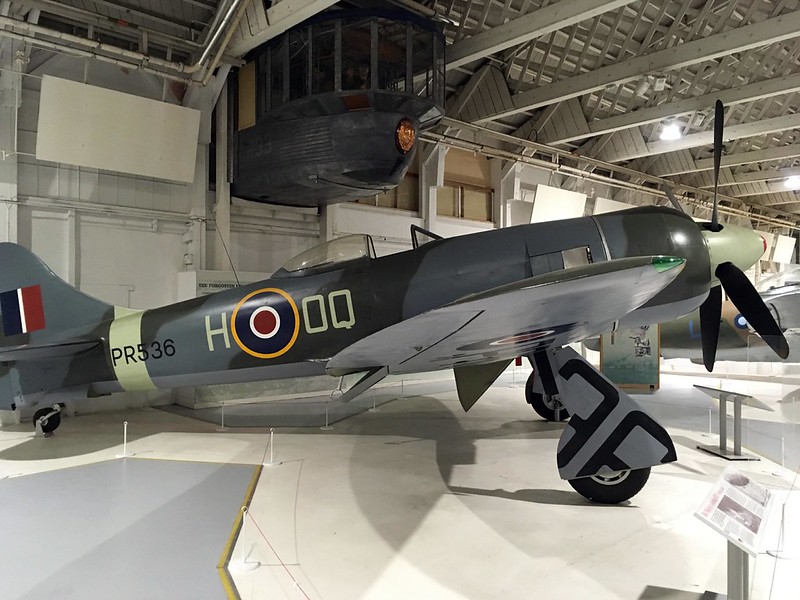
PR536 at RAF Museum Cosford
| Information | |
|---|---|
| Manufacturer: | Hawker Aircraft |
| First flight: | 1942 |
| Propulsion: | (Mark II) Bristol Centaurus Mk 5 radial engine (Mark V) Napier Sabre IIB H-24 inline engine |
| Withdrawn: | 1953 |
| Number built: | 1,702 |
The Tempest began life as a development of the Hawker Typhoon and indeed was originally called the Typhoon II. The Tempest had a new thinner wing to counter the Typhoon's weakness at high altitude. The Tempest first flew in 1942 and entered service in 1944. It's early combat experience was in intercepting V-1 flying bombs. It was also used in the ground attack role during the latter stages of the war.
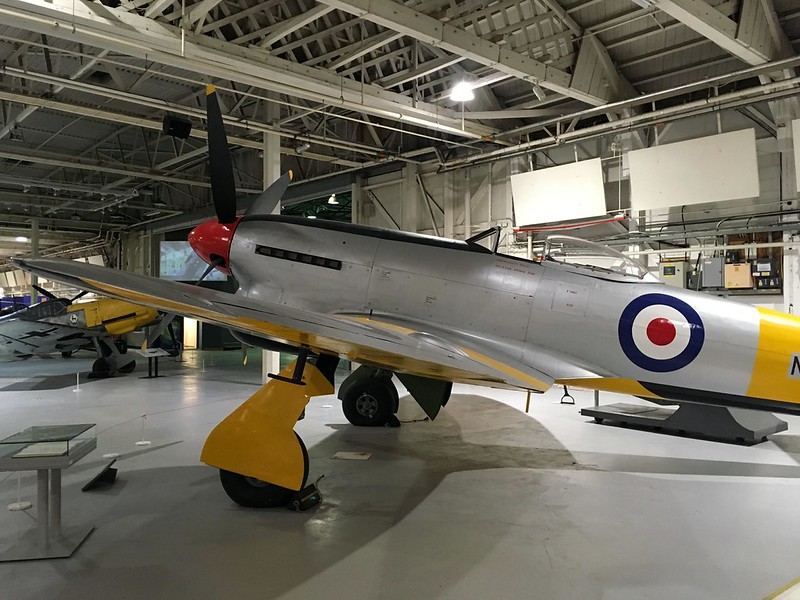
NV778 at RAF Museum London, in target tug livery
After the war, the Tempest became the RAF's standard fighter while waiting for the next generation of jet fighters. The Tempest stayed in RAF service until 1953 though in it's final years it's main use was as a target tug.
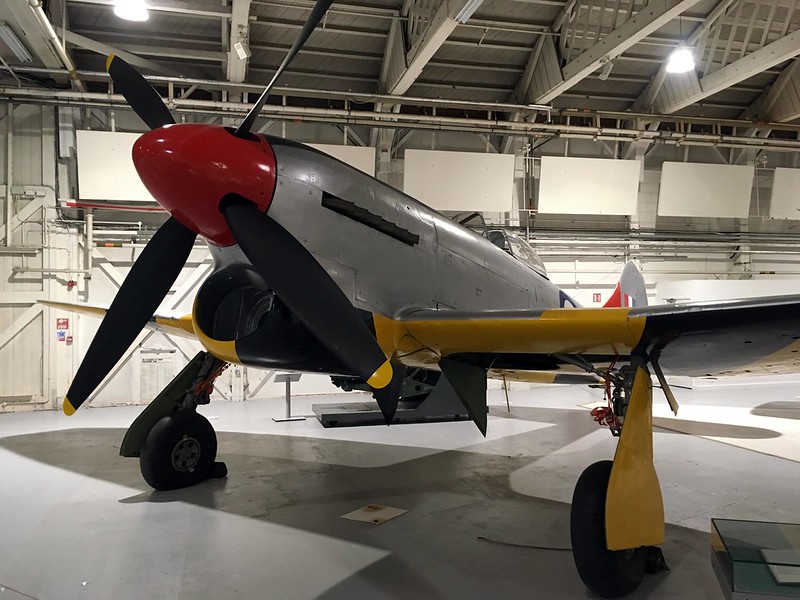
NV778 has the Napier Sabre engine
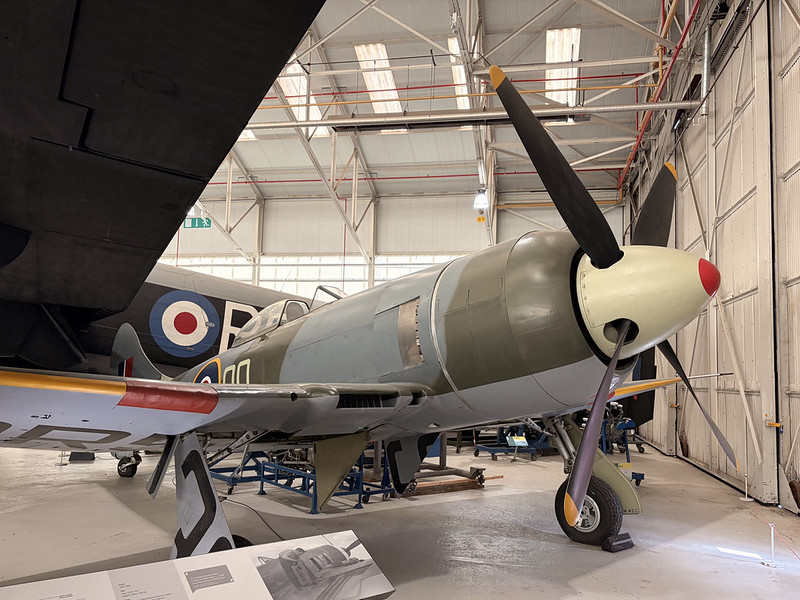
PR536 has the Bristol Centaurus
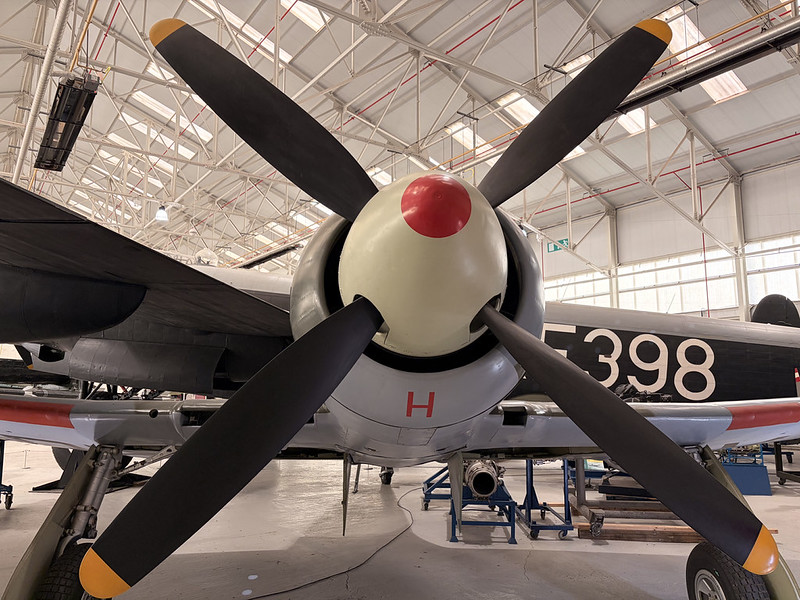
Another view of PR536