
The de Havilland Dove was developed as a successor to the Dragon Rapide as a feeder airliner. It became one of the most successful British airliners of the postwar period with over 500 built over a twenty one year period.
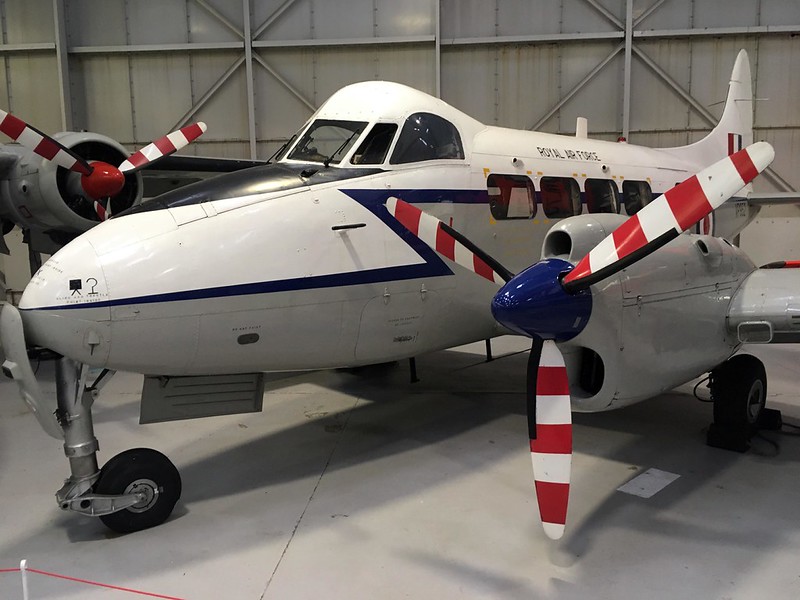
Devon at RAF Museum Cosford
| Information | |
|---|---|
| Manufacturer: | de Havilland |
| First flight: | 1945 |
| Propulsion: | 2 de Havilland Gipsy Queen 60 Mark 3 piston engines |
| Withdrawn: | Some still in service for heritage flights |
| Number built: | 544 |
The Dove was built to a British government committee requirement for a small airliner. The all-metal Dove first flew in 1945 and typically could carry up to eleven passengers as well as cargo.
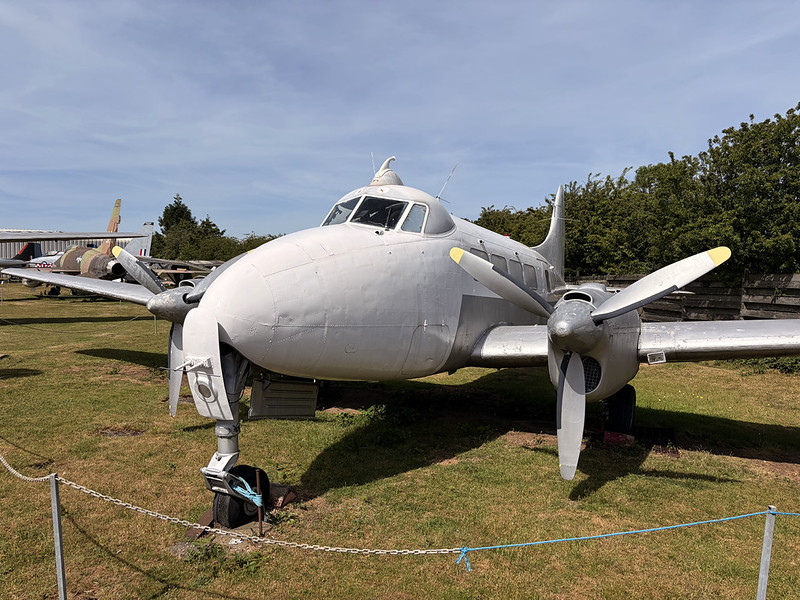
Dove II at the Midland Air Museum
Military version for the RAF and Royal Navy were also produced as the Devon and Sea Devon and remained in use in the VIP, training and general purpose roles into the 1970s. The Dove remained in commercial roles well into the late 20th century, some receiving turboprop engines. A small number are still in a flyable condition.
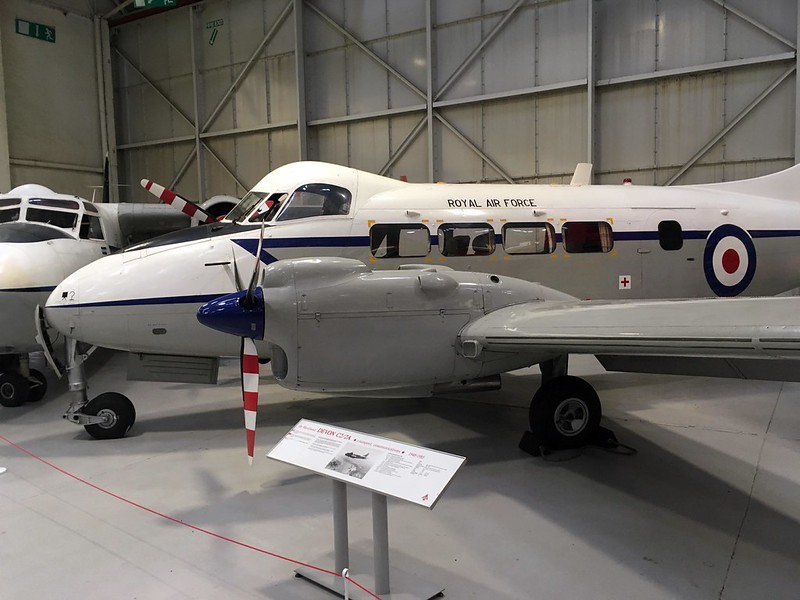
Another view of the Devon at Cosford
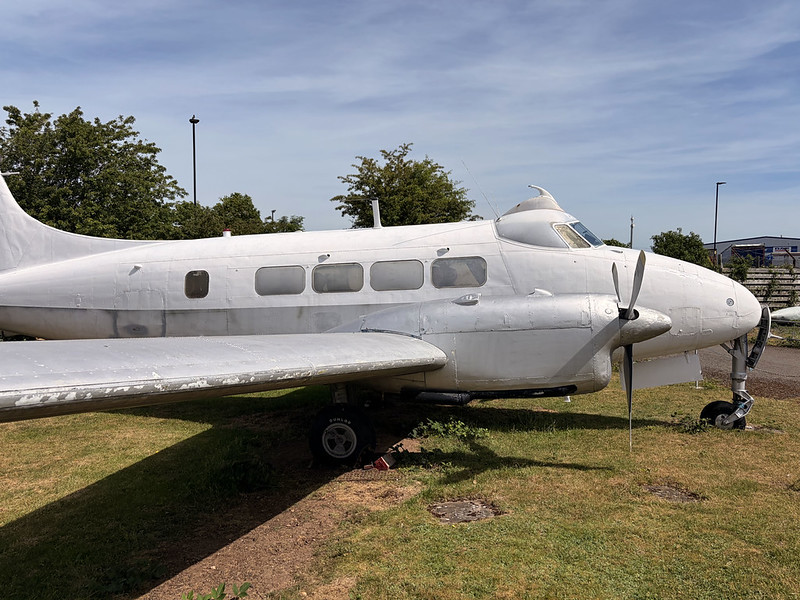
Side view of the Dove II
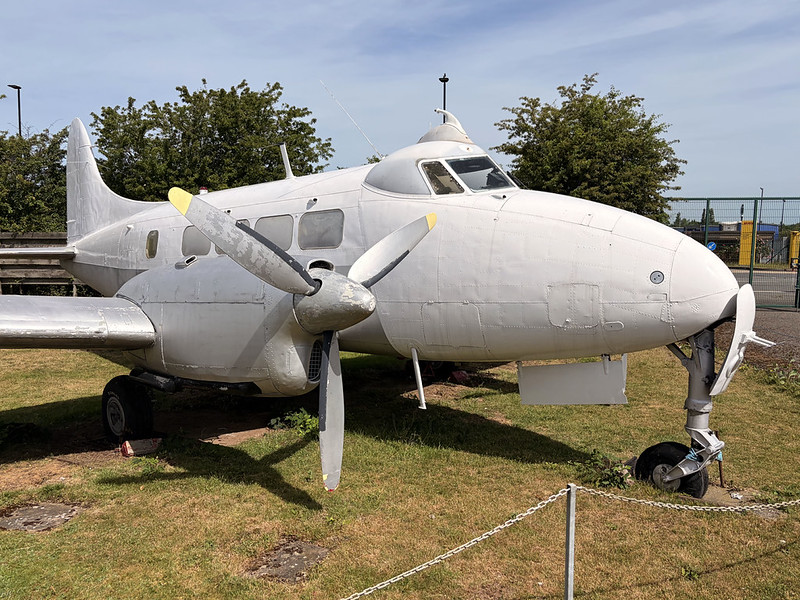
Another view of the Dove II