
de Havilland Canada developed the Chipmunk after the Second World War as a primary trainer. Although a design of their Canadian subsidery (later owned by the Canadian government), most Chipmunks were built under licence by de Havilland in the UK.
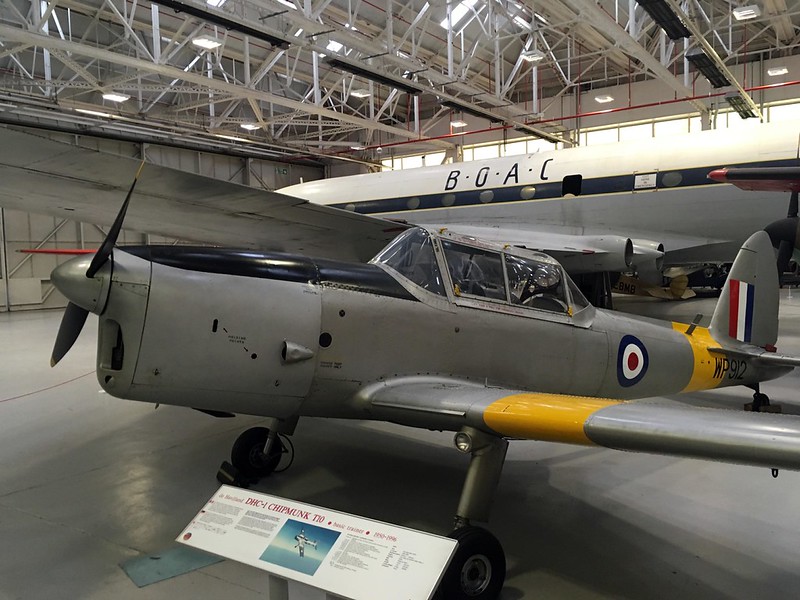
Chipmunk at RAF Museum Cosford
| Information | |
|---|---|
| Manufacturer: | de Havilland Canada |
| First flight: | 1946 |
| Propulsion: | de Havilland Gipsy Major 1C piston engine |
| Withdrawn: | 1996 (UK except for heritage flights) |
| Number built: | 1,284 |
The Chipmunk was de Havilland Canada's first indigenous design. It was a monoplane intended to replace aircraft like de Havilland's Tiger Moth. The Chipmunk first flew in 1946 and entered production in Canada the following year. Two hundred and seventeen were built in Canada, but a thousand were built in the UK. The Chipmunk was also built under licence in Portugal.
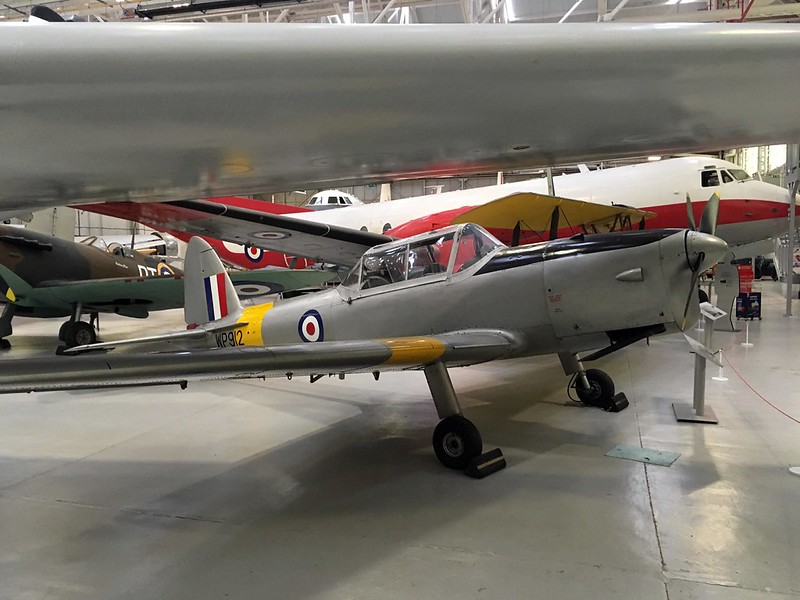
Another view of the Chipmunk at Cosford
The Chipmunk served with the Canadian, British and many other airforces. It remained in service in the UK until 1996, some remain with the RAF, Royal Navy and British Army historic flights. Many also remain in a flyable condition with private individuals.